



GEU
facilities
Level
Undergraduate
facilities
Duration
4 Years
facilities
Fee Structure
Click Here
B.Des. (Industrial Product Design)

Admission Procedure

Merit will be prepared on the basis of the qualifying exam.

Provisional Admission

Seats to be allocated based on projected scores (12th), calculated based on the candidate’s 10th percentage.

About The Program

The seamless integration of human and artificial cognition leveraged through Emerging Technologies is the core of our practice. This dynamic, transdisciplinary method builds a foundation for leading innovation in user-environment-centered problem-solving and creative product development.

The Bachelor of Design (B.Des.) program is a comprehensive undergraduate program that cultivates innovative, ethical, and user-centered designers, empowering them with enhanced Human Intelligence (HI) for creative problem-solving in a technologically advanced world.

The curriculum is structured to foster well-rounded creative minds, developing key aspects of HI by integrating design theory and practice across physical, digital, and visual domains, and by encouraging an awareness of AI's potential impact on design.

Students embark on a developmental journey, progressing from building a strong foundation in design fundamentals (including visual communication, design thinking, and materials & processes) to acquiring specialized skills and practical knowledge in Industrial Product Design, Interior and Spatial Experience Design, User Experience & Interaction Design, Graphic & Visual Communication Design or Animation & Game Design. The program emphasizes a human-centered approach, encouraging students to conduct user research, analyze complex problems with social and cultural awareness, and create effective, sustainable, and accessible solutions that meet both user and business needs.

Whether focusing on designing tangible products, shaping digital experiences, or crafting compelling visual narratives, students learn to apply human-centered design methodologies, utilize diverse tools and technologies (including emerging AI tools), and consider the strategic value of design in achieving business goals and addressing societal challenges. The B.Des. program prepares graduates to be versatile, adaptable, and ethically responsible designers, equipped to shape the future of products, experiences, and communication in a rapidly evolving world, contributing to both human well-being and economic growth.
Eligibility Criteria for Admission

  • Academic Qualification : To be eligible for the Bachelor of Design (B.Des.) program, a candidate must have passed 10+2 examination.
  • Entrance Exam : Candidate’s admission may be based on Graphic Era’s entrance test, or a personal interview, unless they have a valid score from a national-level entrance exams like UCEED / NID-DAT / NIFT Entrance Exam.

Teaching Pedagogies

The design pedagogy is aimed at empowering future designers with building-in enhanced human intelligence (HI) for creative problem-solving with AI assisted holistic curriculum that cultivates intelligence, capacity, skills, tools, method, technique, and crucial additional factors in a developmental sequence, fostering well-rounded creative minds.

Design education embraces the synergy of Al and HI, forging a 'hyper-transdisciplinary' approach. This empowers learners to tackle complex challenges through deep integration of knowledge, Al-augmented creativity, and ethically guided innovation. Cultivating both Al literacy and enhanced human intelligence will be central to shaping impactful design solutions for tomorrow's world.

Building-in Areas of Expertise in Innovation

Design Strategy: Defines the overarching vision and framework for design decisions to achieve specific goals.

  • User research
  • Design direction
  • Culture & context
  • Design impact
  • Socio-business design
  • Strategic design

Design Tools & Technologies: Equips students with the practical skills to translate concepts into tangible outputs using relevant software and methods.

  • Design thinking
  • CAD softwares
  • Human intelligence & Artificial intelligence
  • Ergonomics
  • Prog. languages
  • XR Lab (AR+VR+MR)
  • Emerging technologies

Design Innovation : Fosters creative problem-solving and the development of novel and impactful design solutions.

  • Design process
  • HCI - Human Factors
  • Inclusive Design
  • Systems thinking
  • Managing uncertainty
  • Value realization & creation

Experience Design: Focuses on understanding and shaping meaningful and user-centric interactions across touchpoints.

  • Multi-sensory design
  • Human interface
  • Nature & sustainability
  • Design futures
  • Product lifestyle
  • Holistic User Experience

Business Design Management: Integrates design thinking with business principles for strategic decision-making and value creation.

  • Business tools for Design
  • Leadership & change maker
  • Design management
  • Professional communication
  • Promotion & awareness
  • Business strategy
  • Project management
Infrastructure
  • Drawing Studios
  • Illustration and Graphic Design Studios
  • Photography Studio
  • Sound Mixing and Recording Studio
  • Cinematography Studio
  • CAD Studio
  • Visual Merchandising Studio
  • Prototyping Workshops (such as Wood, Metal, Plastic, Paint shop, Assembly workshop)
  • Ergonomics Lab
  • Fabrication Lab
  • Mechatronics lab
  • CNC Lab and Laser Cutting Shop Floor
  • 3D Printing Facility
  • Material Testing lab
  • IoT Lab
  • AR/VR Lab & Usability Lab
  • Creative Display Studio

Key highlights - Infrastructure

To provide a world-class learning environment for B.Des. (Industrial Product Design), the campus infrastructure is designed to mirror professional R&D centers and advanced manufacturing hubs. It allows students to transition seamlessly from a conceptual sketch to a market-ready prototype.

Design Studios & Ideation SpacesThese are the primary 'home bases' for students, designed for long hours of creative work and collaboration.

  • High-End Design Studios : Spacious, well-lit environments equipped with professional drafting tables, work surfaces, and collaborative pin-up walls for peer reviews.
  • Visual Communication Lab : A dedicated space for analytical drawing, color theory exploration, and manual rendering techniques.
  • Design Resource Center : A curated library of physical material samples, finish swatches, and global design catalogs to inspire material-led innovation.

Advanced Prototyping & Fabrication Workshops : The core of 'Learning-by-Doing', where students transform ideas into physical reality.

  • Hi-Tech Model Making Lab : Equipped for precision work with high-density foams, plastics, and resins to create high-fidelity 'look-and-feel' models.
  • Heavy Duty Material Workshop : Industrial-grade facilities for wood and metal fabrication, including lathe machines, welding stations, and specialized cutting tools.
  • Paint & Surface Finishing Booth : A professional-grade, ventilated spray-painting environment to achieve automotive-quality finishes on student prototypes.
  • Ceramics & Pottery Studio : Equipped with electric and gas furnaces for exploring form through traditional and industrial ceramic processes.

Digital Manufacturing & 'Future-Tech' Labs : Integrating the latest technology for rapid innovation.

  • Rapid Prototyping Center : Featuring a fleet of 3D printers, CNC routers, and high-precision laser cutters for complex geometry fabrication.
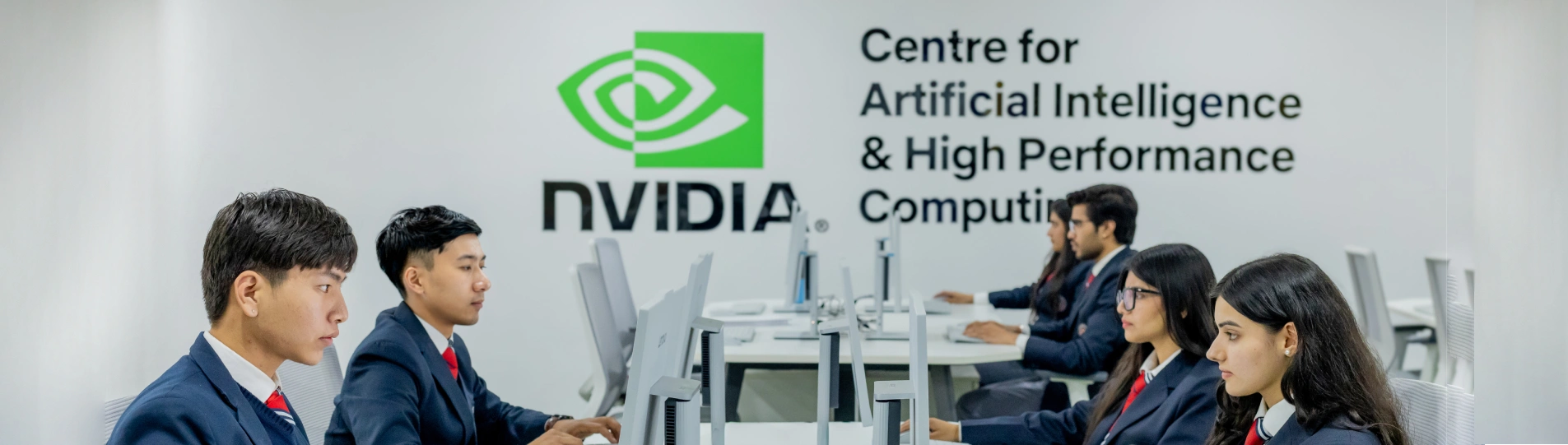
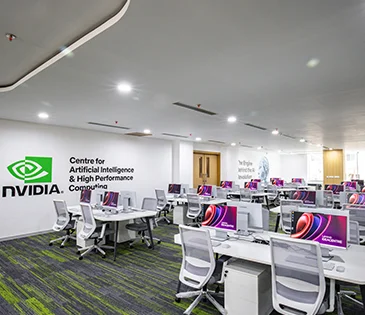
  • Digital Simulation Suite: A high-performance computing lab for complex 3D modeling, stress testing, and generative design simulations.
  • Virtual Reality (VR) Simulation Lab : An immersive environment where students can test the scale and ergonomics of products like furniture or vehicles in a virtual space.

Specialized Research & Testing Facilities : Ensuring products are scientifically sound and user-ready.

  • Human Factors & Ergonomics Lab : Equipped with anthropometric measurement tools and sensor-based equipment to test user comfort and cognitive load.
  • Smart Product (IoT) Lab : A facility for integrating electronics, sensors, and interactive elements into physical product designs.
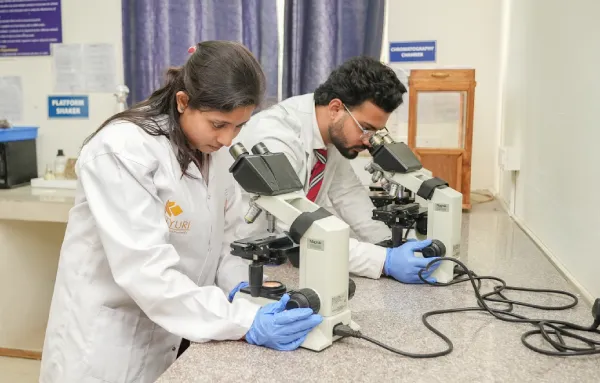
  • Materials Testing Lab: Facilities to analyze the strength, durability, and environmental impact of different industrial materials.

Exhibition & Professional Engagement : Bridging the gap between the classroom and the global design industry.

  • Design Gallery & Jury Space : A professional exhibition area to showcase student projects, host industry juries, and hold public design festivals.
  • Collaborative 'War Rooms' : Specialized spaces for industry-linked live projects, where students work in teams to solve real-world corporate challenges.
  • Photography & Portfolio Studio : A controlled lighting environment for high-quality documentation of physical models for professional portfolios.

The B.Des. (Industrial Product Design) program is defined by a rigorous academic structure that balances artistic inquiry with industrial pragmatism. The following key highlights characterize the unique pedagogical and professional environment of the department.

Programmatic Excellence & Strategic Pillars :

  • Multidisciplinary Curriculum Framework : An academic structure aligned with the National Education Policy (NEP) 2020, facilitating a broad-based learning approach that integrates humanities, technology, and core design principles.
  • Industry 5.0 Readiness : A forward-looking syllabus that incorporates the transition from mass production to personalized, human-centric manufacturing systems.
  • Human Factors and Applied Ergonomics : Deep integration of anthropometric data and cognitive ergonomics in the product development lifecycle to optimize user interaction.
  • Sustainability and Circularity Focus : A core emphasis on 'Cradle-to-Cradle' design methodologies, encouraging the selection of bio-materials and the implementation of 'Design for Disassembly' to minimize environmental impact.
  • Technological Integration : Systematic exposure to advanced digital fabrication, including additive manufacturing, generative design, and virtual reality simulations for spatial validation.

Research and Professional Integration :

  • Live Industry Collaborations: The curriculum incorporates 'Industry-Led Studios' where students address real-world design challenges provided by corporate partners and manufacturing firms.
  • Intellectual Property and Entrepreneurship : Focused modules on design patenting, copyright laws, and the business of design to foster an entrepreneurial mindset among graduates.
  • Design-Tech Synergy : A unique focus on 'HandiCraft-tech', exploring the intersection of traditional Indian artisanal excellence with modern digital platforms and production techniques.
  • Global Design Standards : Benchmarking student outcomes against international design excellence frameworks, preparing graduates for diverse roles in global design consultancies and R&D centers.
  • Portfolio-Centric Assessment : A rigorous continuous evaluation system that prioritizes the development of a professional-grade portfolio, documenting the iterative process from ideation to final prototype.

Specialization

Stream: B.Des. (Industrial Product Design)

This specialization trains designers to conceive, develop, and refine physical products, enhancing Human Intelligence (HI) by creating intuitive, efficient, and desirable solutions that augment human capabilities and contribute to societal well-being. It integrates aesthetic principles with engineering considerations to emphasize functionality, user-centered ergonomics, and manufacturing feasibility, while also fostering an awareness of AI-driven production possibilities and the business context of product development.

The curriculum progresses from foundational courses that build spatial reasoning and problem-solving (form studies, object analysis, technical drawing) to advanced skills in 3D modeling, rendering, physical/digital prototyping, testing and refinement. Students learn to apply design research methodologies, conduct user testing to understand diverse user needs and human factors, explore sustainable design practices, and consider market viability and business strategy.

The program culminates in the design of complex product systems and smart, connected products that may incorporate AI elements, with a focus on ethical considerations and creating value for both users and businesses. This prepares graduates to innovate across diverse industries, from consumer goods and furniture to transportation and medical equipment, with a human-centered, technologically informed, and strategically minded approach.

Highlight Areas

Industrial Products, Lifestyle Accessories, Healthcare Products, Toys, Jewellery, Furniture, Consumer Electronics Gadgets, Lighting Products, Agricultural Products, Mobility Products, and many more.

Program Educational Objectives (PEOs)

PEO1

To prepare students for successful careers in diverse design domains by building a strong foundation in theoretical knowledge, practical skills, and problem-solving methodologies applicable to real-world, interdisciplinary challenges.

PEO2

To develop responsible and ethical design professionals capable of contributing effectively both as independent practitioners and as collaborative team members in dynamic work environments.

PEO3

To equip students with the academic and research aptitude necessary to pursue higher education and engage in scholarly or professional advancement within the field of design and allied disciplines.

PEO4

To instill in students the ability to embrace and adapt to evolving design practices, tools, and technologies through a mindset of lifelong learning and continuous improvement.

Program Outcomes (POs)

PO1

Analyzing

Identify and analyze complex design challenges by applying critical thinking and contextual awareness across cultural, societal, and technological domains.

PO2

Understanding

Understand user needs, behaviors, and values through empathy-driven approaches to create inclusive, human-centered design outcomes.

PO3

Applying

Apply design thinking methodologies and creative problem-solving processes to address real-world design problems effectively.

PO4

Evaluating

Conduct and evaluate design research using appropriate qualitative and quantitative methods to generate informed insights.

PO5

Synthesizing

Integrate diverse inputs—technical, emotional, and aesthetic—into cohesive and impactful design solutions.

PO6

Reflecting

Demonstrate professional ethics, self-awareness, and reflective practice in individual and collaborative design work.

PO7

Creating

Conceptualize and develop original, adaptive, and future-oriented design ideas using imagination, iteration, and prototyping.

PO8

Sustaining

Evaluate the social, environmental, and ethical implications of design choices, promoting sustainability and responsible innovation.

PO9

Collaborating

Function effectively in interdisciplinary teams, managing roles and responsibilities across the design and development process.

PO10

Communicating

Express design ideas, processes, and outcomes clearly through visual, verbal, and written communication tailored to varied audiences and contexts.

PO11

Evolving

Recognize the necessity for independent, life-long learning by maintaining the agility to adapt to emerging technologies and applying critical thinking to navigate continuous socio-technological change.

Program Specific Outcomes (PSOs)

In addition to these ten POs, ten Program Specific Outcomes (PSOs) are formulated

PSO1

Apply principles of ergonomics, material science, and product aesthetics to design functional, user-centered, and manufacturable products.

PSO2

Conduct contextual and user research to understand product usage, needs, and environmental considerations.

PSO3

Develop physical and digital prototypes using appropriate tools, techniques, and technologies to test and validate design ideas.

PSO4

Utilize CAD modeling, rendering, and technical documentation to communicate design intent effectively for manufacturing and presentation.

PSO5

Integrate design for sustainability and responsible innovation into product development, considering lifecycle, waste, and user impact.

PSO6

Analyze and adapt to technological, cultural, and economic trends to develop relevant and future-oriented product solutions.

PSO7

Collaborate with cross-functional teams including engineers, marketers, and manufacturers to co-create viable product outcomes.

PSO8

Communicate product concepts, value propositions, and functional features using a range of visual and physical formats.

PSO9

Demonstrate the ability to manage product design projects through planning, resource allocation, and iterative development.

PSO10

Uphold ethical design practices and exhibit a commitment to continuous learning, professional development, and innovation.

Career Prospects

Design permeates virtually every facet of modern industry, making it an indispensable discipline across a vast array of sectors. Graduates from design programs find opportunities in established fields where shaping human experiences and creating meaningful solutions are paramount in the industry domains such as.

  • Technology
  • Healthcare
  • Banking & Finance
  • Fashion
  • E-Commerce
  • Education
  • Entertainment
  • Media & Publishing
  • Automotive
  • Telecommunication
  • Aviation
  • Agriculture
  • Logistics & Supply Chain
  • Manufacturing
  • Clean Energy / Greentech
  • Government,
  • Consulting
  • Smart Home & IoT
  • Robotics
  • Food & Beverage technology
  • Sports Tech.
  • Sustainable development
  • Travel & Hospitality
  • Urban planning
  • User research agencies
  • Nonprofit organizations
  • Design Studio / Entrepreneurship

Graduates of the B.Des. in Industrial Product Design program are highly sought-after professionals in the modern design industry. Potential career paths and roles include:

  • Physical Product Designers
  • Product Designer (Consumer Goods)
  • Industrial Designer/Engineer (Appliances)
  • Transportation Designer
  • Medical Equipment Designer
  • Furniture Designer
  • Sustainable Product Designer
  • Packaging Designer
  • Design Consultant
  • Product Development Specialist
  • CAD Designer/Modeler
  • Design Researcher (Product)
  • Universal Design Specialist
  • Materials and Processes Specialist
  • Product Innovation Strategist
  • Smart Product Designer
  • Exhibition Designer (Product Focus)
  • Toy Designer
  • Handicrafts
  • Sports Equipment Designer
  • Design Manager
  • Studio Owner/Entrepreneur

Notes: Semester 1 and 2 are applicable only for regular entry students. Lateral entry students begin from Semester 3.

Course Curriculum

Semester 1

Core Courses

  • Visualisation & Representation
  • Elements & Principles of Design
  • Materials & Processes
  • Digital Interface & Visualisation 1
  • Programming 1
  • Program Elective 1
  • Program Elective 2
  • Healthy Living and Fitness
  • Environmental Science

List of Electives

  • Form & Function
  • Object Studies & Technical Drawing
  • Interaction Fundamentals
  • Design Thinking Methods
  • Visual Composition & Layout
  • Basics of Typography & Letterform
  • Animation Principles
  • Gesture & Anatomy Sketching

Semester 2

Core Courses

  • Scenario & Perception Sketching
  • Storytelling & Narrative Structures
  • Systems Thinking
  • Program Elective 3
  • Program Elective 4
  • Program Elective 5
  • Program Elective 6
  • Industry Visit
  • The Constitution of India
  • Nature Studies

List of Electives

  • Digital Interface & Visualisation 2
  • Form & Function Integration
  • Programming 2
  • Biophilic Design
  • Typography Design
  • Composition in Context
  • Design for and with AI
  • Sensing Nature
  • Factory Visit
  • MOOC course (such as Swayam course, ilearn courses)

Semester 3

Core Courses

  • Photorealistic Product Sketching & Rendering
  • Human Factors & Ergonomics I
  • Product Concept Development
  • Research Methodology
  • Summer Project
  • Program Elective 7
  • Program Elective 8
  • University Open Elective
  • Universal Human Values and Professional Ethics
  • Indian Knowledge System

List of Electives

  • Design Research for Product Design
  • Design Research Methods
  • Visual Research & Analysis
  • Language of Moving Images
  • Sustainable Materiality & Circularity
  • MOOC course (such as Swayam course, ilearn courses)

Semester 4

Core Courses

  • Technically Complex Product
  • 3D CAD Modelling
  • Ergonomics & User Testing
  • Product Prototype Development
  • Program Elective 9
  • Program Elective 10
  • Indian Culture (Ethic & Values in Ancient Indian Traditions)
  • Nature Studies

List of Electives

  • Manufacturing & Assembly Techniques
  • UX Content Strategy
  • Design for Publication
  • Animation Production Pipeline
  • Spatial Media & Interactive Narratives
  • More than Human Design
  • MOOC course (such as Swayam course, ilearn courses)

Semester 5

Core Courses

  • Advanced 3D Modelling & Rendering
  • System Design & Integration
  • Sustainable Product Design
  • Product System Design Project
  • Program Elective 11
  • Program Elective 12
  • Industry Visit
  • Disaster Management

List of Electives

  • Product Packaging & Detailing
  • Data-Driven UX Design
  • Packaging Graphics
  • 2D & 3D Animation
  • Game Development
  • Studio Visit
  • Interior Immersive Technologies
  • MOOC course (such as Swayam course, ilearn courses)

Semester 6

Core Courses

  • Special Needs, Inclusive & Assistive Product Design
  • CMFTT (Color, Material, Finish, Texture, Trims) Strategy
  • Smart & Connected Products
  • Strategic Design
  • Program Elective 13
  • Program Elective 14
  • University Open Elective

List of Electives

  • Product Interface Design
  • Behavioral Design & Gamification
  • Design for Social Change
  • Craft of Direction
  • Design for Social Change & Inclusive Cities
  • MOOC course (such as Swayam course, ilearn courses)

Semester 7

Core Courses

  • Business Integration
  • Entrepreneurship & Innovation in Design
  • Portfolio & Case Study Development
  • Design Research Publication
  • Business Strategy
  • Industrial Internship

Semester 8

Core Courses

  • Graduation Project
  • Project Research Publication

Contact Us

GEU
GEU

566/6, Bell Road, Society Area,
Clement Town, Dehradun,
Uttarakhand