Accredited by NAAC with
grade A+ and holds
recognitions from NIRF,
AICTE, QS i-Gauge, and more.

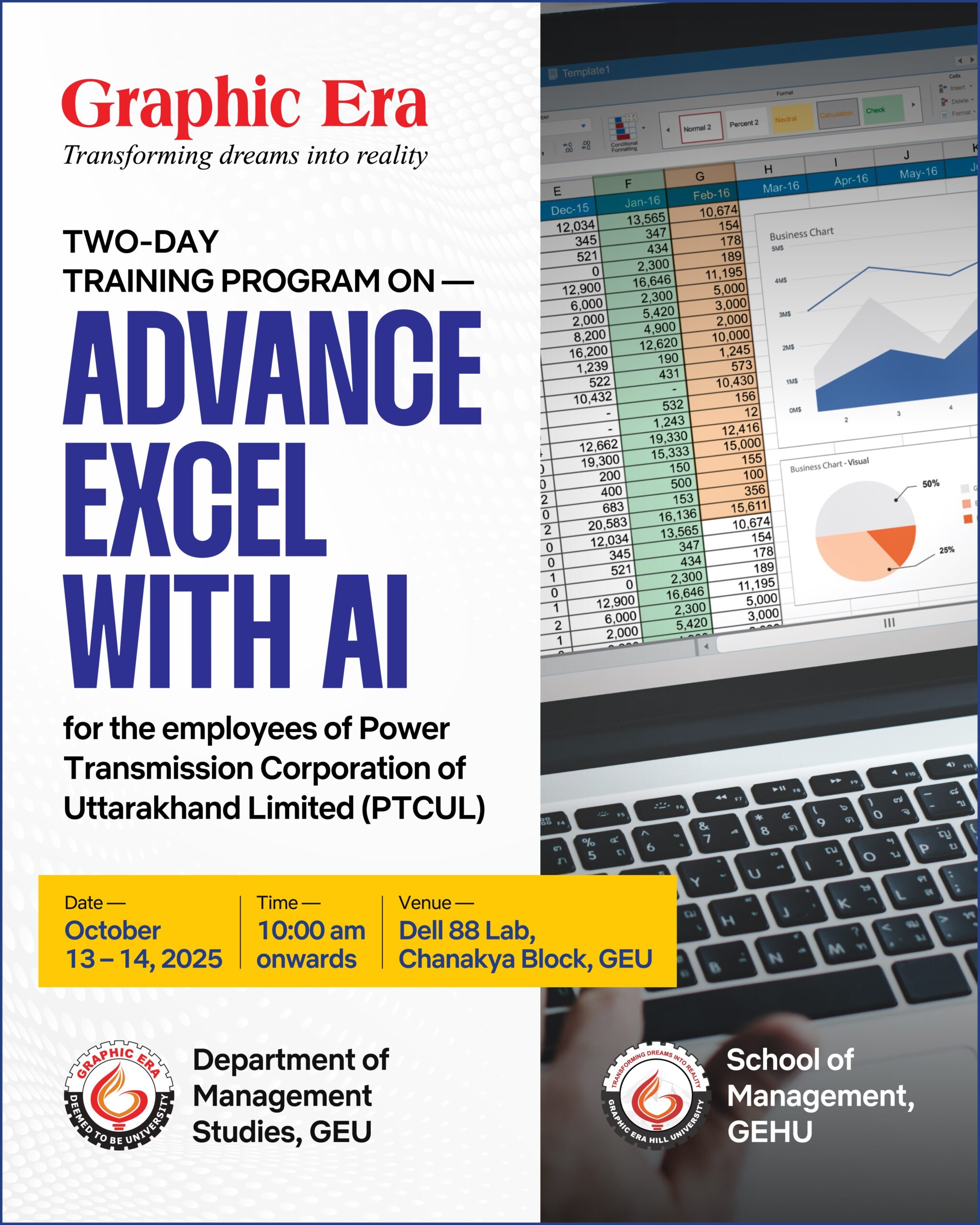
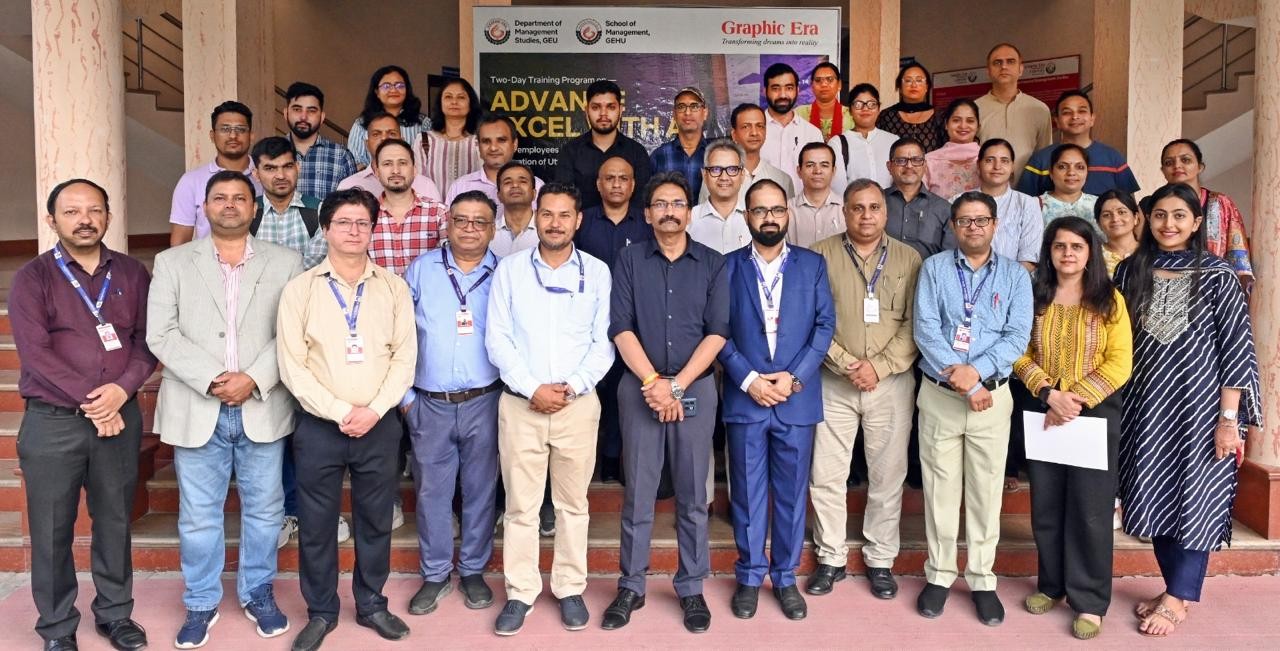
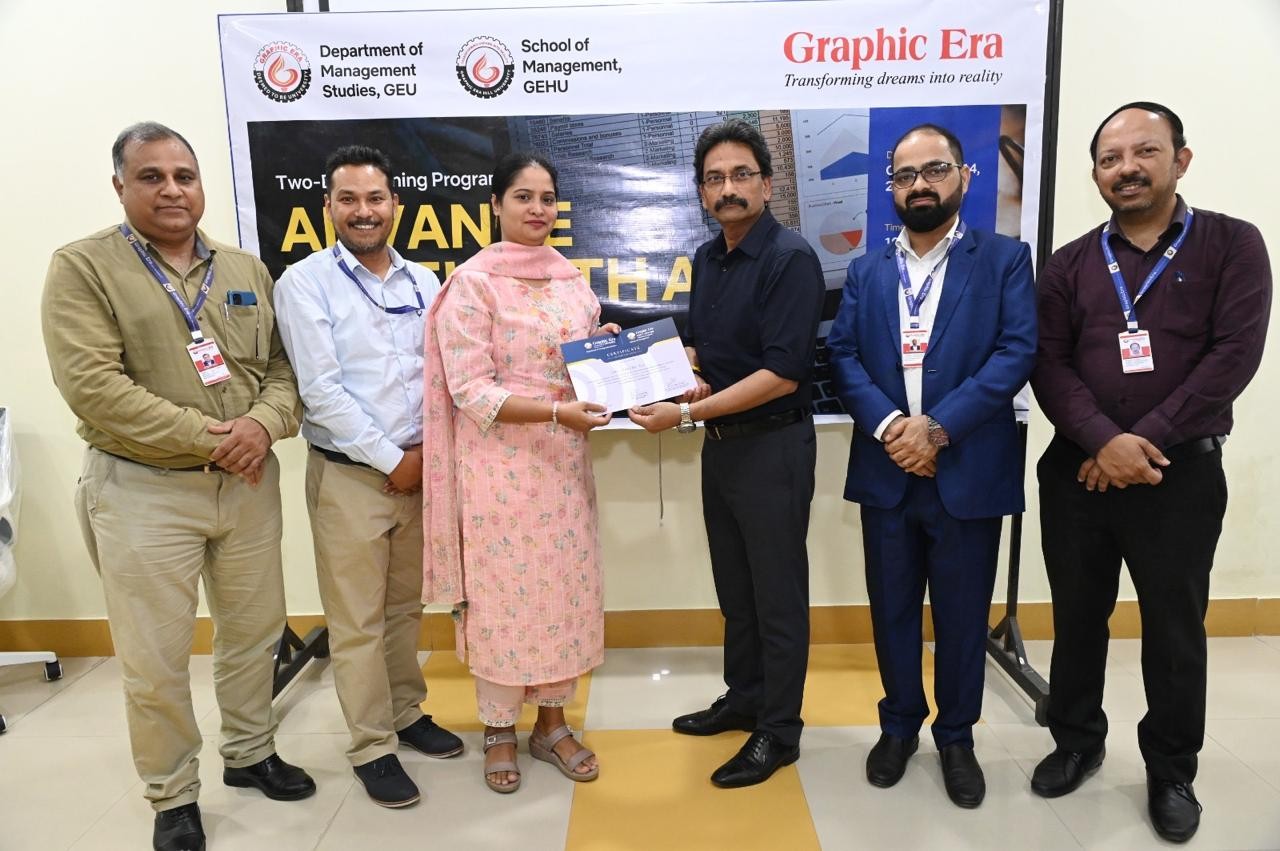
Duration: 2 Days (13/10/2025-14/10/2025)
Objective of the Programme
The objective of the programme was to enhance the analytical, computational, and decision-making skills of PTCUL employees through the application of advanced Excel tools and AI-enabled features for efficient data management and reporting.
Relevance to Professional Practice
The programme is relevant to government and power-sector professionals as it supports effective handling of operational, financial, and administrative data, improves reporting accuracy, and facilitates data-driven decision-making.
Course Content and Learning
Participants were trained in advanced Excel functionalities, including data analysis tools, automated reporting, dashboards, and AI-assisted features for forecasting and insights. Emphasis was placed on practical, hands-on applications aligned with real-time organizational requirements.
Outcomes of the Programme
After completion of the programme, participants demonstrated improved capability in:
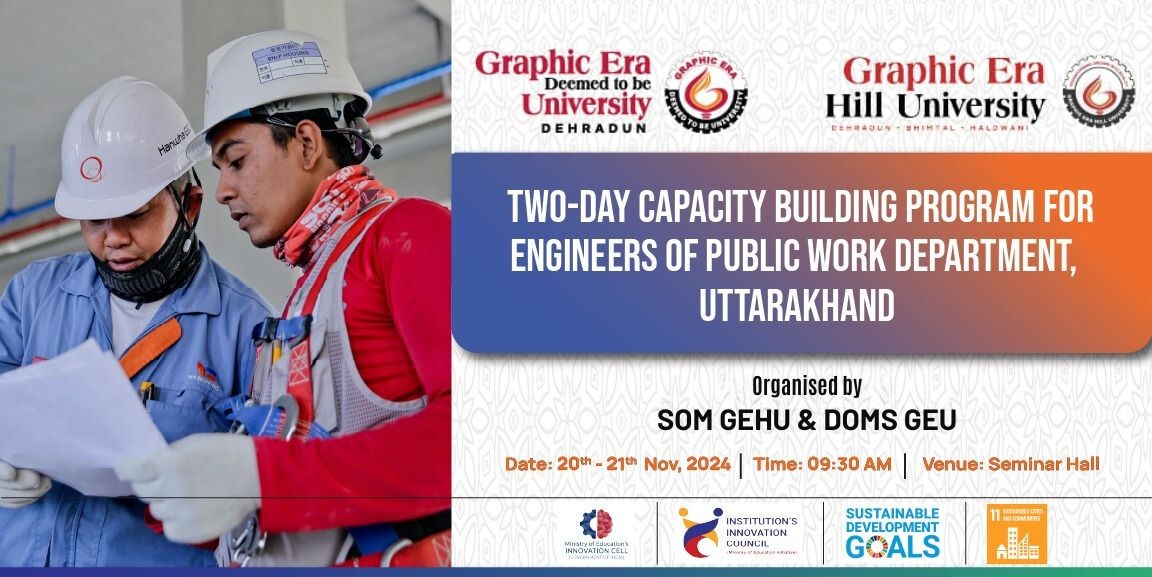
Duration: 2 Days (20/November/2024 – 21/November/2024)
Objective of the Programme
The primary objective of the programme was to enhance the capabilities of PWD engineers in planning, execution, and maintenance of public infrastructure projects. The training aimed to improve efficiency, decision-making, and professional effectiveness through exposure to contemporary project management and employee development practices.
Relevance to Professional Practice
The programme holds significant relevance for PWD engineers as it focuses on strengthening essential competencies required for successful infrastructure delivery. By improving skills related to project planning, coordination, and execution, the programme supports the timely completion of projects and promotes the sustainable development of public infrastructure.
Course Content and Learning
The programme covered key aspects of employee development, including project management practices, quality control, time and cost management, leadership, communication, and ethical responsibilities in public service. The sessions emphasized practical insights and real-world applications.
Outcomes of the Programme
Upon completion, participants were able to:
Strengthen professional and ethical conduct in service delivery
Duration: 3 Days (23/October/2024-25/October/2024)
Objective of the Programme
The objective of the workshop was to update civil engineers with contemporary practices, emerging technologies, and professional standards in civil engineering for effective planning, execution, and management of infrastructure projects.
Relevance to Professional Practice
The programme supports continuous professional development of civil engineers by strengthening technical knowledge, problem-solving abilities, and awareness of current industry practices required for sustainable and quality infrastructure development.
Course Content and Learning
The workshop covered modern construction practices, quality and safety standards, project planning and execution, use of tools and techniques in civil engineering, and best practices followed in the industry. Emphasis was placed on practical insights, case discussions, and real-world applications.
Outcomes of the Programme
After completing the workshop, participants were able to:
4. Adopt best practices aligned with current industry standards.

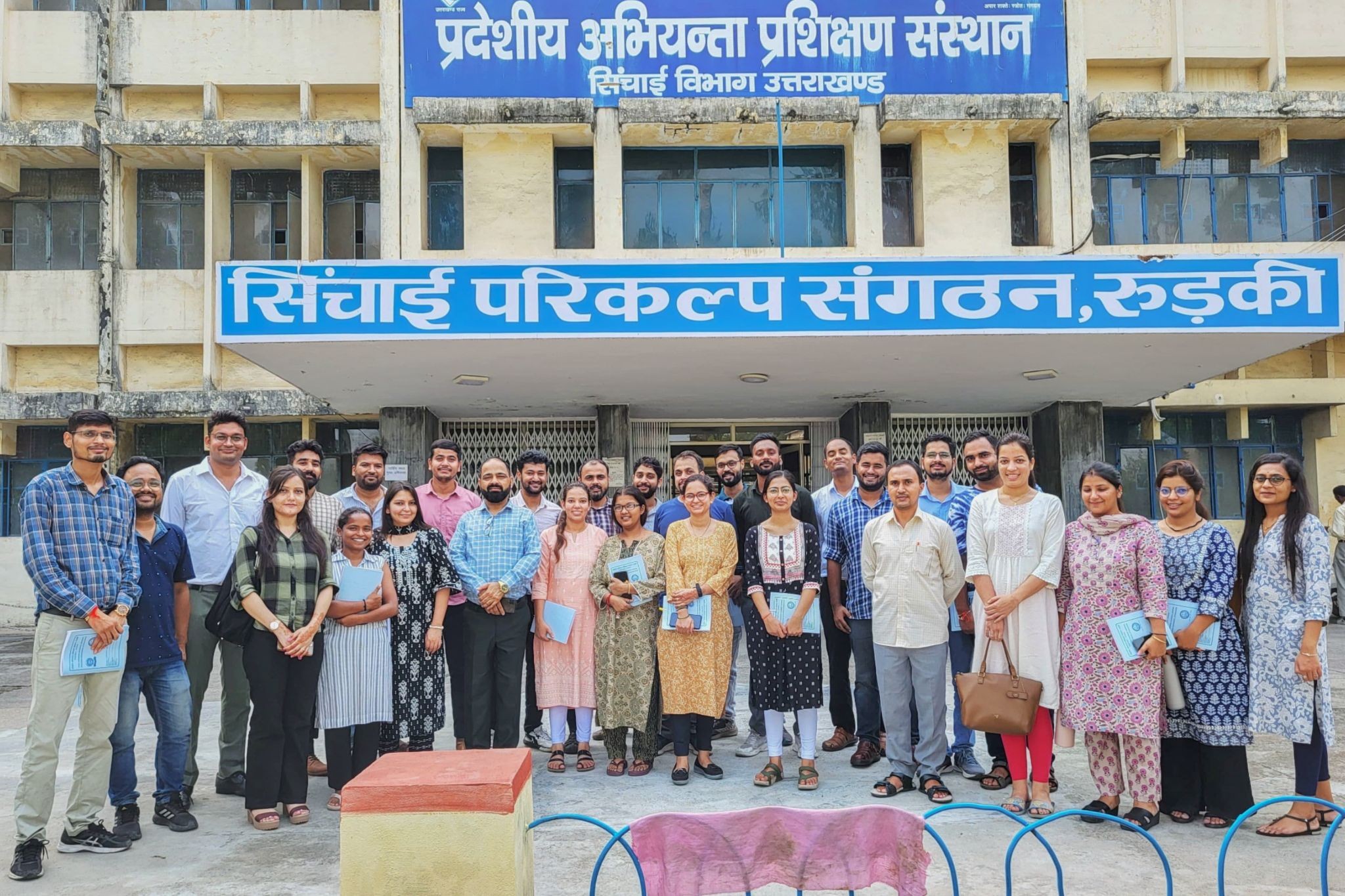
Duration: 30 Days (14/October/2024 – 16/November/2024)
Objective of the Programme
The primary objective of the programme was to build the capacity of Junior Engineers in core civil engineering practices, project planning and execution, quality control, administrative procedures, and professional ethics required for rural development works.
Relevance to Professional Practice
The programme holds high relevance for Junior Engineers engaged in rural infrastructure development. It enhances their ability to plan, execute, and monitor public works efficiently while ensuring quality, accountability, and compliance with government procedures. The training supports improved service delivery and sustainable rural development.
Course Content and Learning
The training covered fundamental and applied aspects of civil engineering, project planning and execution, quality control, site supervision, basic financial and administrative procedures, safety standards, and ethical responsibilities in public service. The residential format facilitated continuous learning, interaction, and practical exposure.
Outcomes of the Programme
Upon completion of the programme, participants demonstrated improved ability to:
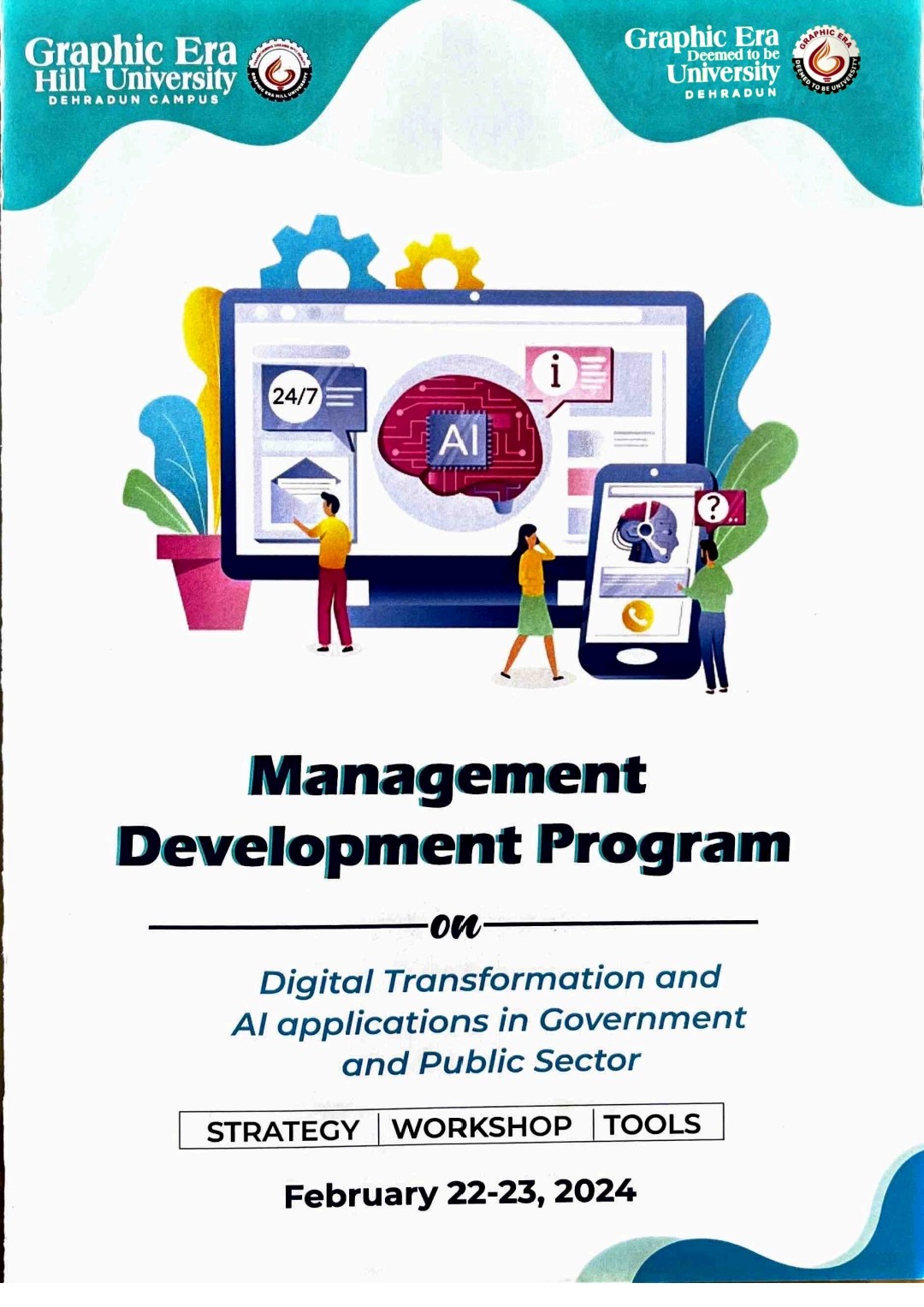
Duration: 2-Days (22/February/2024 – 23/February/2024)
Number of Participants: 50
Objective of the Programme
The primary objective of the programme was to familiarize participants with digital transformation initiatives and AI-based applications that can improve efficiency, transparency, and effectiveness in government and public sector operations. The programme aimed to enhance participants’ understanding of technology-enabled governance and data-driven decision-making.
Relevance to Professional Practice
The programme holds significant relevance for public sector professionals as it supports the adoption of digital tools and AI-based solutions in governance. By strengthening awareness of automation, analytics, and digital platforms, the programme enables better decision-making, improved service delivery, and enhanced citizen engagement.
Course Content and Learning
The programme covered concepts of digital governance, AI applications in public administration, data-driven decision-making, automation of government processes, and ethical considerations in the use of digital technologies. Practical examples and case studies from the public sector were emphasized.
Outcomes of the Programme
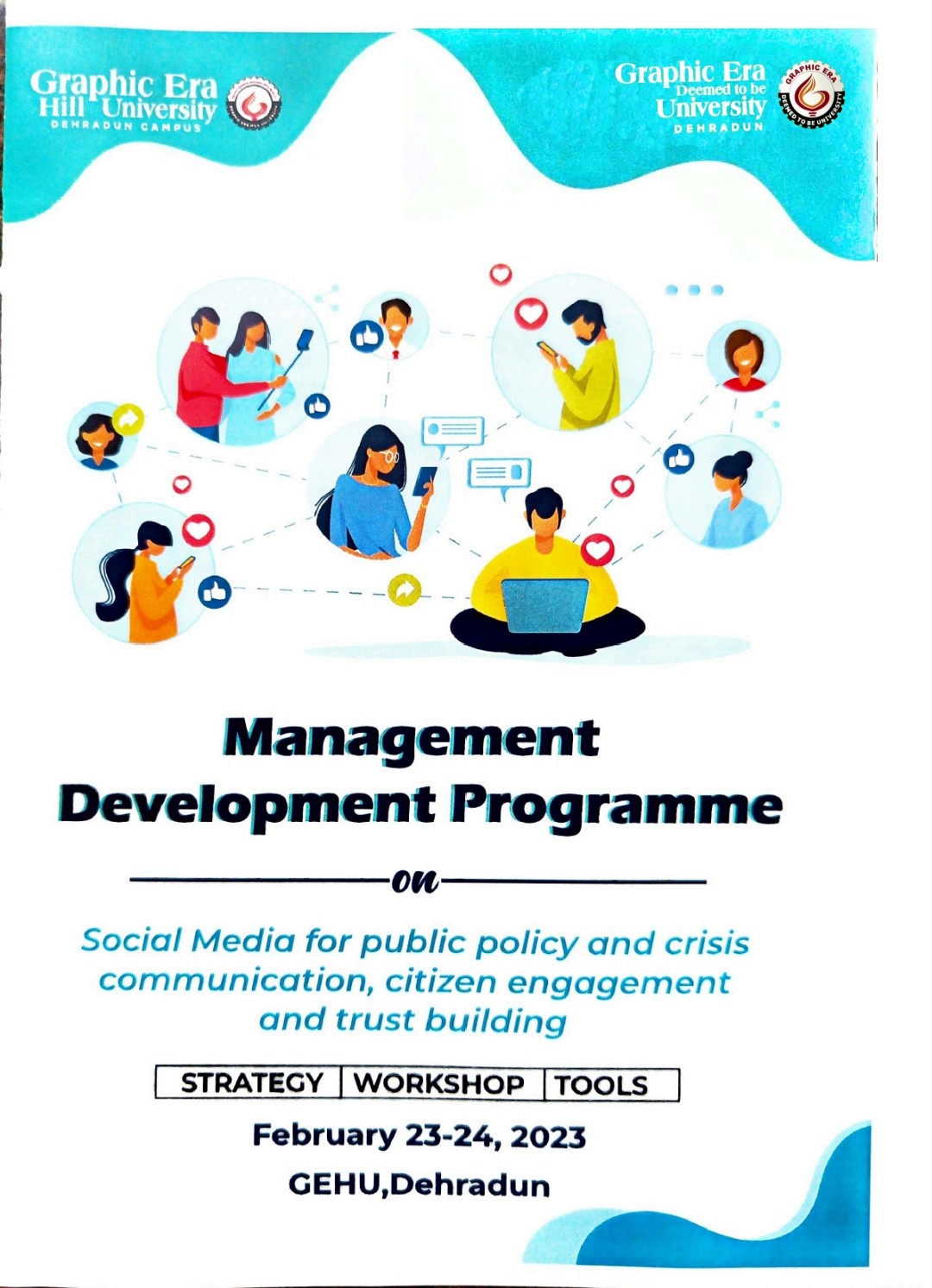
Duration: 2 Days (23/February /2023 – 24/February/2023
Objective of the Programme
The objective of the programme was to develop communication and engagement capabilities of public sector officials through effective use of social media platforms for public policy communication, crisis management, and trust building.
Relevance to Professional Practice
The programme is relevant for government professionals as it strengthens their ability to communicate policies, manage public perception during crises, and engage citizens transparently and responsibly through digital platforms
Course Content and Learning
The programme covered strategic use of social media for public communication, crisis communication frameworks, citizen engagement strategies, content planning, and ethical considerations in digital communication. Real-world public sector case examples were discussed.
Outcomes of the Programme
On completion of the programme, participants were able to: