GEU
facilities
Level
Undergraduate
facilities
Duration
4.5 Years
facilities
Fee Structure
Click Here
Bachelor of Physiotherapy (BPT)

Admission Procedure

Merit prepared on basis of the qualifying exam

Provisional Admission

10+2 with Physics, Chemistry, and Biology

About The Program

The Bachelor of Physiotherapy (BPT) program, regulated by the National Commission for Allied and Healthcare Professions (NCAHP)—widely known as NCHP in academic contexts—is a structured professional healthcare course aimed at producing skilled and ethically responsible physiotherapy professionals.

The program includes four years of academic education followed by a mandatory one-year full-time rotatory internship, providing a balanced integration of theoretical learning and extensive clinical experience. The curriculum focuses on evidence-based practice, patient safety, and professional conduct, equipping graduates to prevent, evaluate, diagnose, and treat movement-related disorders and physical disabilities across all age groups. By incorporating integrated instruction, practical clinical exposure, and community-based rehabilitation, the BPT program prepares graduates to improve functional ability, rehabilitation effectiveness, and overall quality of life, in accordance with NCHP/NCAHP regulations and national healthcare requirements.

Eligibility Criteria for the admissions in the Program

  • 10+2 with Physics, Chemistry, and Biology
  • Minimum age: 17 years
  • Admission as per national/state norms

Teaching Pedagogies

  • Lectures – Conceptual and theoretical learning
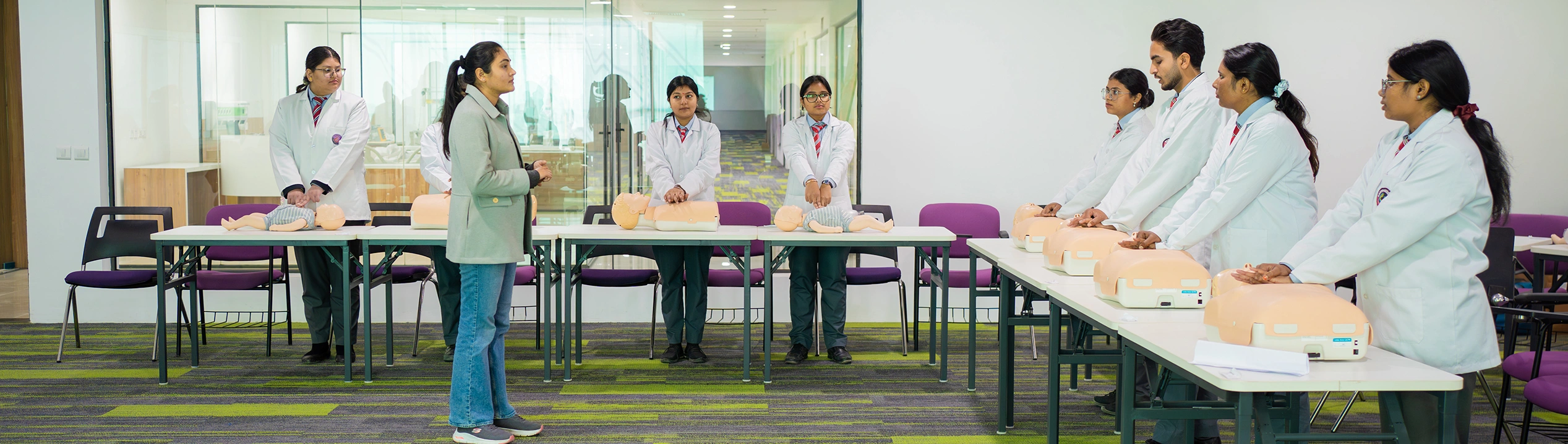
  • Practical Demonstrations – Hands-on skill training
  • Clinical Postings – Real patient exposure
  • Case-Based & Problem-Based Learning – Clinical reasoning
  • Simulation & Bedside Teaching – Safe skill practice
  • Integrated Teaching – Linking theory with clinical practice
  • Seminars & Presentations – Communication skills
  • Research-Based Learning – Evidence-based practice
  • Community-Based Learning – Preventive & rehabilitative care
  • E-Learning & Digital Tools – Blended learning
  • Interprofessional Education – Team-based healthcare
  • Mentorship – Professional and ethical development

Key highlights

Program Overview

  • The Bachelor of Physiotherapy (BPT) is a 4½-year undergraduate professional program (including compulsory internship) designed to develop competent, ethical, and skilled physiotherapists with strong foundations in medical sciences, clinical reasoning, and evidence-based practice.

State-of-the-Art Infrastructure & Laboratories

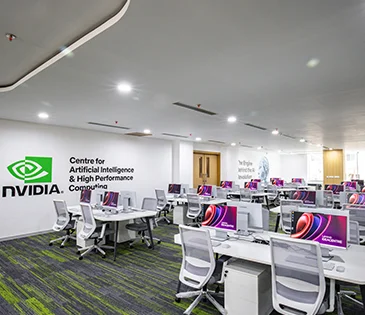
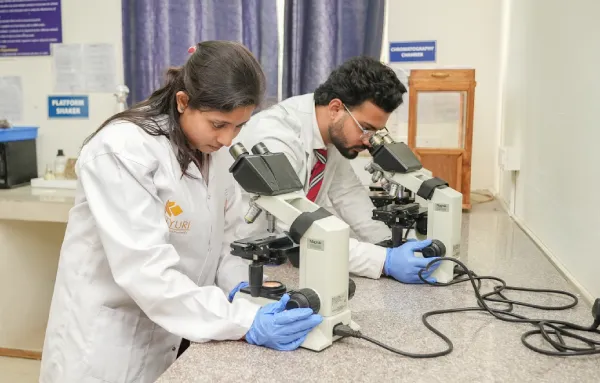
  • Fully equipped Anatomy, Physiology, Exercise Therapy, Electrotherapy, and Biomechanics laboratories
  • Advanced physiotherapy equipment and modalities for hands-on training
  • Well-established clinical facilities for patient assessment and rehabilitation
  • Smart classrooms and digital teaching aids

Clinical Exposure & Training

  • Early and progressive clinical postings across musculoskeletal, neurological, cardiopulmonary, and sports physiotherapy
  • Supervised internship with real patient exposure
  • Training in assessment, treatment planning, and professional communication

Specializations

  • Master of Physiotherapy in Musculoskeletal science
  • Master of Physiotherapy in Neuroscience
  • Master of Physiotherapy in Cardio-Pulmonary science
  • Master of Physiotherapy in Sports science
  • Master of Physiotherapy in Pediatrics and neonatal sciences
  • Master of Physiotherapy in Obstetrics and Gynecology science
  • Master of Physiotherapy in Oncology science
  • Master of Physiotherapy in Community Rehabilitation

Program Educational Objectives (PEOs)

PEO 1

Professional Competence:

Utilize knowledge of biomedical sciences and physiotherapy fundamentals to evaluate and manage movement-related dysfunctions and physical limitations.

PEO 2

Clinical Excellence:

Deliver safe, ethical, and evidence-informed physiotherapy services across preventive, promotive, curative, and rehabilitative healthcare settings.

PEO 3

Lifelong Learning:

Pursue ongoing professional growth through higher education, research involvement, and adoption of advancing technologies to improve patient outcomes.

PEO 4

Ethical & Professional Practice:

Adhere to professional ethics, legal obligations, and patient-focused care in accordance with national healthcare policies and standards.

PEO 5

Communication & Teamwork:

Communicate clearly with patients, caregivers, and collaborate effectively within multidisciplinary healthcare teams for holistic rehabilitation.

PEO 6

Community & Public Health Engagement:

Participate actively in community rehabilitation initiatives, health promotion activities, and disability prevention to meet societal health needs.

PEO 7

Leadership & Entrepreneurship:

Exhibit leadership, administrative, and entrepreneurial capabilities in clinical practice and healthcare organizations.

Program Outcomes (POs)

By the end of the program, the graduate will be able to:

PO 1

Assess and diagnose physical impairments and functional limitations

PO 2

Plan and execute physiotherapy treatment protocols

PO 3

Apply evidence-based physiotherapy practices

PO 4

Promote rehabilitation, fitness, and wellness

PO 5

Work effectively as part of a multidisciplinary healthcare team

PO 6

Demonstrate professional ethics and patient-centered care

Program Specific Outcomes (PSOs)

By the end of the program, the graduate will be able to:

PSO 1

Patient Assessment & Diagnosis

Perform comprehensive physiotherapy assessment, functional evaluation, and clinical diagnosis of movement and physical impairments across lifespan.

PSO 2

Therapeutic Intervention

Design and implement individualized physiotherapy treatment plans using exercise therapy, manual therapy, and electro-physical modalities safely and effectively.

PSO 3

Clinical Reasoning & Evidence-Based Practice

Apply clinical reasoning, critical thinking, and evidence-based practice in physiotherapy management.

PSO 4

Specialized Physiotherapy Care

Deliver physiotherapy services in orthopaedic, neurological, cardio-respiratory, sports, pediatric, and geriatric conditions.

PSO 5

Patient Safety & Ethical Practice

Demonstrate ethical conduct, legal awareness, patient safety, and infection control in accordance with NCHP regulations.

PSO 6

Communication & Interprofessional Practice

Communicate effectively with patients, caregivers, and multidisciplinary healthcare teams for coordinated rehabilitation.

PSO 7

Community-Based Rehabilitation

Plan and participate in community health, disability prevention, and rehabilitation programs.

PSO 8

Professional Development & Lifelong Learning

Engage in continuous learning, research, and professional growth to meet evolving healthcare needs.

Career Pathways

  • Clinical Physiotherapist (Hospitals, Clinics, Rehabilitation Centers)
  • Specialist Physiotherapist (Orthopaedics, Neurology, Cardio-Pulmonary, Sports, Pediatrics)
  • Community & Public Health Physiotherapist
  • Sports & Fitness Physiotherapist
  • Academic Physiotherapist (Teaching & Training Institutions)
  • Research Assistant / Clinical Researcher
  • Private Practitioner / Entrepreneur (Physiotherapy Clinic)
  • Industrial & Occupational Health Physiotherapist
  • Rehabilitation Consultant (NGOs, Disability Centers)
  • Higher Education (MPT, PhD, Fellowships)

Notes: Semester 1 and 2 are applicable only for regular entry students. Lateral entry students begin from Semester 3.

Course Curriculum

Year 1

  • Basic sciences (Anatomy, Physiology, Biochemistry)
  • Introduction to Physiotherapy
  • Communication
  • Ethics

Year 2

  • Movement Sciences (Kinesiology, Biomechanics)
  • Pathology
  • Exercise & Electrotherapy
  • Public Health Basics

Year 3

Clinical Subjects

  • Medicine
  • Surgery
  • Obstetrics & Gynecology
  • Cardiothoracic
  • Orthopaedics
  • Neurology

Year 4

  • Advanced Clinical Practice (Neuro, Cardio-Respiratory, Geriatrics, Paediatrics)
  • Evidence-Based Practice
  • Research Basics
  • Dissertation

Year 5

  • Compulsory Structured Internship in Multiple Departments
  • Competency-Based Assessments

Frequently Asked Questions

A professional healthcare course that trains students to treat physical dysfunctions through exercise and physical therapy techniques.

4½ years (4 years academic + 6 months compulsory internship).

10+2 with Physics, Chemistry, and Biology.

Yes, it is recognized under NCHP / NCAHP.

Yes NEET compulsory & depends on state/university admission rules.

Anatomy, Physiology, Biomechanics, Exercise Therapy, Electrotherapy, and Clinical Physiotherapy.

Yes, 1-year rotatory internship is mandatory.

Yes, you can pursue MPT, PhD, or specialized certifications.

Clinical practice, sports physiotherapy, academics, research, and private practice.

Yes, it offers job stability, growth, and national recognition.

Contact Us

GEU
GEU

566/6, Bell Road, Society Area,
Clement Town, Dehradun,
Uttarakhand