
GEU
facilities
Level
Undergraduate
facilities
Duration
3.5 Years
facilities
Fee Structure
Click Here
Bachelor of Medical Laboratory Technology (BMLT)

Admission Procedure

Merit prepared on basis of the qualifying exam

Provisional Admission

Successful completion of 10+2 with Physics, Chemistry, Biology or equivalent qualification

About The Program

The Bachelor of Medical Laboratory Technology (BMLT) is an undergraduate allied healthcare program designed to develop skilled, competent, and ethically responsible medical laboratory professionals capable of supporting healthcare delivery systems through accurate laboratory investigations.

The curriculum includes training in clinical biochemistry, hematology, microbiology, histopathology, immunology, and transfusion science, with emphasis on hands-on laboratory practice, biosafety, quality control, and ethical standards. Graduates are trained to perform pre-analytical, analytical, and post-analytical laboratory procedures accurately using modern diagnostic techniques.

Eligibility

  • Successful completion of 10+2 with Physics, Chemistry, Biology or equivalent qualification
  • Minimum aggregate marks as prescribed by regulatory authorities
  • Admission through institutional or state-level entrance procedures (as applicable)
  • Medical fitness as per institutional norms

Teaching Pedagogies

Teaching pedagogies include:

  • Classroom lectures for theoretical concepts
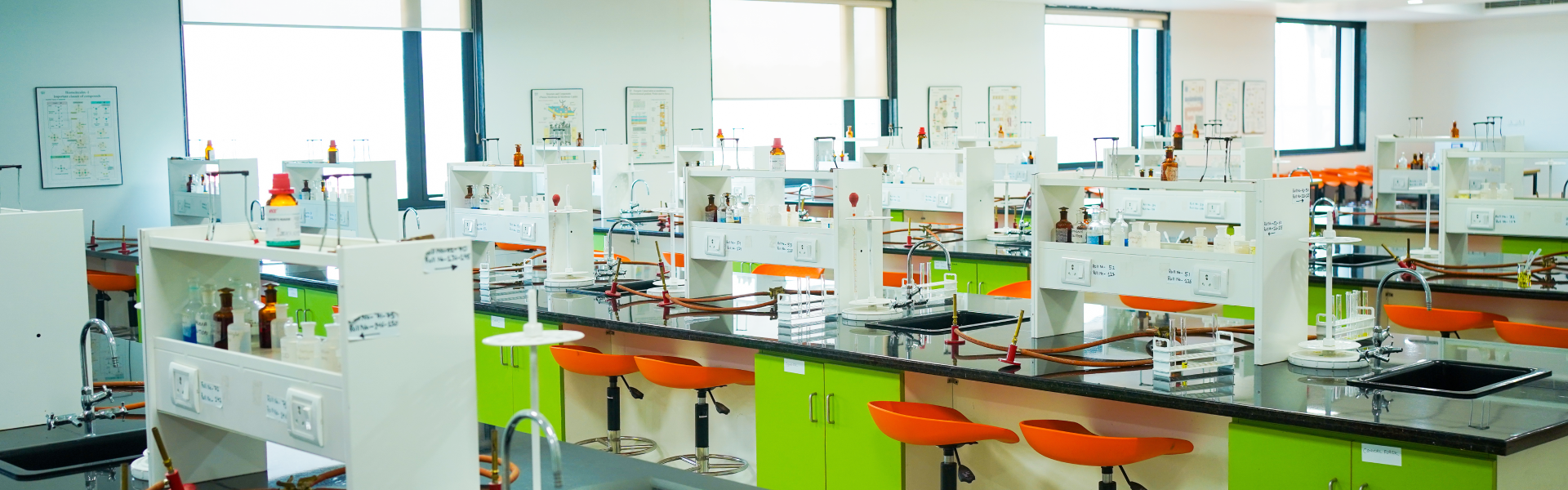
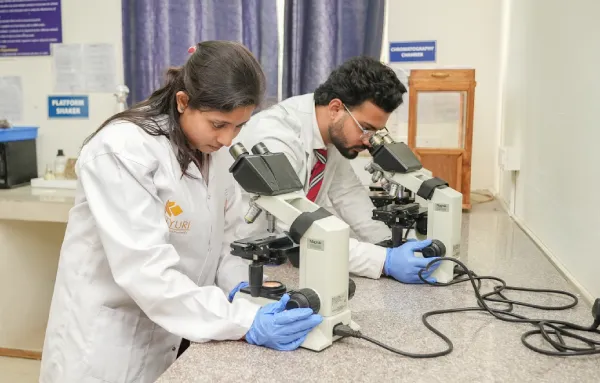
  • Hands-on laboratory practical for skill development, and demonstrations of diagnostic techniques.
  • Case-based learning, problem-based discussions, and seminars are used to enhance analytical and critical thinking skills.
  • Clinical training and hospital internships provide real-time exposure to laboratory practices, while projects and assignments promote independent learning, professionalism, and ethical responsibility.

Key highlights

The Bachelor in Medical Laboratory Technology (BMLT) is an undergraduate professional degree program designed to train students in the scientific, technical, and analytical aspects of clinical laboratory diagnostics. Medical Laboratory Technologists are integral members of the healthcare team, contributing significantly to disease diagnosis, treatment monitoring, prevention, and research. The BMLT program equips students with strong theoretical foundations, hands-on laboratory skills, ethical values, and professional competencies required in modern diagnostic laboratories.

  • Healthcare-focused professional degree essential for disease diagnosis and patient care.
  • Strong foundation in pathology, microbiology, hematology, biochemistry, immunology, and molecular diagnostics.
  • Extensive hands-on laboratory training with emphasis on SOPs and skill competency.
  • Competency-based and industry-oriented curriculum aligned with modern diagnostic practices.
  • Mandatory clinical postings and internship in hospital laboratories.
  • Training in biosafety, quality control, quality assurance, and laboratory ethics.
  • Exposure to automation, digital diagnostics, and laboratory information systems (LIS).
  • Student-centered teaching methods including case-based and problem-based learning.
  • High employability in hospitals, diagnostic labs, blood banks, and research institutes.
  • Opportunities for higher education and research (MMLT, MSc, PhD).

Specializations

The BMLT program provides exposure and competency development in the following laboratory disciplines:

  • Clinical Pathology
  • Hematology
  • Clinical Biochemistry
  • Medical Microbiology
  • Immunology and Serology
  • Blood Banking and Transfusion Medicine
  • Histopathology and Cytotechnology

Program Educational Objectives (PEOs)

Graduates of the BMLT program will:

PEO1

Function as competent Medical Laboratory Technologists.

PEO2

Apply professional ethics, quality assurance, and patient safety principles in laboratory services.

PEO3

Demonstrate lifelong learning and adaptability to emerging laboratory technologies.

PEO4

Collaborate effectively with healthcare teams to support diagnosis, treatment, and disease prevention.

Program Outcomes (POs)

On successful completion of the program, graduates will be able to:

PO1

Apply foundational knowledge of biomedical sciences and laboratory principles in diagnostic testing.

PO2

Perform pre-analytical, analytical, and post-analytical laboratory procedures accurately.

PO3

Operate, maintain, and troubleshoot laboratory instruments and automated analyzers.

PO4

Implement quality control, quality assurance, and laboratory accreditation standards. 

PO5

Communicate effectively with clinicians, healthcare professionals, and patients. 

PO6

Demonstrate professional ethics, legal awareness, and social responsibility.

PO7

Work efficiently as part of a multidisciplinary healthcare team.

PO8

Apply critical thinking and problem-solving skills in laboratory diagnosis.

PO9

Use information technology and laboratory information systems effectively.

PO10

Engage in self-directed learning and professional development.

Program Specific Outcomes (PSOs)

Graduates of the BMLT/BMLS program will be able to:

PSO1

Perform routine and specialized investigations in biochemistry, hematology, microbiology, pathology, and blood banking.

PSO2

Analyze and validate laboratory results to support accurate clinical diagnosis.

PSO3

Apply laboratory safety, infection control, and biomedical waste management protocols.

PSO4

Assist in quality audits, documentation, and laboratory management activities. 

Career Pathways

Graduates may pursue careers as:

Medical Laboratory Technologist

Laboratory Technician / Technical Officer

Laboratory Supervisor

Quality Control Assistant

Blood Bank Technician

Research Assistant

Teaching Assistant (with higher qualifications)

Higher education (MMLS, specialized certifications, research programs)

Notes: Semester 1 and 2 are applicable only for regular entry students. Lateral entry students begin from Semester 3.

Frequently Asked Questions

The Bachelor of Medical Laboratory Technology / Bachelor of Medical Laboratory Science (BMLT/BMLS) is an undergraduate allied health program that trains students to perform laboratory investigations essential for disease diagnosis, treatment, and monitoring.

Graduates will be able to:

  • Perform routine and specialized laboratory investigations
  • Handle and maintain laboratory instruments and analyzers
  • Apply quality control and biosafety measures
  • Interpret laboratory results accurately
  • Communicate effectively with healthcare professionals
  • Follow ethical and legal standards in laboratory practice

Yes. A mandatory 6-month clinical internship is an integral part of the program

Student assessment includes:

  • Internal assessments (theory and practical)
  • End-semester examinations
  • Skill-based evaluations
  • Continuous formative assessment during laboratory work and internship

Graduates can work as:

  • Medical Laboratory Technologists
  • Laboratory Technicians / Technical Officers
  • Blood Bank Technologists
  • Quality Control Assistants
  • Research Assistants
  • Laboratory Supervisors (with experience)
  • They may be employed in hospitals, diagnostic laboratories, research institutes, and healthcare industries.

Yes. Graduates are eligible to pursue Master’s programs in Medical Laboratory Science (MMLS) or related specializations, as well as research and academic career pathways.

The program is of 3.5 years duration, which includes 3 years of academic instruction and 6 months of compulsory clinical internship.

Students are trained in ethical conduct, confidentiality, record keeping, and data protection, including safe use of laboratory information systems.

Yes. Students are introduced to laboratory management principles, including inventory control, equipment maintenance, documentation, and personnel coordination.

Yes. Students are encouraged to participate in seminars, workshops, guest lectures, and continuing education programs to enhance professional development.

Contact Us

GEU
GEU

566/6, Bell Road, Society Area,
Clement Town, Dehradun,
Uttarakhand