GEU
facilities
Level
Undergraduate
facilities
Duration
3 Years
B.Com  (Hons.) with Certified Public Accountant

Admission Procedure

Merit prepared on basis of the qualifying exam

Provisional Admission

Yes, Under the process of Provisional Admission, a candidate may proceed for provisional admission on the basis of his/ her 12th preboard marks for undergraduate program and aggregate of all semesters for post graduate students. This shall be indicative of the marks that may be secured by the candidate in his/ her 12th Examination/ Graduation within a permissible range of 7%.

About The Program

The B.Com (Honors) with CPA (Certified Public Accountant – US) program is designed for students who aim to build a high-impact accounting and finance career in the United States and global markets.

The CPA credential, awarded by American Institute of Certified Public Accountants (AICPA), is considered the gold standard in the accounting profession. It is often a mandatory requirement for accounting, audit, tax, and advisory roles in the US. This program equips students with strong foundations in Corporate Accounting, Financial Reporting (US GAAP), Auditing, Taxation, Risk Management, and Business Analytics, aligned with US regulatory and compliance standards.

Eligibility

Class XII pass from any Indian Board / Equivalent Foreign Board

Teaching Pedagogies

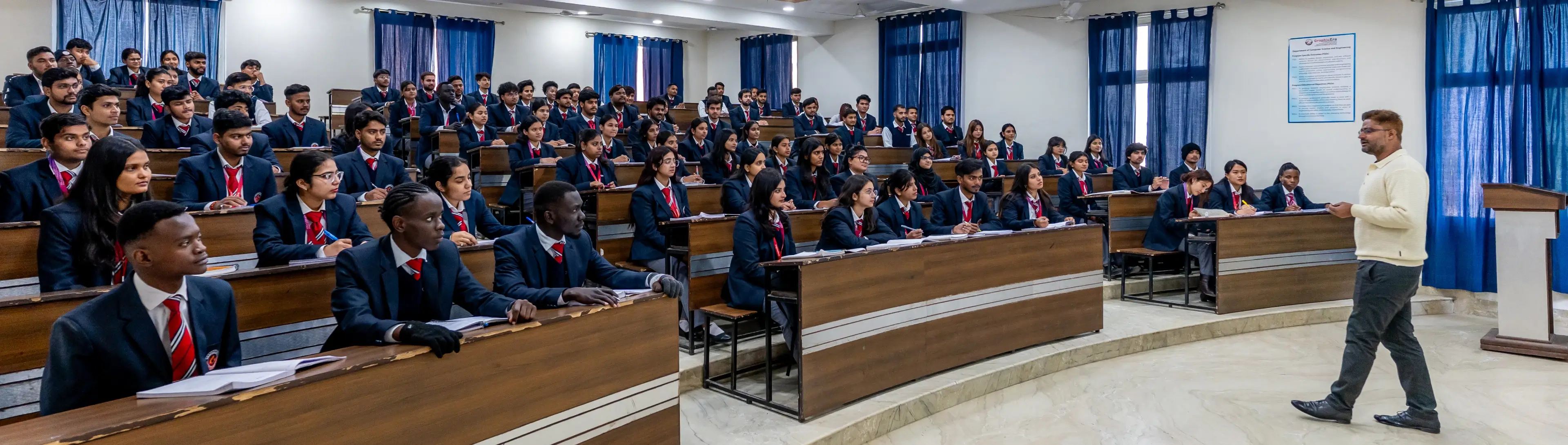
The Department of Commerce follows a blended, outcome-oriented teaching approach designed to build conceptual clarity, analytical ability and professional competence. The major pedagogical practices include:

  • Interactive Lectures
    Structured classroom sessions that focus on core concepts, real business scenarios and contemporary developments in commerce, taxation, finance and policy.
  • Case-Based Learning
    Use of Indian and Global business cases to develop decision-making, problem-solving and analytical reasoning in students. Students learn to evaluate alternatives decision making and to justify conclusions.
  • Practical Labs & Hands-on Training
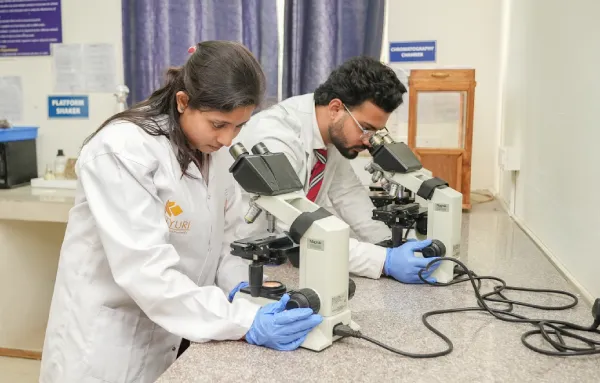
    MS Excel, Advanced Excel, Tally, SPSS, machine learning, AI Tools, Financial modelling and other digital tools are taught through practice-based sessions to build computational, analytical and data-handling skills.
  • Experiential and Project-Based Learning
    Minor and major research projects, field studies, surveys, industry problem-solving tasks and internships are part of curriculum that translate theory into action.
  • Collaborative Learning
    Group discussions, team assignments, role plays, simulations and peer learning sessions that develop teamwork, leadership and communication skills.
  • Industry Exposure
    Guest lectures, workshops, masterclasses, industrial visits and interactions with practitioners from accounting, banking, fintech, auditing and taxation sectors are regular features of the program.
  • Research-Integrated Teaching
    Faculty incorporate current research, emerging trends and data-driven analysis in classroom teaching. Students use statistical tools and research methodolgy from early semesters.
  • ICT-Enabled Learning
    Use of LMS, digital resources, e-content, online databases, simulation tools and blended learning models to enhance flexibility and access.
  • Continuous Assessment & Feedback
    Regular quizzes, assignments, presentations, problem sets and classroom activities are conducted with constructive feedback to improve learning outcomes.
  • Value-Based & Holistic Pedagogy
    Courses on ethics, human values, sustainability and constitutional responsibilities ensure students develop strong moral and civic foundations.

Program Educational Objectives (PEOs)

The Programme Educational Objectives (PEOs) of a B. Com (Hons) program are designed to prepare graduates for successful careers, professional growth, and responsible citizenship within the commerce and business sectors. The core PEO’s are:

PEO 1: Career and Professional Success

Establish a successful career

To prepare graduates for employment in public or private organizations, or as entrepreneurs, across various fields such as Accounting, Taxation, Finance, Banking, Auditing, Marketing, and E-Commerce.

Attain professional growth

To equip students with the analytical, research, and technical skills necessary to identify, analyse, and solve complex business problems in dynamic situations.

Pursue higher education/certifications

To provide a strong foundation that enables graduates to pursue advanced degrees (like M. Com or MBA) or professional certifications (like CA, CMA, CPA,ACCA etc.). 

PEO 2: Skills Development

Develop critical thinking and problem-solving skills

To foster the ability to analyze different professional scenarios critically and independently, and make informed, data-based decisions.

Enhance communication and leadership abilities: 

To demonstrate effective oral and written communication, teamwork, and leadership skills necessary for managing and leading diverse teams and business operations in a multicultural environment.

Install an entrepreneurial mind-set: 

To develop the skills needed to plan and launch independent start-ups and entrepreneurial ventures.  

PEO 3: Ethics and Social Responsibility

Uphold high ethical standards: 

To ensure graduates uphold integrity and professional ethics, recognize different value systems, and accept responsibility for their decisions.

Promote social responsibility and sustainability:

To cultivate an awareness of social, economic, and environmental issues and a commitment to socially responsible and sustainable business practices. 

PEO 4: Lifelong Learning

Cultivate a mind-set of lifelong learning: 

To acquire the ability to engage in continuous, self-directed learning and adapt to evolving business environments and technological advancements. 

Program Outcomes (POs)

PO1

Problem-solving

Students will acquire basic knowledge of principles and processes underlying Biotechnology and will be apply the learning to real life situations as well solve different problems in the field.

PO2

Critical thinking and creativity

Students will develop essential analytical skills and apply reasoning/thought to innovate and conduct independent work in Commerce areas.

PO3

Research-related skills

Student will be able to appropriately use statistical and other analytical tools and techniques, to develop methodology which enable the student to problematize, synthesize, and articulate issues and design research proposals.

PO4

Team work and leadership qualities

Student will function effectively as an individual, and as a member or leader in diverse teams, and in multidisciplinary settings.

PO5

Skill development

Student will acquire knowledge and skills necessary for working independently, acquire organizational skills, and time management to set self-defined goals and targets with timeline. Student will acquire skills necessary for pursuing learning activities throughout life aimed at personal development, meeting social, economic, and cultural objectives, and adapting to changing demands of the workplace.

PO6

Modern tool usage

Student will be able to demonstrate the capability to create, select, and apply appropriate techniques, resources, and modern IT tools and software for data analysis in a variety of learning and work situations.

PO7

Multicultural competence and inclusive spirit

Student will be able to demonstrate knowledge of multiple cultural values and beliefs with perspective to respect, honour cultural diversity, gender sensitivity, adopt gender neutral approach, as well as empathy for the less advantage/ differently-abled or learning disabilities.

PO8

Value inculcation

The students will be able to demonstrate the acquisition of knowledge and attitude that are required to embrace and practice constitutional humanities, ethics, human and moral values and perform responsible global citizenship. Also, the student will acquire knowledge to understand regulatory norms, and will adopt ethical practices in the pursuit of science.

PO9

Autonomy, responsibility and accountability

The student will be able to apply knowledge, understanding or skills independently and exercise responsibility as well as accountability in applying knowledge and or skills in work.

PO10

Society, environment and sustainability

Students will be able to demonstrate the acquisition of and ability to apply the knowledge, skills, attitude and values for mitigating the problems related to society, health, environment, food security, sustainable development.

PO11

Communication

Students will acquire oral and communication skills and will be able to communicate effectively with the community and with society at large, such as, being able to comprehend and write effective reports and design documentation, make effective presentations, and give and receive clear instructions

PO12

Community engagement and service

The student will be able to demonstrate the capability to engage in community-services/activities for promoting the wellbeing of society.


Career Pathways

The department’s professional linkages create a strong pipeline for internationally recognized certifications:

Students interested in global finance roles can pursue the CPA pathway after meeting eligibility requirements. CPA-qualified professionals are in demand in Big 4 firms, multinational corporations, and international audit and compliance roles.

They have various career opportunities as:

Accounting & Financial Management

Taxation & Auditing

Banking & Insurance Sector

Marketing & Sales Roles

Human Resource Management

Fintech & Data-Driven Roles

Entrepreneurship & Start-ups

Research & Higher Studies

Public Sector & Competitive Exams

Global Professional Pathways

Notes: Semester 1 and 2 are applicable only for regular entry students. Lateral entry students begin from Semester 3.

Course Curriculum

Semester 1

  • International Finance
  • Business Mathematics
  • Principles and Practices of Management
  • Micro Economics
  • Fundamentals of Computer
  • MS-Excel
  • Business Communication
  • Environmental Science (Mandatory Non-Graded Course)

Semester 2

  • Human Resource Management
  • Minor Stream Course I – International Financial Accounting and Reporting I
  • Business Statistics
  • Macro Economics
  • Computerized Accounting
  • Universal Human Values – II
  • General Proficiency
  • Indian Constitution (Mandatory Non-Graded Course)

Semester 3

  • Business Law
  • International Financial Accounting and Reporting II
  • Minor Stream Courses II
  • Open Elective I
  • Career Skills – I
  • Minor Stream Courses III
  • Introduction to Research Tools
  • Indian Knowledge System (Mandatory Non-Graded Course)

Specializations

  • Working Capital Management
  • Market Research
  • Human Resource Development
  • Bank Management
  • Conceptual Foundations of Accounting

Semester 4

  • Corporate Law
  • International Taxation I
  • Open Elective II
  • Minor Stream Courses IV
  • Career Skills – II
  • Digital Marketing
  • Introduction to FinTech
  • General Proficiency

Specializations

  • Investment Analysis and Portfolio Management
  • Consumer Behaviour
  • Training and Development
  • Accounting in Banking and Insurance Institutions
  • Accounting Standards

Semester 5

  • Income Tax Law and Practices
  • International Business
  • Open Elective Course III
  • International Auditing I
  • Minor Stream Courses V
  • Career Skills – III

Specializations

  • Types and Sources of Financing for Startup Business
  • Customer Relationship Management
  • Industrial Relations
  • Risk Management in Banking and Insurance Industry
  • Management Accounting

Semester 6

  • GST Laws
  • FinTech Applications in Financial Services
  • International Auditing – II
  • Industrial Law
  • Minor Stream Courses VI
  • Introduction to R

Specializations

  • Export–Import Procedures and Documentation
  • Marketing of Services
  • Organizational Behaviour
  • Banking and Insurance Laws
  • Specialized Accounting

Semester 7

  • Project Management
  • Cryptocurrency and Decentralized Finance
  • Minor Stream Courses VII
  • Minor Research Project and Statistical Tools

Specializations

  • Financial Derivatives
  • Integrated Marketing Communication
  • Team Building and Leadership
  • Retail Banking
  • Corporate Tax Planning

Semester 8

  • Strategic Management
  • Sustainable Development, Innovation and Creativity
  • Minor Stream Courses VIII
  • Major Research Project and Academic Project Writing

Frequently Asked Questions

B.Com (Honors) is a 3-year programme of 6 semesters.

B.Com (Honors with Research) is a 4-year programme of 8 semesters.

Yes. The curriculum follows NEP 2020 guidelines with Outcome Based Education (OBE) and the Choice Based Credit System (CBCS).

Students can choose minors/specializations in Finance, Marketing, Human Resource Management, Banking & Insurance, or Auditing, Accounting & Taxation.

Students can exit with a Certificate after Year 1, Diploma after Year 2, Honors Degree after Year 3, and Honors with Research after Year 4.

Yes. The department has MOUs with ISDC for ACCA and Wiley and MILES for CMA and CPA to support global professional qualifications.

Students enrolled in the B.Com (Hons) ACCA program at Graphic Era (Deemed to be University) are eligible for 9 out of 13 ACCA papers as exemptions, provided they complete the prescribed curriculum under the ACCA-integrated pathway offered through the University’s MoU with ISDC. These exemptions typically cover the Knowledge and Skill modules, allowing students to begin ACCA from the Professional level papers.

CMA does not offer subject-wise exemptions, but B. Com (Hons) curriculum and Wiley training provide strong preparation for Part 1 and Part 2 exams, reducing learning time and increasing pass probability.

Students must complete an internship as part of the Mandatory Non-Graded Course and also work on research or industry projects in higher semesters.

Through guest lectures, industrial visits, expert workshops, internships, and interaction with professionals from banking, auditing, taxation, fintech and analytics sectors.

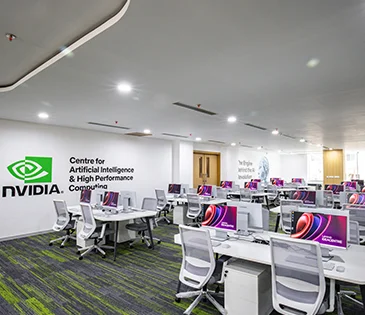
Students have access to IT labs, an advanced library, research software, digital learning tools, industry exposure and dedicated academic support.

University follows continuous evaluation system which includes Continuous Internal Evaluation (CIE), Mid-Semester Examination (MSE), and End-Semester Examination (ESE).

A blend of interactive lectures, case studies, ICT-enabled learning, skill labs, collaborative activities, situation handling, vignettes and project-based learning.

Yes. Graduates can pursue M. Com, MBA, CA, CMA, ACCA, CPA, or research pathways including Ph.D., especially those completing the 4-year Honors with Research.

More flexibility, specialization choices, skill-based courses, stronger industry relevance, research integration, digital tools, project work and better career readiness aligned with NEP 2020.

Contact Us

GEU
GEU

566/6, Bell Road, Society Area,
Clement Town, Dehradun,
Uttarakhand