


GEU
facilities
Level
Undergraduate
facilities
Duration
4 Years
B.Des. (Fashion Apparel and Textile Design)

Admission Procedure

Merit will be prepared on the basis of the qualifying exam.

Provisional Admission

Seats to be allocated based on projected scores (12th), calculated based on the candidate’s 10th percentage.

About The Program

The seamless integration of human and artificial cognition leveraged through Emerging Technologies is the core of our practice. This dynamic, transdisciplinary method builds a foundation for leading innovation in user-environment-centered problem-solving and creative product development.

The Bachelor of Design (B.Des.) program is a comprehensive undergraduate program that cultivates innovative, ethical, and user-centered designers, empowering them with enhanced Human Intelligence (HI) for creative problem-solving in a technologically advanced world. The curriculum of this animation course in Dehradun is structured to foster well-rounded creative minds, developing key aspects of HI by integrating design theory and practice across physical, digital, and visual domains, and by encouraging an awareness of AI's potential impact on design.

Students embark on a developmental journey, progressing from building a strong foundation in design fundamentals (including visual communication, design thinking, and materials & processes) to acquiring specialized skills and practical knowledge. The program emphasizes a human-centered approach, encouraging students to conduct user research, analyze complex problems with social and cultural awareness, and create effective, sustainable, and accessible solutions that meet both user and business needs.

Whether focusing on designing tangible products, shaping digital experiences, or crafting compelling visual narratives, students learn to apply human-centered design methodologies, utilize diverse tools and technologies (including emerging AI tools), and consider the strategic value of design in achieving business goals and addressing societal challenges. The B.Des. program prepares graduates to be versatile, adaptable, and ethically responsible designers, equipped to shape the future of products, experiences, and communication in a rapidly evolving world, contributing to both human well-being and economic growth.
Teaching Pedagogies

The pedagogy for the Bachelor of Design (B.Des.) in Fashion Apparel and Textile Design moves beyond conventional garment construction and surface ornamentation toward material innovation, sustainable systems thinking, and hybrid craftsmanship. The learning journey is structured to bridge the tactile richness of loom-to-drape fabrication with virtual fashion engineering and circular lifecycle design.

Experiential & Studio-Based Learning

  • Atelier Culture & Rigorous Crits: Learning centers around tactile atelier studios equipped for weaving, printmaking, digital fabrication, and 3D draping. Continuous open-floor reviews and jury critiques mirror international design houses, training designers to articulate creative choices, interpret critique, and refine visual identity.
  • Tactile & Form Iteration: Emphasizes material-first prototyping. Students explore form, silhouette, and movement directly on mannequins using calico toiles, raw weaves, and zero-waste pattern drafting before committing to final fabrics and high-grade materials.
  • Integrated Fashion & Textile Pipeline: The curriculum mirrors the complete couture and industrial supply chain: fiber selection and surface creation (weave, knit, print, dye) through silhouette development, precision tailoring, technical documentation, and final collection staging.

Future-Ready & Tech-Integrated Pedagogy

  • Virtual Prototyping & Digital Draping: Students master advanced 3D fashion modeling software (such as CLO 3D and Browzwear) to simulate true-to-life fabric physics, drape, fit, and tension digitally, dramatically reducing physical sampling waste and accelerating production iteration.
  • AI-Augmented Surface & Form Generation: Generative design tools are integrated for rapid pattern iteration, custom print sequencing, mood curation, and predictive color formulation, freeing the designer to focus on creative direction, storytelling, and craftsmanship.
  • Smart Textiles & Material Innovation: Explores biomaterials, bio-dyes, smart performance fibers, and additive manufacturing (3D-printed embellishments and seamless bonding), preparing students to design responsive, next-generation apparel.

Cognitive, Cultural & Circular Systems

  • Circular Lifecycle & Eco-Restorative Design: Moves beyond basic eco-awareness to full lifecycle analysis (LCA). Students learn cradle-to-cradle design methodologies, post-consumer textile upcycling, mono-material engineering for recyclability, and low-impact dyeing chemistries.
  • Craft Cluster Immersion & Heritage Semiotics: Grounded in indigenous craft ecosystems and artisanal practices, students deconstruct traditional textile structures and symbolic motifs to ethically synthesize ancestral craft techniques with contemporary global silhouettes.
  • Live Industry Briefs & Transmedia Showcasing: Direct collaborations with mills, export houses, and global fashion labels ground designs in real manufacturing constraints, market costing, and brand strategy. Capstone outputs emphasize holistic brand identity, extending from runway and editorial styling to digital lookbooks and meta-retail environments.

Design education embraces the synergy of AI and HI, forging a 'hyper-transdisciplinary' approach. This empowers learners to tackle complex challenges through deep integration of knowledge, AI-augmented creativity, and ethically guided innovation. Cultivating both AI literacy and enhanced human intelligence will be central to shaping impactful design solutions for tomorrow's world.

Building-in Areas of Expertise in Innovation

Design Strategy: Defines the overarching vision and framework for design decisions to achieve specific goals.

  • User research
  • Design direction
  • Culture & context
  • Design impact
  • Socio-business design
  • Strategic design

Design Tools & Technologies: Equips students with the practical skills to translate concepts into tangible outputs using relevant software and methods.

  • Design thinking
  • CAD softwares
  • Human intelligence & Artificial intelligence
  • Ergonomics
  • Prog. languages
  • XR Lab (AR+VR+MR)
  • Emerging technologies

Design Innovation: Fosters creative problem-solving and the development of novel and impactful design solutions.

  • Design process
  • HCI - Human Factors
  • Inclusive Design
  • Systems thinking
  • Managing uncertainty
  • Value realization & creation

Experience Design: Focuses on understanding and shaping meaningful and user-centric interactions across touchpoints.

  • Multi-sensory design
  • Human interface
  • Nature & sustainability
  • Design futures
  • Product lifestyle
  • Holistic User Experience

Business Design Management: Integrates design thinking with business principles for strategic decision-making and value creation.

  • Business tools for Design
  • Leadership & change maker
  • Design management
  • Professional communication
  • Promotion & awareness
  • Business strategy
  • Project management

Infrastructure

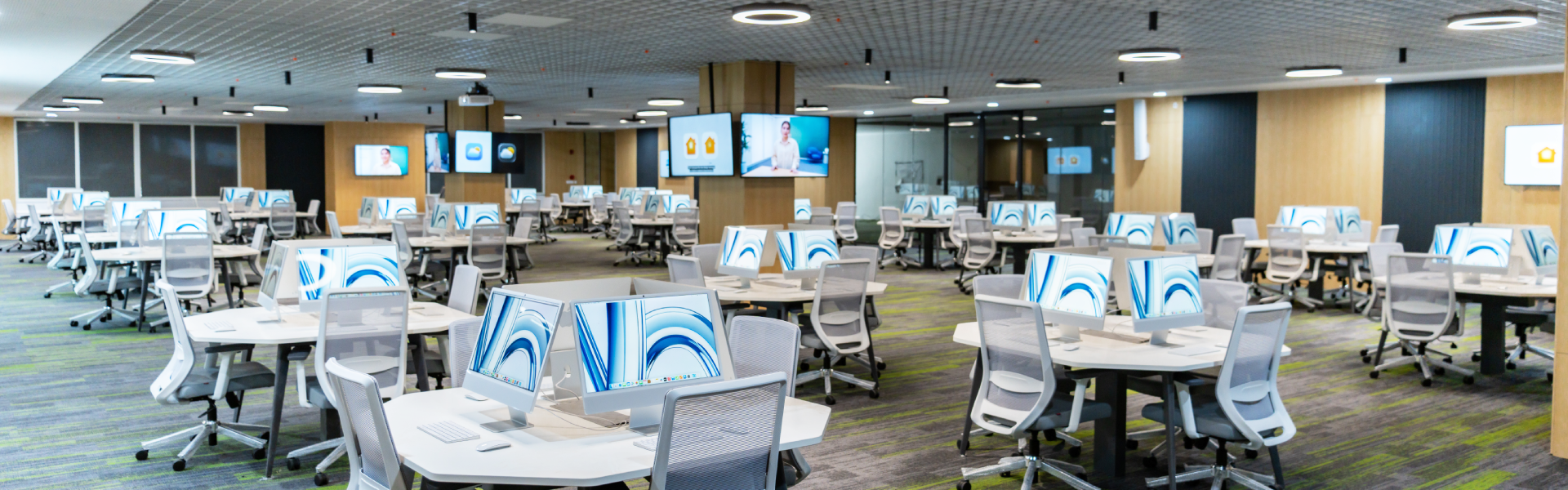
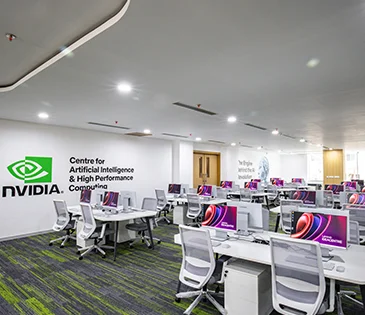
  • Garment Construction & Assembly Studios
  • Pattern Making & Draping Studios
  • Weaving & Loom Shed (Handlooms, Table Looms & Dobby Systems)
  • Textile Dyeing & Wet Processing Laboratory
  • Printmaking & Surface Ornamentation Studio (Screen, Block & Heat Transfer)
  • Digital Textile Printing & CAD Studio
  • 3D Fashion Simulation & Virtual Prototyping Lab (CLO 3D / Browzwear)
  • Knitting & Fiber Exploration Lab
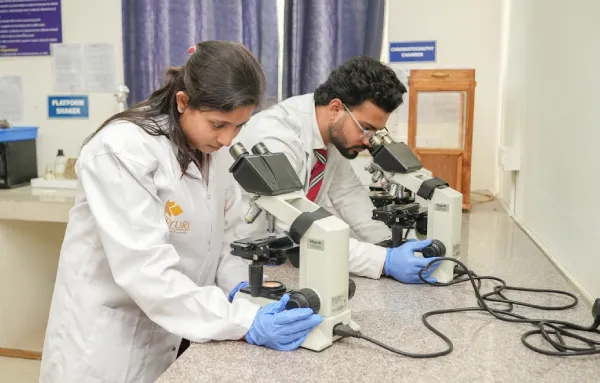
  • Material & Fabric Testing Laboratory
  • Textile & Trim Resource Library
  • Fashion Styling, Editorial & Photography Studio
  • Laser Cutting & Ultrasonic Fabric Bonding Facility
  • Circular Fashion, Upcycling & Zero-Waste Workshop
  • Fitting & Visual Merchandising Display Studio

Key Highlights

Fashion Design, Textile & Surface Design, Apparel Production & Technical Design, 3D Digital Fashion / Virtual Prototyping, Print & Pattern Development, Fashion Styling & Direction, Sustainable & Circular Fashion, Costume Design, and many more

Specializations

Stream : B.Des. (Fashion Apparel and Textile Design)

  • This specialization trains designers to bridge material craft, silhouette engineering, and sustainable innovation, fusing Human Intelligence (HI) with advanced design methodologies to create meaningful, future-ready apparel and textile systems. It balances aesthetic sensibility with technical rigor, exploring tactile fabrication, surface storytelling, and contemporary form-making.
  • The curriculum advances from foundational drawing, fiber science, and basic draping to advanced pattern engineering, surface development (weave, print, knit, and dye), 3D virtual fashion simulation, and circular design systems. Students work through the complete product pipeline, from material conception and zero-waste pattern cutting to sample assembly, digital fit testing, and collection staging, leveraging generative digital tools and sustainable practices alongside traditional artisanal techniques.
  • Students learn to articulate distinct visual identities, design functional and bespoke garments, engineer custom textiles, implement circular lifecycle models, and navigate the commercial dynamics of global fashion, luxury, and smart materials.
  • This prepares graduates to lead across global ateliers, textile mills, digital fashion houses, and conscious apparel brands as visionary designers, material innovators, and creative directors.

Program Educational Objectives (PEOs)

PEO1

To prepare graduates for successful professional careers across the global fashion, apparel, and textile industries by instilling strong core competencies in material innovation, silhouette engineering, surface design, and end-to-end collection development.

PEO2

To develop responsible, ethical, and visionary design practitioners who integrate sustainable systems, circular design methodologies, and heritage craft preservation while collaborating effectively across multi-disciplinary creative and manufacturing environments.

PEO3

To equip students with the critical inquiry, research aptitude, and strategic thinking required to pursue advanced academic study, scholarly research, or entrepreneurial ventures in fashion, textiles, and allied creative disciplines.

PEO4

To instill a commitment to lifelong learning, enabling graduates to anticipate and adapt to evolving industry paradigms, emerging digital tools, 3D virtual prototyping, and smart material technologies.

Program Outcomes (POs)

PO1

Analyzing

Examine and deconstruct complex apparel and textile challenges by analyzing fiber properties, fabric behavior, market trends, and socio-cultural shifts using critical inquiry and contextual awareness.

PO2

Understanding

Understand consumer ergonomics, body diversity, and cultural semiotics through empathy-driven research to develop inclusive, functional, and user-centric apparel and textile solutions.

PO3

Applying

Apply foundational and advanced principles of pattern engineering, draping, surface ornamentation, and digital design tools to execute precise, technically viable fashion and textile prototypes.

PO4

Evaluating

Assess and validate material performance, garment fit, quality standards, and design viability through structured physical testing, digital simulation, and field-based user feedback.

PO5

Synthesizing

Integrate material science, artisanal craft traditions, aesthetic expression, and commercial feasibility into cohesive, production-ready fashion collections and textile ranges.

PO6

Reflecting

Demonstrate professional ethics, self-awareness, and cultural sensitivity, respecting intellectual property and honoring craft communities in both individual and collaborative practices.

PO7

Creating

Conceptualize and develop original, trend-resilient, and forward-looking fashion silhouettes, print collections, and woven or knit structures using iterative experimentation and rapid prototyping.

PO8

Sustaining

Evaluate the ecological, social, and economic footprints of apparel production, implementing circular design frameworks, low-impact wet processing, zero-waste patterning, and ethical lifecycle practices.

PO9

Collaborating

Function effectively within multi-disciplinary teams—alongside pattern masters, merchandisers, textile technicians, and brand strategists—to manage end-to-end design and manufacturing pipelines.

PO10

Communicating

Articulate design concepts, technical specifications, and brand narratives persuasively across visual, verbal, digital, and editorial formats for diverse industry and client stakeholders.

PO11

Evolving

Engage in independent, lifelong learning by continuously adapting to emerging industry paradigms, including 3D virtual prototyping, AI-augmented design workflows, smart bio-materials, and evolving global supply chains.

Program Specific Outcomes (PSOs)

PSO1

Apply principles of design theory, silhouette construction, and visual storytelling to develop compelling fashion concepts and cohesive apparel collections.

PSO2

Develop original textile structures and surfaces using weave, knit, print, dye, and surface ornamentation techniques, integrating them into functional and expressive fashion applications.

PSO3

Apply principles of flat pattern engineering, creative draping, and garment assembly to translate two-dimensional textile concepts into well-fitted, three-dimensional physical and virtual forms.

PSO4

Design apparel and textile collections rooted in consumer behavior, anthropometry, trend forecasting, and brand identity to address diverse market segments.

PSO5

Use industry-standard CAD, 3D fashion simulation (such as CLO 3D), and digital surface design tools to prototype, simulate fabric physics, and streamline pre-production workflows.

PSO6

Demonstrate understanding of ethical sourcing, circular lifecycle systems, and cultural preservation in material selection, craft cluster collaboration, and garment manufacturing.

PSO7

Work effectively in collaborative production environments alongside textile mill technicians, pattern makers, merchandisers, and creative directors from concept to showroom delivery.

PSO8

Reflect critically on fit analyses, wear testing, and market feedback to iterate and refine garment ergonomics, material performance, and commercial viability.

PSO9

Explore emerging paradigms such as smart responsive textiles, bio-fabricated materials, AI-assisted design workflows, and virtual meta-fashion to advance sustainable apparel practices.

PSO10

Demonstrate professionalism, technical agility, and an entrepreneurial mindset to navigate and lead within the evolving global fashion and textile ecosystem.

Career Prospects

Fashion, apparel, and textile design is an expansive, evolving discipline that operates at the intersection of creative culture, material science, and global manufacturing. Graduates from this program find opportunities across established and emerging sectors where material innovation, human wearability, aesthetic direction, and sustainable systems are essential, including:

  • Luxury & Ready-to-Wear Fashion Houses
  • Textile Mills & Fabric Manufacturing
  • E-Commerce & Quick Commerce Fashion Retail
  • Apparel Export Houses & Buying Agencies
  • Smart Textiles & Wearable Technology
  • Sports, Athleisure & Performance Wear
  • Automotive & Aerospace Interior Trims
  • Home Fashion, Furnishings & Lifestyle Design
  • Media, Publishing & Fashion Journalism
  • Handloom, Craft Clusters & Artisanal Cooperatives
  • Creative Direction & Visual Branding Studios
  • Trend Forecasting & Consumer Analytics Agencies
  • Independent Design Labels / Fashion Entrepreneurship
  • Entertainment, Film, OTT & Theatre (Costume Design)
  • Gaming & Virtual Worlds (Digital Assets & Avatars)
  • Sustainable Development & Circular Economy Hubs

Graduates of the B.Des. in Fashion Apparel and Textile Design program are versatile practitioners equipped with both physical craftsmanship and digital agility. Potential career paths and roles include:

  • Fashion Designer (Apparel / Prêt / Couture)
  • Surface Ornamentation / Print & Pattern Designer
  • Creative Director / Art Director
  • Pattern Engineer / Creative Drafter
  • Fashion Merchandiser & Range Planner
  • Fashion Buyer & Sourcing Manager
  • Smart Textiles & Wearables Developer
  • Costume Designer (Cinema, OTT & Stage)
  • Trend Forecaster & Color Strategist
  • Craft Cluster & Community Liaison Designer
  • Fashion Brand Strategist & Content Creator
  • Visual Merchandiser (Retail & Flagship Spaces)
  • Production Manager / Quality Assurance Lead (Apparel)
  • Independent Label Founder / Design Studio Entrepreneur
  • 3D Digital Fashion Designer / Virtual Cloth Prototyper
  • Textile Designer (Woven, Printed & Knitted Textiles)
  • Fashion Stylist & Visual Director (Editorial / Commercial)
  • Apparel Technical Designer / Garment Technologist
  • Sustainable Fashion Strategist / Circular Lifecycle Designer

Course Curriculum

Course Name

Semester 1

  • Visualisation and Representation
  • Elements and Principles of Design
  • Materials and Processes
  • Digital Interface and Visualisation
  • Creative Coding
  • Healthy Living and Fitness
  • Environmental Science

Semester 2

  • Scenario and Perception Sketching
  • Storytelling and Narrative Structures
  • Systems Thinking
  • Industry Visit
  • The Constitution of India
  • Nature Studies

Semester 3

  • Fiber Science and Yarn Exploration
  • Indian Knowledge System
  • Fashion Illustration and Figure Anatomy
  • Research Methodology
  • Summer Project
  • Universal Human Values and Professional Ethics
  • Surface Ornamentation and Dyeing Techniques

Semester 4

  • Weaving Structures and Loom Practices
  • Nature Studies
  • Digital Textile Design and Print Exploration
  • History of World Art, Costumes, and Textiles
  • Pattern Making and Garment Construction I
  • Indian Culture (Ethics and Values in Ancient Indian Traditions)

Semester 5

  • Creative Draping and Silhouette Development
  • 3D Digital Fashion Simulation and Virtual Prototyping
  • Pattern Making and Garment Construction II
  • Craft Cluster Research and Documentation
  • Industry Visit

Semester 6

  • Advanced Surface Design: Knits and Technical Textiles
  • Circular Fashion and Sustainable Material Systems
  • Apparel Range Development and Collection Planning
  • Fashion Merchandising and Sourcing

Semester 7

  • Business Integration
  • Graduation Project Case Study
  • Design Research Publication
  • Business Strategy
  • Industrial Internship
  • Entrepreneurship and Innovation in Design

Semester 8

  • Graduation Project
  • Design Colloquium

List of Electives - Course Names

Semester 1

  • Form and Function
  • Object Studies and Technical Drawing
  • Interaction Fundamentals
  • Design Thinking Methods
  • Visual Composition and Layout
  • Basics of Typography and Letterform
  • Animation Principles
  • Gesture and Anatomy Sketching

Semester 2

  • Form and Function Integration
  • Physical Computation
  • Biophilic Design
  • Typography Design
  • Composition in Context
  • Design for and with AI
  • Sensing Nature
  • Factory Visit
  • Responsive Interface and Interaction Design

Semester 3

  • Design Research for Product Design
  • Design Research Methods
  • Visual Research and Analysis
  • Language of Moving Images
  • Sustainable Materiality and Circularity

Semester 4

  • Manufacturing and Assembly Techniques
  • UX Content Strategy
  • Design for Publication
  • Animation Production Pipeline
  • More than Human Design
  • Spatial Media and Interactive Narratives

Semester 5

  • Product Packaging and Detailing
  • Data-Driven UX Design
  • Packaging Graphics
  • 2D and 3D Animation
  • Game Development
  • Studio Visit
  • Interior Immersive Technologies

Semester 6

  • Product Interface Design
  • Behavioral Design and Gamification
  • Design for Social Change
  • Craft of Direction
  • Design for Inclusive Spaces and Cities

Contact Us

GEU
GEU

566/6, Bell Road, Society Area,
Clement Town, Dehradun,
Uttarakhand