
GEU
facilities
Level
Undergraduate
facilities
Duration
3.5 Years
facilities
Fee Structure
Click Here
B.Sc. Operation Theatre (BOTT)

Admission Procedure

Merit prepared on basis of the qualifying exam

Provisional Admission

Seats to be allocated based on projected scores(12th), calculated basis the candidate’s 10th percentage – only meritorious students

About The Program

The Bachelor of Operation Theatre Technology (BOTT) is a 3.5-year undergraduate allied health sciences program designed in accordance with the guidelines of the National Commission for Allied and Healthcare Professions (NCAHP).

An operation theatre (OT) technologist forms an intrinsic part of any hospital. To become a trained professional one must undertake Operation theatre technology course. An OT professional is the one, who facilitates the surgical procedures, planned and emergency both, by preparing in advance the equipment that are necessary for any surgical procedures. He/she also looks after all the work and management of the operation theatre which includes managing the patients in & out of operation theatre, looking after all the surgical equipment, arrangement of operation theatre table, dressing table, anesthesia table as well as management of the staff. As the surgical branch has various specialties including General Surgery, OBG, Cardiac, Ortho and genito-urinary, the OT technologist needs to know about these various specialties.

Eligibility

As per NCAHP and institutional guidelines:

Educational Qualification:10+2 (Science) with Physics, Chemistry, and Biology

Minimum Marks:As prescribed by regulatory bodies / university norms

Age Limit:As per NCAHP or state/university admission policies

Medical Fitness:Candidate must be medically fit for clinical training

Teaching Pedagogies

The design pedagogy is aimed at empowering future designers with building-in enhanced human intelligence (HI) for creative problem-solving with AI assisted holistic curriculum that cultivates intelligence, capacity, skills, tools, method, technique, and crucial additional factors in a developmental sequence, fostering well-rounded creative minds.

The program adopts a competency-based education model emphasizing both theory and clinical practice as recommended by NCAHP.

Lecture Materials

  • Comprehensive lecture notes.
  • Presentations and slides.
  • Handouts and reading materials.

Demonstration Models

  • Anatomical models /simulators for demonstrating surgical techniques.
  • Simulators for practicing instrument handling and airway management.

Surgical Instruments

  • Real surgical instruments (including laparoscopic, arthroscopic and Robotic instruments) for hands-on practice
  • Simulated instruments for familiarization.

Audiovisual Aids

  • Educational videos demonstrating surgical procedures.
  • Interactive simulations or virtual reality tools.

Anesthesia Equipment

  • Anesthesia machines.
  • Monitors for vital signs and anesthesia administration.
  • Airway management devices.
  • Intravenous equipment.

Sterile Technique Supplies

  • Sterile drapes.
  • Surgical gowns and gloves
  • Sterile instruments and supplies.

Monitoring Equipment

  • Monitors for vital signs, oxygen saturation, and end-tidal carbon dioxide levels, Neuromuscular monitoring, BIS.

Simulation Training

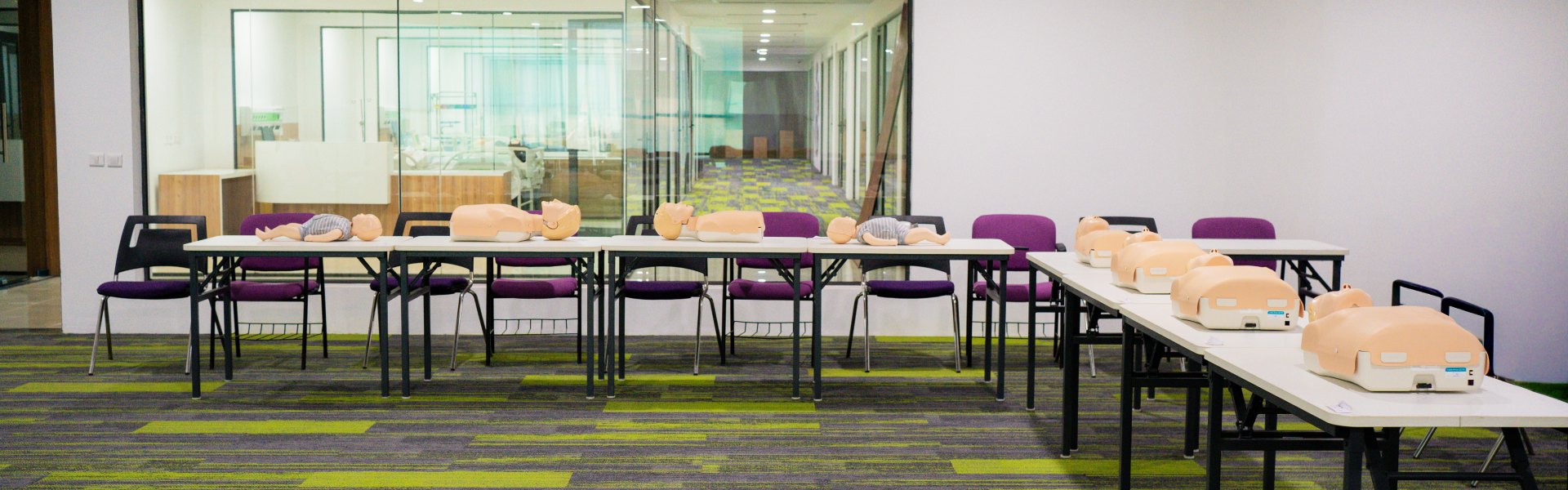
  • High-fidelity patient simulators or mannequins for I.V Cannulation, Intubation, BLS & ACLS.

Clinical Observations

  • Opportunities to observe actual surgical procedures.
  • Assistance in real-world clinical settings.
  • Case Studies and Scenarios:

Customized case studies and scenarios for problem-solving and decision-making practice.

Assessment Tools:

  • Workshop, Quizzes, and written exams.
  • Practical assessments on instrument handling, sterile technique, and anaesthesia administration.
  • Simulated emergency scenarios for performance evaluation.

Specialization

The specializations within a Bachelor of Operation Theatre Technology program focus on different aspects of surgical support and patient care within the operating room environment. These include:

  • Surgical Procedures and Techniques
  • Anaesthesia Technology
  • Sterilization and Infection Control
  • Operation Theatre Management
  • Patient Care and Monitoring
  • Medical Equipment Management
  • Critical Care and Emergency Management
  • Medical Ethics and Laws

Program Educational Objectives (PEOs)

The curriculum has been designed with a focus on performance-based outcomes pertaining to different levels. They will be articulated as learning goals (why we teach this) and learning objectives (what the students will learn). Using the framework, students will learn to integrate their knowledge, skills and abilities in a hands-on manner in a professional healthcare setting. These learning goals are divided into nine key areas, though the degree of required involvement may differ across various levels of qualification and professional cadres:

PEO1

Clinical care

PEO2

Communication

PEO3

Membership of a multidisciplinary health team

PEO4

Ethics and accountability at all levels (clinical, professional, personal and social)

PEO5

Commitment to professional excellence

PEO6

Leadership and mentorship

PEO7

Social accountability and responsibility

PEO8

Scientific attitude and scholarship (only at higher levels-Master‟s & Ph.D.)

PEO9

Lifelong learning

Program Outcomes (POs)

After graduation, students will have the ability to:

PO1

Demonstrate ability to prepare and maintain Operation Theater.

PO2

Demonstrate ability to maintain equipment support in an acute care environment.

PO3

Identify and move to maintain a sterile field.

PO4

Follow infection control policies and procedures.

PO5

Manage and maintain theater equipment.

PO6

Demonstrate ability to prepare the patient for operative procedures.

PO7

Provide intra-operative equipment and technical support.

PO8

Demonstrate skills and knowledge to assist anesthetist in handling emergencies outside of OT Room.

PO9

Manage hazardous waste and follow biomedical waste disposal protocols.

PO10

Ensure availability of medical and diagnostic supplies.

Program Specific Outcomes (PSOs)

The BOTT program's graduates will be capable of:

PSO1

Monitor and assure quality.

PSO2

Act within the limits of one’s competence and authority.

PSO3

Work effectively with others.

PSO4

Manage work to meet requirements.

PSO5

Maintain a safe, healthy, and secure working.

Career Prospects

Graduates of BOTT can pursue careers as:

Direct Surgical Support Roles

  • Surgical Technologist/Operation Theatre Technologist
  • Scrub Technician
  • Surgical Assistant
  • Anesthesia Technician

Specialized Clinical Roles

  • Endoscopy Technician
  • Emergency and Trauma Care Assistant
  • Intensive Care Unit (ICU) Technician
  • Surgical Lab Technician

Management and Administrative Roles

  • Senior Operation Theatre Technologist
  • Chief Operation Theatre Technologist/Supervisor
  • OT Manager/Administrator
  • Central Sterile Supply Department (CSSD) Technician

Industry and Academic Roles

  • Application Specialist
  • Product Specialist/Sales Representative
  • Technical Support
  • Educator/Instructor
  • Researcher

Notes: Semester 1 and 2 are applicable only for regular entry students. Lateral entry students begin from Semester 3.

Frequently Asked Questions

Yes, the BOTT program is structured and delivered in accordance with the guidelines prescribed by the National Commission for Allied and Healthcare Professions (NCAHP).

The duration of the program is 3.5 years, which includes academic coursework, clinical training, and a mandatory supervised internship.

Yes, clinical training is a core component of the BOTT program. Students undergo structured clinical postings in hospitals and diagnostic centers as per NCAHP norms.

Students develop skills in preparing the operation theatre, sterilizing surgical instruments, assisting the surgical team during procedures, monitoring patients' vital signs, handling emergencies, maintaining aseptic conditions, and managing complex medical equipment. They also gain critical thinking, problem-solving, communication, and teamwork abilities.

The course is a blend of basic medical science and technical training. and the key subjects typically includes Anatomy and Physiology, Microbiology and Pharmacology, Surgical Instruments, Anaesthesia Technology, Operation Theatre Ethics etc

Candidates must have completed 10+2 (Science) with Physics, Chemistry, and Biology from a recognized board, along with meeting age and medical fitness requirements as prescribed by regulatory authorities.

Graduates can pursue careers as an Operation Theatre Technician, Surgical Assistant, Anesthesia Technologist, Medical Device Sales Representative, Healthcare Administrator, or Educator. They work in various healthcare settings such as hospitals, clinics, surgical centers, and research institutions.

Yes, graduates are eligible for postgraduate programs, diploma courses, and research opportunities in medical imaging and allied health sciences.

Yes, professional ethics, patient rights, communication skills, and legal responsibilities are emphasized throughout the program in line with NCAHP guidelines.

Graduates are eligible for registration with the appropriate regulatory bodies in India. Employment opportunities may also be available abroad, subject to country-specific licensing and qualification requirements.

Contact Us

GEU
GEU

566/6, Bell Road, Society Area,
Clement Town, Dehradun,
Uttarakhand