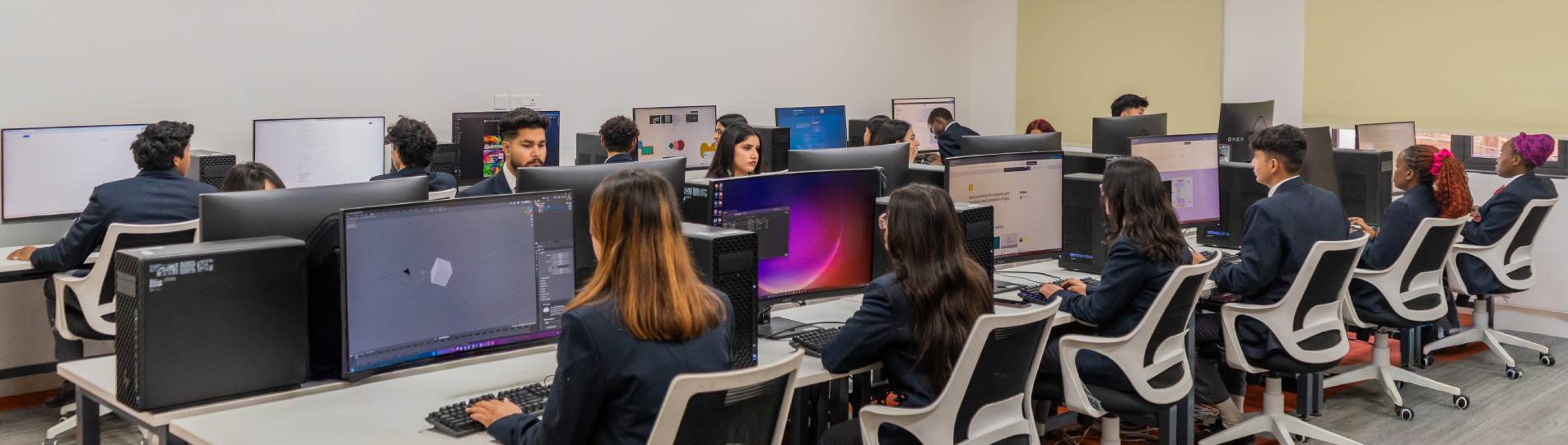
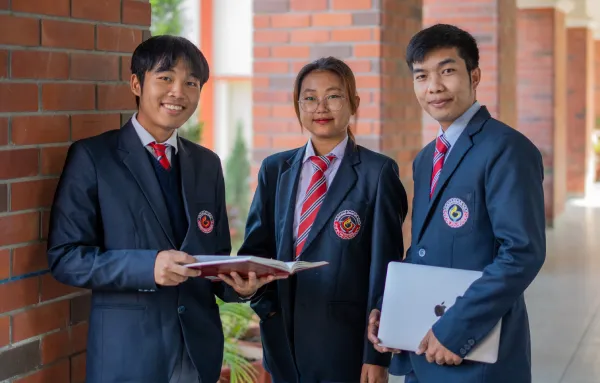
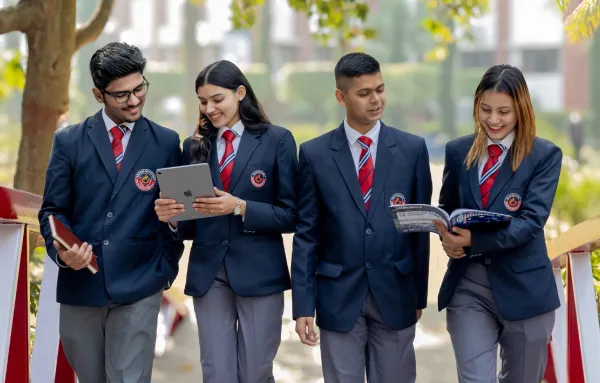
Strategic design for next-generation visual and interactive systems advances transdisciplinary practice by leveraging Human Intelligence (HI), Artificial Intelligence (AI), and Emerging Technologies to drive innovation in communication, experience, organizational strategy, and the augmentation of Human Environment Cognition (HEC).
The Master of Science (M.Sc.) in Graphic and Interaction Design is an advanced postgraduate program for designers who want to move beyond isolated visual artifacts or interface screens and address the complete relationship among people, information, brands, products, services, technology, and culture. It cultivates design strategists, researchers, and practitioners capable of engaging with complexity across visual, digital, and interactive contexts.
The program combines the graphic and visual communication focus on typography, semiotics, branding, editorial systems, image-making, information design, motion, and cross-platform consistency with the user experience and interaction focus on human behavior, research, interaction architecture, interface design, prototyping, usability, service design, and emerging technologies.
Students learn to translate complex audience, user, communication, and business requirements into coherent visual-interaction ecosystems that are meaningful, usable, persuasive, inclusive, technically feasible, and ethically responsible. Advanced research, iterative visualization, prototyping, usability evaluation, strategic innovation, and industry engagement support the progression from inquiry to implementation.
Eligibility Criteria for Admission
Academic Qualification : To be eligible for the Master of Science (M.Sc.) in Graphic and Interaction Design program, a candidate must have a Bachelor's Degree of minimum 4 years duration in any specialization.
Entrance Exam : Candidate admission may be based on Graphic Era's entrance test or a personal interview, unless the candidate has a valid score from a national-level entrance examination such as GATE / CEED / NID-DAT / NIFT Entrance Exam.
Entrance Exam is exempted for GEU Alumni.
Teaching Pedagogies
The design pedagogy is aimed at empowering future designers with building-in enhanced human intelligence (HI) for creative problem-solving through an AI-assisted holistic curriculum that cultivates intelligence, capacity, skills, tools, methods, techniques, and crucial additional factors in a developmental sequence, fostering well-rounded creative minds.
Design education embraces the synergy of AI and HI, forging a 'hyper-transdisciplinary' approach. This empowers learners to tackle complex challenges through deep integration of knowledge, AI-augmented creativity, and ethically guided innovation. Cultivating both AI literacy and enhanced human intelligence is central to shaping impactful design solutions for tomorrow's world.
Building-in Areas of Expertise in Innovation
Design Strategy
Defines the overarching vision and framework for design decisions to achieve specific goals.
User research
Design direction
Culture & context
Design impact
Socio-business design
Strategic design
Design Tools & Technologies
Equips students with the practical skills to translate concepts into tangible outputs using relevant software and methods.
Design thinking
CAD softwares
Human intelligence & Artificial intelligence
Ergonomics
Prog. languages
XR Lab (AR+VR+MR)
Emerging technologies
Design Innovation
Fosters creative problem-solving and the development of novel and impactful design solutions.
Design process
HCI - Human Factors
Inclusive Design
Systems thinking
Managing uncertainty
Value realization & creation
Experience Design
Focuses on understanding and shaping meaningful and user-centric interactions across touchpoints.
Multi-sensory design
Human interface
Nature & sustainability
Design futures
Product lifestyle
Holistic User Experience
Business Design Management
Integrates design thinking with business principles for strategic decision-making and value creation.
The objective of M.Sc. Graphic and Interaction Design is to create meaningful, persuasive, usable, and engaging communication experiences that connect visual language with human action across print, digital, product, service, and emerging media contexts. The specialization treats graphic systems and interactions as an integrated continuum rather than separate design outcomes.
At the master's level, this requires the integration of communication strategy, typography, semiotics, brand architecture, information design, motion, and visual storytelling with user research, human-computer interaction, information architecture, interface systems, prototyping, usability engineering, service design, and human-AI interaction.
Graphic design shapes how people perceive, interpret, and trust information through hierarchy, type, image, color, composition, and narrative. Interaction design shapes how people act within products, services, and systems through flows, feedback, behavior, and time. Together, they determine clarity, identity, usability, engagement, accessibility, and the emotional quality of experience.
The integrated practice converts complex communication and user needs into coherent design systems and interactive experiences. It balances message, medium, cognition, aesthetics, business value, technological feasibility, inclusion, and ethical responsibility across the complete lifecycle - from research and strategy to visualization, prototyping, evaluation, deployment, and evolution.
Highlight Areas
Strategic Visual Systems, Brand Architecture and Cross-Platform Integrity
Semiotics, Cognitive Persuasion, Visual Storytelling and Data Visualization
UX Research, Interaction Architecture, Service Design and Usability Engineering
Human-AI Interaction, Emerging Technologies, Experience Ethics and Accessibility
Program Educational Objectives (PEOs)
PEO1
To prepare graduates for advanced leadership careers across graphic, visual communication, user experience, and interaction design by building mastery in theoretical knowledge, research methodologies, and advanced problem-solving capabilities applicable to complex, multidisciplinary design challenges.
PEO2
To develop responsible and ethical design leaders capable of driving visual and interactive innovation and strategic thinking as independent practitioners and collaborative team leaders while demonstrating cultural sensitivity, inclusive practice, accessibility, and responsible communication.
PEO3
To equip graduates with advanced research competencies and scholarly aptitude necessary to pursue doctoral studies, engage in cutting-edge communication and interaction design research, or lead research and development initiatives within industry and academic institutions.
PEO4
To instill the ability to anticipate, embrace, and drive evolving media practices, emerging technologies, intelligent systems, and future interaction paradigms through lifelong learning, continuous innovation, and thought leadership.
Program Outcomes (POs)
PO1
Analyzing
Identify and analyze complex design challenges by applying critical thinking and contextual awareness across cultural, societal, and technological domains.
PO2
Understanding
Understand user needs, behaviors, and values through empathy-driven approaches to create inclusive, human-centered design outcomes.
PO3
Applying
Apply design thinking methodologies and creative problem-solving processes to address real-world design problems effectively.
PO4
Evaluating
Conduct and evaluate design research using appropriate qualitative and quantitative methods to generate informed insights.
PO5
Synthesizing
Integrate diverse inputs - technical, emotional, and aesthetic - into cohesive and impactful design solutions.
PO6
Reflecting
Demonstrate professional ethics, self-awareness, and reflective practice in individual and collaborative design work.
PO7
Creating
Conceptualize and develop original, adaptive, and future-oriented design ideas using imagination, iteration, and prototyping.
PO8
Sustaining
Evaluate the social, environmental, and ethical implications of design choices, promoting sustainability and responsible innovation.
PO9
Collaborating
Function effectively in interdisciplinary teams, managing roles and responsibilities across the design and development process.
PO10
Communicating
Express design ideas, processes, and outcomes clearly through visual, verbal, and written communication tailored to varied audiences and contexts.
PO11
Evolving
Recognize the necessity for independent, life-long learning by maintaining the agility to adapt to emerging technologies and applying critical thinking to navigate continuous socio-technological change.
Program Specific Outcomes (PSOs)
PSO1
Apply human-centered and visual communication principles to create coherent, accessible, and engaging experiences across print, digital, interactive, and emerging media platforms.
PSO2
Conduct user, audience, cultural, visual, and behavioral research using qualitative and quantitative methods to identify communication needs, interaction patterns, and strategic design opportunities.
PSO3
Develop integrated visual identity and communication systems using typography, image, color, composition, editorial, packaging, information design, and cross-platform brand principles.
PSO4
Design interaction architectures, user flows, interface systems, and service touchpoints that enhance usability, accessibility, consistency, and the end-to-end user experience.
PSO5
Develop and evaluate wireframes, interactive prototypes, motion behaviors, micro-interactions, and functional interface concepts using contemporary tools, programming approaches, and emerging technologies.
PSO6
Translate complex ideas, narratives, and data into clear, persuasive, and meaningful visual stories and interactive information experiences for diverse audiences.
PSO7
Integrate ethical, inclusive, accessible, privacy-aware, and sustainable design practices to ensure responsible representation and equitable participation across communication and interaction systems.
PSO8
Align communication objectives, user needs, business goals, and technological feasibility to create strategic graphic-interaction systems, digital products, and services within complex organizations.
PSO9
Collaborate effectively with developers, marketers, researchers, content creators, technologists, and stakeholders while communicating research findings, design strategies, prototypes, and specifications through professional documentation and presentation.
PSO10
Critically evaluate AI-driven systems, emerging media platforms, design trends, and future interaction paradigms while demonstrating professional leadership, adaptability, and commitment to lifelong learning.
Career Prospects
Graphic and interaction design shape how organizations communicate, how people understand information, and how users experience digital products and services. Graduates are prepared for roles wherever visual systems, brands, interfaces, content, data, and human-centered technology must be researched, designed, tested, implemented, and managed.
Industry Domains
Technology & SaaS
Advertising, Branding & Marketing
Media & Publishing
E-Commerce & Retail
Banking, Finance & FinTech
Healthcare & HealthTech
Education & EdTech
Entertainment, Gaming & Streaming
Fashion & Lifestyle
Automotive & Mobility
Telecommunication
Government & Civic Services
Consulting & Innovation
Smart Products & IoT
Travel & Hospitality
Nonprofit & Social Impact
User Research Agencies
Design Studios & Entrepreneurship
Graduates of the M.Sc. in Graphic and Interaction Design program are prepared for a broad spectrum of professional roles across visual communication, branding, interface and product experience, research, service innovation, motion, information design, accessibility, and design leadership.
Potential Career Paths and Roles
Creative Director
Graphic Designer
Visual Communication Designer
Visual Strategist
Brand Identity Designer
Packaging Designer
Editorial/Publication Designer
Information Designer / Data Visualization Specialist
Motion Graphics Designer
Typographer/Type Designer
UX-UI Designer
Interaction Designer
Digital Product Designer
User Researcher
Information Architect
User Experience Strategist
Service Designer
UX Writer / Content Designer
Usability Analyst / Tester
Accessibility Specialist
Design Researcher
Design Systems Designer
Front-end Developer / Creative Technologist
Design Manager/Lead
Innovation Consultant
Freelance/Independent Designer
Academic/Researcher
Course Curriculum
The curriculum combines shared advanced design studies with a balanced selection of subjects from M.Des. (Graphic and Visual Communication Design) and M.Des. (User Experience and Interaction Design). Course names are retained from the source programs.
Semester 1
Cultural Context & Design Practices
Research Methodology
AI-Augmented Creativity & Programming
Advanced Visual Semiotics
Brand System and Processes
Human-Computer Interaction
Interaction Design
Healthy Living and Fitness
Environmental Science
Semester 2
Systems Thinking & Circularity
Industry Visit
The Constitution of India
Nature Studies
Visual Media Trends
Dynamic Information & Data Visualization
User Interface Systems & Architecture
Special Needs, Inclusive & Assistive Design
Prototyping for Emerging Interaction Technologies
Semester 3
Design Entrepreneurship
Design Innovation Strategy & Impact
Design Industry Internship
Design for Social Change & Advocacy
UX Strategy & Service Design
Usability Engineering & Testing
Indian Knowledge System
Universal Human Values and Professional Ethics
Professional Practice & Creative Leadership
Semester 4
Graduation Capstone Project
Design Colloquium
Professional Portfolio
Disaster Management
Indian Culture (Ethic & Values in Ancient Indian Traditions)












 Download Brochure




 Download
Brochure
Download
Brochure