About The Program
The M.Sc. Forensic Science program trains aspiring scientists to become skilled forensic experts who can strengthen the judicial system. It focuses on skill-based training in the collection, handling, and analysis of evidence to enable effective crime investigation and the fair delivery of justice.
The field has evolved from traditional areas like fingerprint examination, DNA analysis, ballistics, and toxicology, and now integrates a wider range of advanced techniques for more efficient, streamlined, and dependable investigative methods, leading to accurate and reliable results.
Teaching Pedagogies
Student-Centric and Outcome-Based Learning
- Introducing the flexible curriculum for the students, the curriculum is structured around clearly stated learning outcomes-what students are expected to be able to do upon completion of a program or course.
- Effective teaching methods, such as learning tasks and assessment materials, to best assist students in attaining those results.
- Emphasis on Real-world Skills aimed at training skills and competencies that can be implemented in real-life situations by students. The students learn to apply knowledge to solve problems, think critically, communicate, and work in groups.
- Adopt constructive learning, where students build knowledge through active tasks.
- Align teaching with Bloom’s Taxonomy (Understand → Remember → Apply Analyze → Evaluate → Create).
Blended Learning (Hybrid Mode)
- LMS-based learning modules that enable students to learn anytime and anywhere, removing barriers of time and location, but with the possible support of in-person engagement. (Any speed, any mode, any language).
- Blended learning provides a platform to promote greater interaction between students, as well as between students and teachers. It combines face-to-face classroom teaching with digital learning platforms like SWAYAM, NPTEL, and Virtual Labs.
Experiential and Practical-Based Learning
- Enhancing skill: providing hands on training, workshops and industrial visits, a personalized learning and adaptable educational experience that helps in building social skills of the students
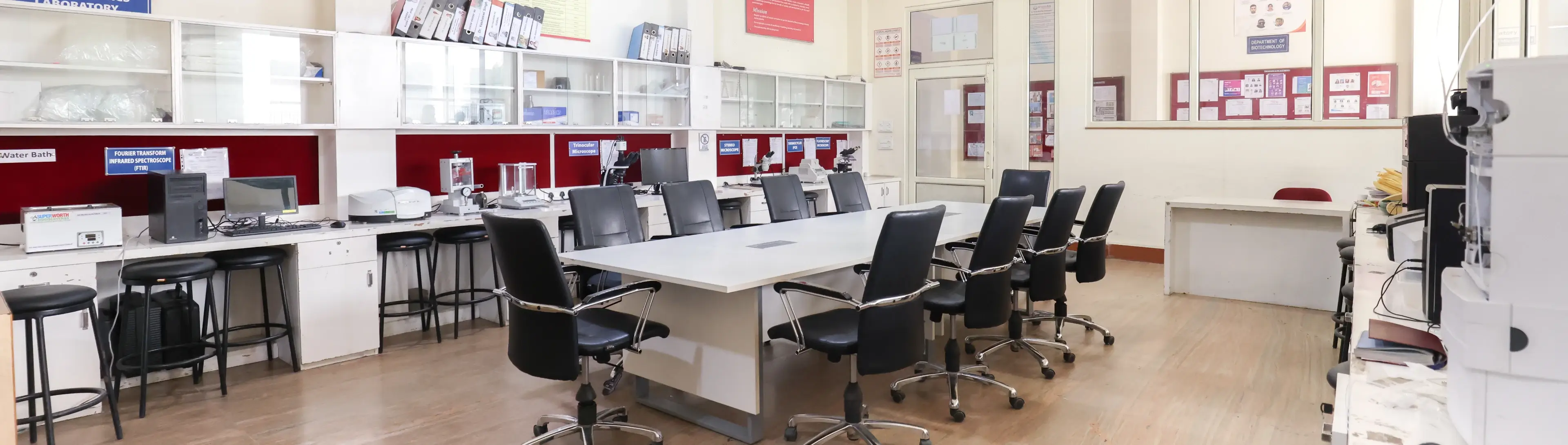
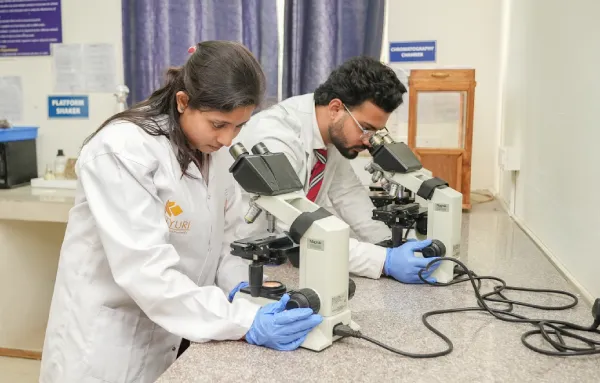
- Encourage hands-on laboratory sessions aligned with practical casework, upgrading the experimental knowledge of students, which is a practical aspect for making knowledge more efficient.
Research-Integrated Teaching
- The programs focus more on innovative and interdisciplinary training, capacity building, skill enhancement, and consultancy, with the main goal of contributing meaningfully to the development and economic upliftment of the local population in general and the region in particular by exposing them to various job and self-employment opportunities.
- Introduce students to mini research projects from Semester I for upgrading the skill and interest of the students towards innovation and research.
- Each student completes a six months’ dissertation based on original research in national level research institutes/ industry.
Continuous and Comprehensive Evaluation (CCE)
- Continuous Internal Evaluation, Includes viva-voce, seminars, and regular lab performance to assess conceptual understanding, practical skills, and scientific communication
- Problem-solving assignments, case analysis reports, and fieldwork presentations to evaluate analytical ability, real-world application, and professional competence
- Peer assessments and group activities to promote teamwork, critical thinking, and participatory learning in line with holistic education approach.
Skill-Based and Vocational Training
- Initiating SWAYAM MOOCs and skill-based courses in the curriculum to Enhance Employability and Practical Competence, Promote Application-Oriented Learning, and Build Lifelong Learning and Industry-Relevant Skills.
- Promoting internships in government organizations and Industries as a part of vocational training, to develop job-ready Practical Skills, bridge the Gap between Education and Employment and support career Growth and Lifelong Skill development
Career Prospects
A career pathway after an M.Sc. in Forensic Science offers diverse and rewarding opportunities across crime investigation, laboratory science, and research. Graduates can work as forensic scientists, crime scene officers, DNA analysts, toxicologists, and questioned document examiners in State and Central Forensic Science Laboratories, police departments, and national agencies like CBI, NIA, and NCB. The program also opens pathways into hospitals, research organizations, universities, and private forensic consultancies. With growing demand for scientific investigation and digital forensics, M.Sc. Forensic Science provides a strong foundation for professional growth, specialization, and contribution to the justice system.
The specific carrier pathway for the M.Sc. Forensic Science can secure their carrier in following sector.
Forensic Science Laboratories (Government & Private)
- Forensic Scientist / Scientific Officer
- Assistant Forensic Officer / Analyst
- Crime Scene Officer
- Questioned Document Examiner
- Fingerprint Expert
- DNA Analyst
- Toxicologist / Serologist / Ballistics Expert
- Recruiting agencies
- Law Enforcement & Investigation Agencies
- Academia & Research
Private Sector & Corporate Forensics
Growing field with multiple roles:
- Document & Signature Verification Expert
- Cyber Forensics Analyst (Corporate Investigations)
- Risk & Fraud Analyst
- Forensic Auditor (with additional certification)
- Quality Control Scientist (pharma, food, cosmetics)
Entrepreneurship Opportunities
Students can establish:
- Private Forensic Consultancy
- Document & Fingerprint Verification Services
- Cyber Forensic & Digital Investigation Firm
- Training Institute for Forensic Skills
Competitive Exams & Government Services, With additional preparation, students may opt for: UPSC & State PSCs, SSC Scientific Assistant, Banking/Insurance Fraud Departments, Judicial Assistant, Court-Monitored Labs.












 Download Brochure




 Download
Brochure
Download
Brochure