





GEU
facilities
Level
Undergraduate
facilities
Duration
4 Years
facilities
Fee Structure
Click Here
B.Sc Nursing

Admission Procedure

Merit prepared on basis of the qualifying exam

Provisional Admission

For B.Sc. Nursing, the Indian Nursing Council (INC) requiresย 10+2 with Science (Physics, Chemistry, Biology) and English

About The Program

Welcome to the Graphic Era College of Nursing, a constituent institution of Graphic Era (Deemed to be) University, committed to excellence in nursing education, clinical practice, and healthcare research.

The B.Sc. Nursing program is designed to prepare competent, compassionate, and professionally skilled nurses who can meet the dynamic healthcare needs at national and global levels.

The college is supported by a team of highly qualified, experienced, and dedicated faculty members with strong academic and clinical backgrounds. Faculty members possess postgraduate and doctoral qualifications in specialized areas of nursing and are actively involved in teaching, clinical mentoring, research, and professional development. Their expertise spans Medical-Surgical Nursing, Obstetrics & Gynaecological Nursing, Child Health Nursing, Community Health Nursing, Mental Health Nursing, Nursing Education, Nursing Administration, and Nursing Research. Faculty members regularly participate in national and international conferences, workshops, and continuing nursing education programs, contributing to academic excellence and evidence-based practice.

The B.Sc. Nursing curriculum, as prescribed by the Indian Nursing Council (INC), is enriched with a strong emphasis on experiential, competency-based, and patient-centered learning. The program integrates theoretical instruction with extensive clinical exposure, enabling students to develop sound clinical judgment, critical thinking, and professional ethics. Innovative teaching-learning strategies such as simulation-based training, skill laboratories, case-based discussions, seminars, and project work are actively employed to enhance student learning outcomes.

A distinctive strength of the program is the comprehensive clinical training provided at Graphic Era Institute of Medical Sciences (GEIMS), a multispecialty teaching hospital equipped with modern infrastructure, advanced diagnostic facilities, and specialized units. Students receive hands-on clinical experience across various departments, including Medical and Surgical Wards, Obstetrics & Gynaecology, Paediatrics, Neonatal Care Units, Intensive Care Units, Operation Theatres, Emergency Services, Community Health Centres, and Mental Health Facilities. Under the supervision of experienced clinicians and nursing faculty, students gain real-world exposure to patient care, clinical procedures, interdisciplinary teamwork, and hospital management practices.

The college provides a supportive academic ecosystem that promotes holistic student development, focusing on professional competence, ethical values, leadership qualities, and lifelong learning. Students receive structured mentoring for academic excellence, clinical skill enhancement, research orientation, and career planning. The institution also offers guidance for higher education opportunities such as M.Sc. Nursing, specialty certifications, and international nursing pathways.

Students are encouraged to actively participate in clinical skill competitions, health camps, community outreach programs, seminars, workshops, research activities, and professional nursing events, fostering social responsibility and professional confidence. Emphasis is placed on community-based learning, enabling students to understand public health challenges and contribute effectively to preventive and promotive healthcare services.

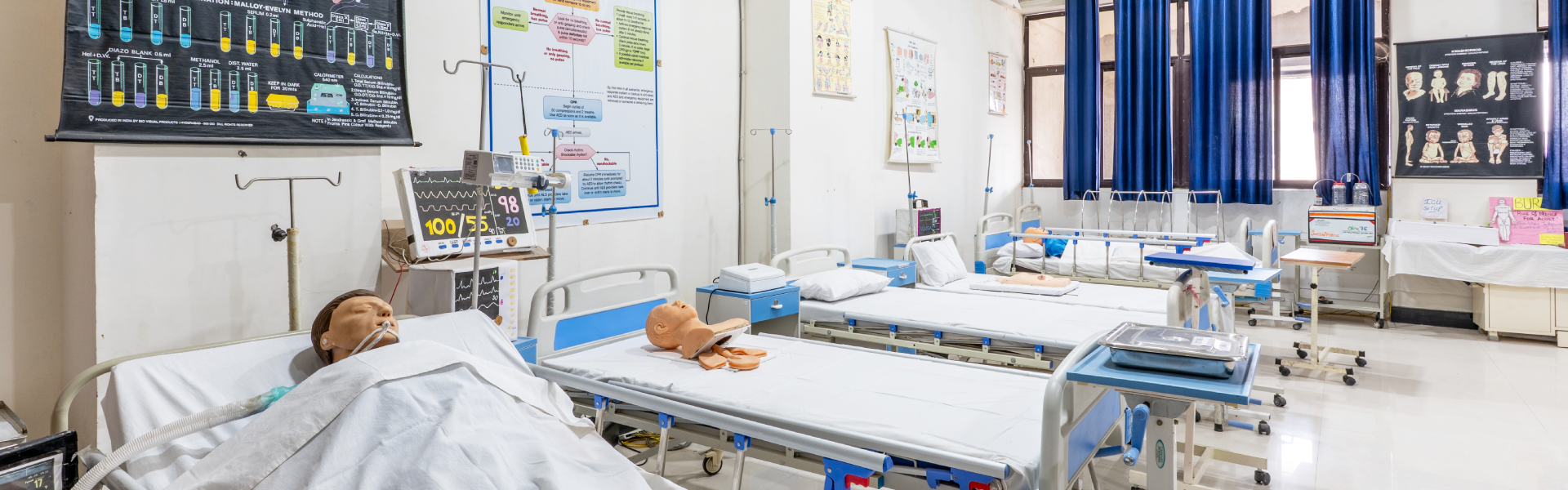
With state-of-the-art infrastructure, well-equipped nursing skill and simulation laboratories, a rich learning environment, and strong clinical collaboration with GEIMS, the Graphic Era College of Nursing is dedicated to shaping competent, ethical, and compassionate nursing professionals who are prepared to deliver quality healthcare and emerge as future leaders in the nursing profession.

Eligibility Criteria for the admissions in the Program

For B.Sc. Nursing, the Indian Nursing Council (INC) requiresย 10+2 with Science (Physics, Chemistry, Biology) and English, achieving 45% aggregate (40% for SC/ST) in PCB, with minimum age 17 by year-end, and being medically fit, with admission typically yearly and sometimes via entrance exams.ย 

Key Eligibility Criteria:

  • Age:ย Minimum 17 years by December 31st of the admission year.
  • Education:ย 10+2 (or equivalent) with Science subjects (Physics, Chemistry, Biology) and English.

Marks:

  • General:ย 45% aggregate in PCB.
  • SC/ST:ย 40% aggregate in PCB.

Medical Fitness:ย Must be medically fit for nursing.

Board:ย From a recognized board (CBSE, ICSE, State Boards, etc.).

NIOS:ย Students from the National Institute of Open School (NIOS) with 45% in Science are also eligible.ย 

Teaching Pedagogies

The Graphic Era College of Nursing adopts innovative, student-centred teaching pedagogies that integrate theoretical knowledge with clinical competence, professional values, and evidence-based practice. The teachingโ€“learning approach is designed to enhance conceptual clarity, clinical proficiency, critical thinking, and patient-centred care, preparing students to meet contemporary healthcare challenges. Key pedagogical practices include:

  • Outcome-Based Education (OBE)
    The B.Sc. Nursing program is structured around clearly defined program outcomes, course outcomes, and clinical competencies, ensuring measurable academic progress, skill attainment, and professional readiness in accordance with Indian Nursing Council (INC) standards.
  • Experiential & Clinical Learning
    Strong emphasis is placed on hands-on clinical training, skill demonstrations, return demonstrations, bedside teaching, and supervised clinical practice to enhance real-world nursing competencies.
  • Simulation-Based Learning & Skill Laboratories
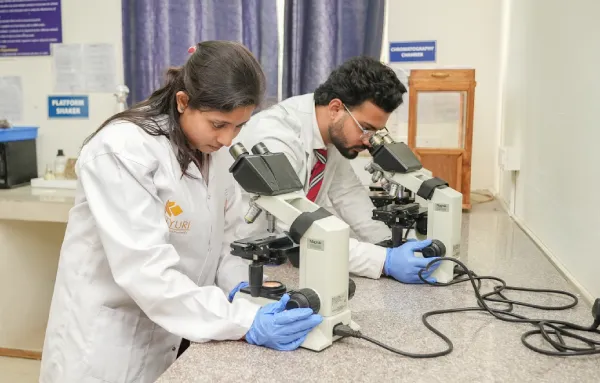
    Well-equipped nursing skill and simulation laboratories are utilized for practicing procedures, emergency response, critical care skills, and patient safety protocols in a controlled learning environment.
  • Case-Based & Problem-Based Learning
    Students engage in clinical case studies, nursing care plans, problem-solving scenarios, and evidence-based discussions, fostering clinical reasoning, decision-making, and holistic patient care.
  • Integrated Clinical Exposure at GEIMS
    Structured clinical postings at Graphic Era Institute of Medical Sciences (GEIMS) provide exposure to multispecialty care settings, enabling students to apply theoretical knowledge to patient care under expert supervision.
  • Blended Learning & ICT-Enabled Teaching
    Teaching is supported through smart classrooms, Learning Management Systems (LMS), digital resources, virtual simulations, and audio-visual aids, enhancing accessibility and learner engagement.
  • Interdisciplinary & Team-Based Learning
    Collaborative learning activities promote effective communication, teamwork, leadership, and interprofessional coordination essential for healthcare delivery.
  • Continuous Assessment & Formative Feedback
    Student performance is evaluated through periodic tests, practical examinations, clinical evaluations, OSCE/OSPE, assignments, presentations, and reflective journals, with regular feedback for continuous improvement.
  • Professional Skill Development & Value-Based Learning
    Emphasis is placed on communication skills, ethical practice, empathy, patient safety, cultural sensitivity, and lifelong learning, nurturing competent and compassionate nursing professionals.

Program Educational Objectives (PEOs)

PEO1

To produce competent graduate nurses with sound understanding of theoretical knowledge, clinical skills, and nursing methodologies to address multidisciplinary healthcare problems in diverse clinical and community settings.

PEO2

To develop ethical, responsible, and compassionate nursing professionals capable of delivering safe, evidence-based, and patient-centred care, while functioning effectively individually and as members of the healthcare team.

PEO3

To impart professional competency and research orientation enabling graduates to pursue higher education, specialized nursing practice, research, and leadership roles in nursing and allied health sciences.

PEO4

To inculcate the ability to adapt to evolving healthcare technologies, policies, and global health challenges through continuous professional development and lifelong learning.

Program Outcomes (POs)

On completion of the B.Sc. Nursing program, graduates will be able to:

PO1

Nursing Knowledge:

Apply knowledge of nursing science, biological sciences, behavioural sciences, and health sciences to provide comprehensive and quality nursing care across the lifespan.

PO2

Clinical Decision Making & Problem Analysis

Identify, analyse, and prioritise patient health problems using critical thinking, clinical reasoning, and evidence-based nursing practices.

PO3

Nursing Care Planning & Implementation

Design, implement, and evaluate individualised nursing care plans ensuring patient safety, quality care, and holistic well-being in diverse healthcare settings.

PO4

Research & Evidence-Based Practice

Utilise research-based knowledge, basic research methods, data interpretation, and nursing audit principles to improve clinical practice and patient outcomes.

PO5

Use of Healthcare Technologies

Select and apply appropriate clinical skills, nursing procedures, medical equipment, digital health tools, and informatics while recognising their limitations in patient care.

PO6

Nurse and Society

Apply nursing practice with an understanding of public health, community needs, sustainability, health promotion, disease prevention, legal aspects, and environmental responsibility.

PO7

Ethics & Professional Values

Demonstrate adherence to professional ethics, legal standards, human values, cultural sensitivity, patient rights, and accountability in nursing practice.

PO8

Individual and Team-Based Practice

Function effectively as an independent practitioner and as a collaborative member or leader within interdisciplinary healthcare teams.

PO9

Communication

Communicate effectively with patients, families, healthcare professionals, and the community using appropriate verbal, non-verbal, and written communication skills.

PO10

Leadership & Management

Apply principles of nursing administration, leadership, resource management, and quality assurance in clinical and community healthcare settings.

PO11

Lifelong Learning

Recognise the need for and engage in lifelong learning, professional development, adaptability to emerging healthcare trends, and reflective nursing practice.

Program Specific Outcomes (PSOs)

PSO1

Demonstrate proficiency in providing safe, competent, and comprehensive nursing care across medical-surgical, obstetric & gynaecological, paediatric, mental health, and community health nursing settings.

PSO2

Apply nursing theories, clinical skills, and evidence-based practices to promote health, prevent illness, restore health, and alleviate suffering across the lifespan.

PSO3

Integrate clinical experience gained at Graphic Era Institute of Medical Sciences (GEIMS) with professional judgment to deliver quality patient care, participate in clinical research, and contribute to healthcare innovation and improvement.

Career Pathways

With the continuous expansion of the healthcare sector and increasing demand for quality patient care, B.Sc. Nursing graduates have a wide range of career opportunities across clinical, community, academic, research, administrative, and global healthcare settings. The program prepares graduates with strong clinical competence, ethical values, and professional skills, enabling them to contribute effectively to the healthcare system.

B.Sc. Nursing graduates can pursue careers in multispecialty hospitals, teaching hospitals, community health centres, public health organizations, government and private healthcare institutions, research organizations, non-governmental organizations (NGOs), academic institutions, and international healthcare systems. The demand for qualified nurses continues to grow both nationally and globally, offering job security, competitive remuneration, and opportunities for career advancement.

Graduates may also pursue higher education, specialized certifications, research roles, and leadership positions in nursing and allied health sciences. With clinical exposure at Graphic Era Institute of Medical Sciences (GEIMS), students gain practical experience that enhances employability and professional readiness.

Career Opportunities Include:

Staff Nurse / Registered Nurse

Clinical Nurse Specialist

Community Health Nurse

Public Health Nurse

Nurse Educator / Tutor

Nurse Administrator / Nursing Officer

ICU / Emergency / OT Nurse

Paediatric Nurse

Mental Health / Psychiatric Nurse

Midwife / Obstetric Nurse

Research Assistant / Clinical Research Coordinator

Infection Control Nurse

Occupational Health Nurse

Home Healthcare Nurse

Military / Defence Nursing Services

International Nursing Careers

Notes: Semester 1 and 2 are applicable only for regular entry students. Lateral entry students begin from Semester 3.

Course Curriculum

Semester 1

  • Communicative English
  • Applied Anatomy
  • Applied Physiology
  • Applied Sociology
  • Applied Psychology
  • Nursing Foundations I (including First Aid as integral module)
  • Mandatory Modules/Simulation Lab Integration (e.g., basic nursing skills)

Semester 2

  • Applied Biochemistry
  • Applied Nutrition & Dietetics
  • Nursing Foundations II (including Health Assessment as part of the course)
  • Health / Nursing Informatics & Technology
  • Community Health Nursing I (including Health Policy & Regulation)
  • Mandatory Modules (e.g., public health basics, career/skill development)

Semester 3

  • Applied Microbiology & Infection Control (including safety)
  • Pharmacology I
  • Pathology I
  • Adult Health Nursing I (Medical-Surgical Nursing I) with integrated pathophysiology
  • Professionalism, Professional Values & Ethics (including Bioethics)
  • Mandatory Modules such as Basic Life Support (BCLS) integrated into relevant nursing subjects

Semester 4

  • Pharmacology II
  • Pathology II & Genetics
  • Adult Health Nursing II (including Geriatric Nursing) with integrated health assessment
  • Educational Technology / Nursing Education
  • Related Mandatory Modules (as prescribed by INC)

Semester 5

  • Child Health Nursing I
  • Includes Essential Newborn Care (ENBC), FBNC, IMNCI, PLS/PALS modules
  • Mental Health Nursing I
  • Community Health Nursing II (including Environmental Science & Epidemiology)
  • Introduction to Forensic Nursing and Indian Laws
  • Nursing Management & Leadership
  • Nursing Research & Statistics
  • Health/Nursing Informatics & Technology (Continued)
  • Self-study / Co-curricular Activities

Semester 6

  • Child Health Nursing II
  • Mental Health Nursing II
  • Midwifery / Obstetrics and Gynaecology (OBG) Nursing I (with SBA modules)
  • Continued Nursing Management & Leadership (Advanced)
  • Project Work / Advanced Clinical Modules (as per INC)
  • Other Electives and integration labs, as applicable

Semester 7

  • Community Health Nursing II (Advanced and Field Immersion)
  • Midwifery/Obstetrics & Gynaecology Nursing II (including Safe Delivery App modules)
  • Nursing Research & Statistics (Advanced / Applied)
  • Professionalism & Ethics (Advanced)
  • Field Visits / Community Posting / Seminar Presentations
  • Project continuations / Elective Concentrations

Semester 8

Internship (Intensive Practicum / Residency Posting)

The final semester consists of extended clinical internship across key nursing speciality areas:

  • Adult Health Nursing (Medical-Surgical & Geriatrics)
  • Child Health Nursing
  • Midwifery & Obstetrics/Gynaecology Nursing
  • Mental Health Nursing
  • Community Health Nursing

During this semester, students rotate through real clinical settings under supervision to demonstrate competency and readiness for professional practice.

Frequently Asked Questions

B.Sc. Nursing is a four-year undergraduate professional program that focuses on nursing science, clinical skills, patient care, community health, research, and professional ethics, preparing students to become competent registered nurses.

The B.Sc. Nursing program is of 4 years duration.

The program consists of 8 semesters, including theory, practical, and extensive clinical training.

On average, each semester includes 4โ€“5 theory courses along with practical and clinical postings as prescribed by the Indian Nursing Council (INC).

The syllabus includes Anatomy & Physiology, Microbiology, Biochemistry, Nutrition, Fundamentals of Nursing, Medical-Surgical Nursing, Obstetrics & Gynaecological Nursing, Child Health Nursing, Mental Health Nursing, Community Health Nursing, Nursing Research, Nursing Education, Nursing Administration, and supervised clinical practice. For detailed information, please refer to the curriculum section.

B.Sc. Nursing is a challenging yet rewarding program. It requires dedication, compassion, and discipline. With proper guidance, regular clinical exposure, and consistent practice, students can successfully complete the program.

Candidates must have completed 10+2 with Physics, Chemistry, Biology, and English, securing the minimum percentage as per INC and university norms. Students must be medically fit.

Generally, a minimum of 45%โ€“50% aggregate marks in PCB (as per INC and university regulations) is required. Reserved category relaxations apply as per norms.

Yes, both male and female candidates are eligible to apply for the B.Sc. Nursing program.

Admission may be based on university-level entrance examinations, merit in qualifying examination, or counselling, as per INC and university admission guidelines.

Admissions may be offered through CUET, university-level entrance tests, or merit-based selection, subject to regulatory approvals.

The fee structure is as per university norms. For detailed and updated fee information, please refer to the Admissions section of the website or contact the admission office.

Yes, scholarships and financial assistance are available for eligible students as per government, university, and institutional policies.

B.Sc. Nursing graduates have excellent career prospects in multispecialty hospitals, teaching hospitals, community health centres, government and private healthcare institutions, research organizations, NGOs, and international healthcare systems. Graduates may also pursue higher studies and specializations.

Graphic Era College of Nursing offers INC-approved curriculum, experienced faculty, extensive clinical exposure at Graphic Era Institute of Medical Sciences (GEIMS), modern skill laboratories, a strong academic support system, and a commitment to producing competent, ethical, and compassionate nursing professionals.

Contact Us

GEU
GEU

566/6, Bell Road, Society Area,
Clement Town, Dehradun,
Uttarakhand