







GEU
facilities
Level
Postgraduate
facilities
Duration
2 Years
facilities
Fee Structure
Click Here
Master in Hotel Management (MHM)

Admission Procedure

Merit prepared on basis of the qualifying exam

Provisional Admission

Any graduate degree (BA, BSc, BCom, BBA, BHM, etc.) from a recognized university with a minimum of 50% marks (45% for SC/ST/OBC candidates)

About The Program

The Two-Year Master's in Hotel Management program offers a comprehensive and specialized exploration of the hospitality industry, focusing on advanced management principles, strategic leadership, and cutting-edge practices.

This program is designed to equip students with the skills and knowledge required to excel in the global hospitality sector, covering key areas such as hotel operations, marketing, finance, human resources, and sustainability. The program's curriculum is structured to provide in-depth learning, combining theoretical foundations with practical applications, case studies, and industry projects. Students will develop expertise in managing hospitality businesses, understanding consumer behavior, and leveraging technology and data analytics to drive business growth.

The two-year structure allows for specialization in areas such as luxury hotel management, event management, tourism development, and hospitality entrepreneurship. Students will also undertake a research project or dissertation, applying advanced research methodologies and analytical tools to address industry-specific challenges. This program prepares graduates for senior management roles in hotels, resorts, event management companies, tourism boards, and other hospitality-related organizations. The curriculum is designed to foster critical thinking, problem-solving, and leadership skills, enabling graduates to navigate the complexities of the global hospitality industry. The program offers flexibility, allowing students to choose electives that align with their interests and career goals. With a strong emphasis on industry engagement, the program features guest lectures, industry projects, and internships, providing students with valuable practical experience and networking opportunities.

Overall, the Master's in Hotel Management program equips graduates with the skills and expertise to succeed in the dynamic and competitive hospitality industry, opening up a wide range of career possibilities.


Eligibility Criteria

The eligibility criteria for admission to the Masters in Hotel Management (MHM) program are as follows:

Academic Qualifications:

  • Any graduate degree (BA, BSc, BCom, BBA, BHM, etc.) from a recognized university with a minimum of 50% marks (45% for SC/ST/OBC candidates).
  • Candidates with a degree in Hospitality, Tourism, or related fields will be given preference. English Language Proficiency
  • Proficiency in English is mandatory, as the medium of instruction is English.
  • Candidates who have completed their previous education in English medium or have a valid score in English language proficiency tests such as IELTS, TOEFL, or PTE will be given preference.

Age Limit:

  • The maximum age limit for admission to the MHM program is 28 years (relaxation of 5 years for SC/ST/OBC candidates).

Age Limit:

  • The maximum age limit for admission to the MHM program is 28 years (relaxation of 5 years for SC/ST/OBC candidates).

Entrance Test:

  • Candidates must appear for a national-level entrance test or test conducted by university.
  • Candidates who have a valid score in the entrance test will be shortlisted for further selection process.

Selection Process:

  • Shortlisted candidates will be called for a personal interview (PI) or group discussion (GD).
  • Final selection will be based on the candidate's performance in the entrance test, PI/GD, and academic record.

Work Experience:

  • COMPREHENSIVE VIVA VOCE –INDUSTRY EXPOSURE
  • TRAINING REPORT AND LOG BOOK
  • SEMINAR
  • GENERAL PROFICIENCY
  • Prior work experience in the hospitality industry is not mandatory but will be given preference.

Other Requirements:

  • Candidates must be physically fit and willing to work in a fast-paced environment.
  • Candidates must be willing to undergo industrial training and internships as part of the program.

Teaching Pedagogies

Our Masters in Hotel Management program employs a range of innovative and interactive teaching methodologies, designed to equip students with the skills and knowledge required to succeed in the hospitality industry.

  • Classroom Teaching
    Interactive lectures using board and markers, led by experienced faculty members, provide a solid foundation in hospitality management principles and concepts.
  • Practical Sessions
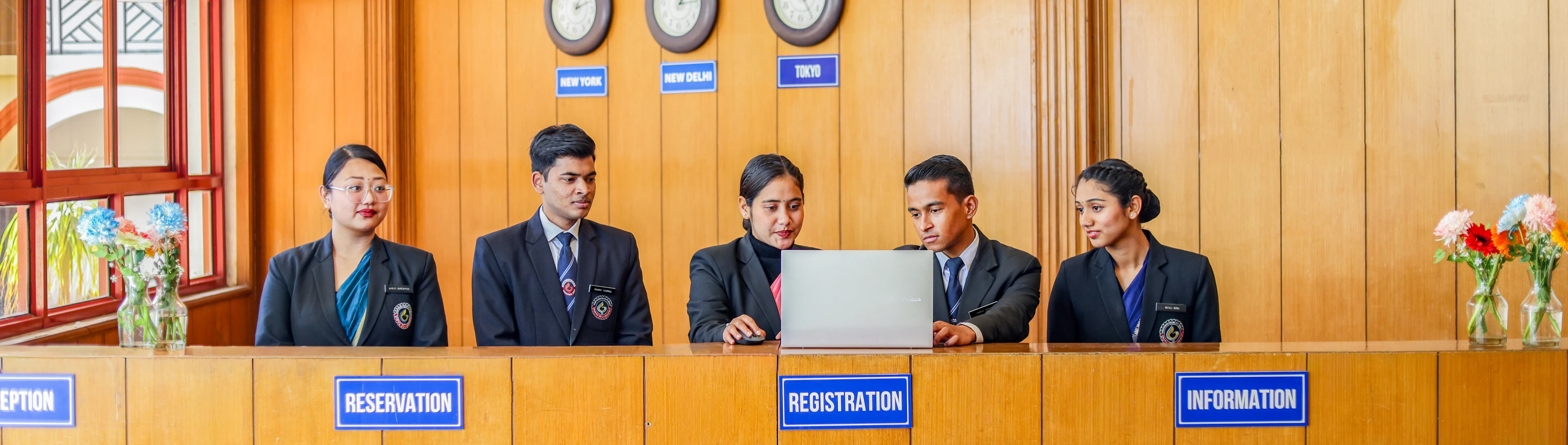
    Hands-on training in hotel operations, food and beverage service, front office management, and other hospitality areas help students develop essential skills.
  • Case Studies
    Students analyze real-life hospitality scenarios, developing critical thinking and problem-solving skills to tackle complex industry challenges.
  • Group Projects and Presentations
    Students work on projects and presentations focused on hospitality management, marketing strategies, and industry trends, honing their teamwork and communication skills.
  • Industry Expert Sessions
    Renowned industry experts share their experiences and insights, providing students with valuable industry perspectives and networking opportunities.
  • Project-Based Learning
    Students apply research methods and hospitality management theories to understand real-world problems and develop evidence-based recommendations for industry partners.
  • Industrial Training and On-the-Job Training
    Hands-on training in hotels, resorts, and other hospitality organizations helps students gain practical experience and apply theoretical concepts to real-world settings.

These teaching methodologies foster a collaborative and immersive learning environment, preparing students for success in the hospitality industry.

Specialization

MHM programs offer various specializations that cater to the diverse interests and career goals of students.

  • Food Production Management
  • Food and Beverage Management
  • Room Division Management
  • Event Management
  • Retail Management

Program Educational Objectives (PEOs)

PEOs (Program Educational Objectives) - Broad career goals for graduates (e.g., successful careers in design),

PEO1

To equip students with a comprehensive understanding of hospitality management principles, theories, and practices, enabling them to analyze and address complex industry challenges and pursue successful careers in hotel management, event planning, tourism development, and related fields.

PEO2

To develop students' leadership and managerial skills, preparing them for senior roles in hospitality organizations, entrepreneurship, and consultancy, leading to rewarding and challenging careers in the industry.

PEO3

To foster critical thinking, creativity, and innovation in students, empowering them to develop and implement effective solutions in hospitality operations, marketing, and customer service, driving business growth and excellence.

PEO4

To prepare students for global careers in hospitality, equipping them with the skills to navigate diverse cultural, social, and economic contexts, and to contribute to the growth and development of the industry in leadership positions.

PEO5

To instill professional ethics, values, and social responsibility in students, enabling them to make informed decisions, drive positive change, and contribute meaningfully to the hospitality industry and society, achieving personal and professional fulfillment.

PEO6

To enhance their proficiency in the development of intellectual flexibility, creativity and to motivate them to appear for NHTET, and other competitive examinations of state and central government.

These PEOs are designed to ensure that graduates of the Masters in Hotel Management program are well-equipped to succeed in the industry and make meaningful contributions to the field, achieving their career goals and aspirations

Program Outcomes (POs)

After successful completion of the program, graduates will be able to:

PO1

Effective Communication: To comprehend, communicate, and execute effectively and efficiently in all of their dealings.

PO2

Leadership: To develop abilities to both lead and respect the views, positions, and beliefs of others and to plan and manage effectively.

PO3

Innovativeness and Entrepreneurship: To explore issues and problems that need solutions and entrepreneurial orientation.

PO4

Ethics and values: To recognize, appreciate and follow ethical standards in all walks of life

PO5

Adaptability and Sociability: Ready to understand and adapt to the changing environment

PO6

Research and Analytical Abilities: To explore, analysis and provide solutions on emerging issues concerning various fields including public policy

PO7

Practical Exposure and Employability: Exposure to the actual working environment leading to employability

PO8

Environment and Sustainability: To develop better understanding regarding hospitality policies and practices from sustainability perspectives and considering the long-term environmental impacts.

These Program Outcomes are designed to ensure that graduates of the Masters in Hotel Management program possess the skills, knowledge, and competencies required to succeed in the hospitality industry and make meaningful contributions to the field.

Program Specific Outcomes (PSOs)

Upon completion of the Masters in Hotel Management program, graduates will be able to:

PSO1

To develop analytical and critical thinking skills among students

PSO2

To develop students with knowledge of the core functions of a manager

PSO3

To develop entrepreneurship & innovative aptitude and skills

PSO4

To prepare students for the changing environment of balancing sustainability and technology

PSO5

Students shall be able to apply knowledge creatively to work in cross-cultural teams and to evolve innovative solutions

These Program Specific Outcomes are designed to ensure that graduates of the Masters in Hotel Management program possess the specialized skills and knowledge required to succeed in the hospitality industry and excel in their chosen specialization.

Career Pathways

A Masters in Hotel Management (MHM) opens up a wide range of career opportunities in the hospitality industry. Here are some potential career pathways:

  • Counselling Psychologist
  • Hotel Management
  • Event Management
  • Tourism and Travel
  • Food and Beverage
  • Consulting and Advisory
  • Academia and Research
  • Corporate Sector
  • Entrepreneurship
Some potential employers include
  • Luxury hotel chains (e.g., Taj, Oberoi, Hilton, Marriott)
  • Resorts and spas
  • Cruise lines
  • Airlines
  • Event management companies
  • Tourism boards
  • Hospitality consulting firms
  • Corporate organizations (e.g., HR, marketing, operations)

Salary packages for MHM graduates can range from ₹30,000 to ₹1,00,000 per month, depending on the organization, location, and experience.

Further Studies

MHM graduates can also pursue further studies, such as

  • PhD in Hospitality Management
  • MBA in Hospitality Management
  • Postgraduate Diploma in Hospitality Management
  • Certification programs in specialized areas (e.g., wine management, culinary arts)

Notes: Semester 1 and 2 are applicable only for regular entry students. Lateral entry students begin from Semester 3.

Course Curriculum

Semester 1

  • Food Production Operation – I
  • Food and Beverage Service Operation – I
  • Front Office Operation Foundation – I
  • Accommodation Operation – I
  • Nutrition & Healthy Living Fitness
  • Business Communication / Functional / Formal Hindi
  • Introduction to Tourism
  • Food Production Operation – I Practical
  • Food and Beverage Service Operation – I Practical
  • Front Office Operation – I Practical
  • Accommodation Operation – I Practical

Semester 2

  • Food Production Operation – II
  • Food and Beverage Service Operation – II
  • Front Office Operation – II
  • Accommodation Operation – II
  • Uttarakhand Tourism
  • Foreign Language French – I / Leadership and Public Speaking
  • Hotel Sales and Marketing
  • Food Production Operation – II Practical
  • Food and Beverage Service Operation – II Practical
  • Front Office Operation – II Practical
  • Accommodation Operation – II Practical

Semester 3

  • Elective – I
  • Elective – II
  • Research Methodology
  • Tourism Entrepreneurship
  • Organizational Behaviour
  • Facility Management
  • Elective – I Practical
  • Elective – II Practical
  • Project Report

Frequently Asked Questions

The duration of the Masters in Hotel Management program is 2 years.

Any graduate degree (BA, BSc, BCom, BBA, BHM, etc.) from a recognized university with a minimum of 50% marks (45% for SC/ST/OBC candidates) is eligible.

No, prior work experience is not mandatory, but it is preferred.

The medium of instruction is English.

MHM graduates can pursue careers in hotel management, event management, tourism, food and beverage, consulting, academia, and more.

Yes, MHM is a recognized postgraduate degree in hospitality management.

Yes, MHM graduates can pursue PhD in Hospitality Management or related fields.

Yes, various scholarships are available for MHM students, including merit-based and need-based scholarships.

Yes, MHM graduates can explore job opportunities globally, especially in countries with a strong hospitality industry.

Key skills include leadership, communication, customer service, time management, and adaptability, among others.

Salary packages for MHM graduates can range from ₹30,000 to ₹1,00,000 per month, depending on the organization and experience.

Yes, MHM graduates can start their own hospitality-related businesses, such as hotels, restaurants, or event management companies.

MHM programs often offer specializations like Hotel Operations, Event Management, Tourism Management, Food and Beverage Management, and Marketing Management.

Yes, MHM is a good course for those passionate about hospitality and looking for a rewarding career in the industry.

The fee structure for MHM varies across institutions, ranging from ₹1 lakh to ₹5 lakhs per year.

Yes, some institutions conduct entrance exams like CAT, MAT, XAT, or CMAT for MHM admissions.

Yes, MHM graduates are preferred by top hotel chains like Taj, Oberoi, Hilton, and Marriott.

Key skills include leadership, communication, customer service, time management, adaptability, and teamwork.

Yes, BBA graduates can pursue MHM, as it is an interdisciplinary program.

Yes, industrial training is often part of the MHM curriculum, providing hands-on experience in the hospitality industry.

Yes, many universities abroad offer MHM programs, providing global exposure and opportunities.

Job roles include Hotel Manager, Event Manager, Tourism Manager, Food and Beverage Manager, and more.

Yes, MHM is suitable for both fresh graduates and those with prior hospitality experience.

Yes, scholarships are available for MHM students based on merit and need.

Emerging trends include sustainable hospitality, digitalization, personalize

Contact Us

GEU
GEU

566/6, Bell Road, Society Area,
Clement Town, Dehradun,
Uttarakhand