







GEU
facilities
Level
Undergraduate
facilities
Duration
4 Years
facilities
Fee Structure
Click Here
B.Tech in Electrical and Computer Engineering

Admission Procedure

Merit prepared on basis of the qualifying exam

Provisional Admission

All interested candidates should have passed Class XII from a recognized board of examination

About The Program

If you are passionate about engineering and aspire to be part of a dynamic and innovative community, we invite you to explore the B. Tech in Electrical and Computer Engineering at GEU.

This program is designed to integrate the core principles of electrical engineering with cutting-edge computing technologies, preparing students for diverse career opportunities in today’s rapidly evolving technological landscape.

Our curriculum blends electrical engineering fundamentals with modern computing disciplines such as embedded systems, artificial intelligence, machine learning, Internet of Things (IoT), power electronics, and smart grids. With a strong interdisciplinary approach, the program ensures that students develop expertise in both hardware and software domains, making them industry-ready professionals.

The department boasts a highly qualified faculty with experience from premier institutes like IITs, NITs, and other prestigious universities. Our faculty members are actively involved in research and innovation, providing students with opportunities to work on real-world projects, cutting-edge research, and industry collaborations.

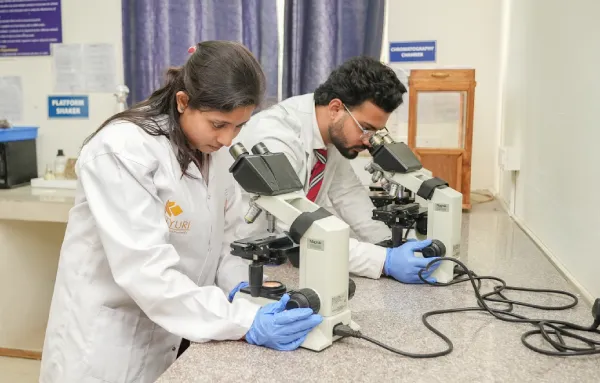
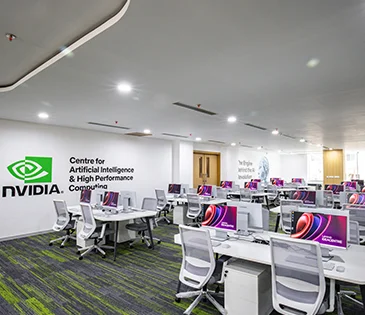
Students gain hands-on experience through state-of-the-art laboratories, industry visits, internships, and collaborative projects. Our focus on experiential learning equips students with practical skills essential for problem-solving in diverse engineering fields, including telecommunications, automation, data analytics, robotics, and renewable energy systems. Graduates of this program are well-prepared for careers in industries such as power systems, software development, VLSI design, AI-driven technologies, cybersecurity, and smart infrastructure development. Additionally, the program provides a strong foundation for those pursuing higher studies or research in advanced engineering fields. Join us at the Department of Electrical Engineering and be a part of a forward-thinking academic community that is shaping the future of technology and innovation.


Eligibility Criteria for the admissions in the Program

All interested candidates should have passed Class XII from a recognized board of examination with Physics, Mathematics, and Chemistry or equivalent, as per AICTE guidelines, and admission will be granted as per merit decided by the university.

Teaching Pedagogies

  • Interactive classroom teaching with problem-solving sessions.
  • Activity-based and student-centric learning.
  • Hands-on training through modern electrical, electronics, and computing laboratories.
  • Industry-oriented learning through workshops, expert talks, and certification courses.
  • Project-based learning using embedded systems, IoT, AI/ML, and automation.
  • Simulation-based learning using tools such as MATLAB, Python, Proteus, and others.
  • Case-based learning on power systems, automation, smart grids, and computing applications.
  • Flipped classroom approach for enhanced conceptual understanding.
  • Collaborative learning through group activities, hackathons, and technical competitions.
  • Experiential learning through industrial visits, internships, and real-world projects.
  • Continuous assessment through quizzes, laboratory reviews, and presentations.
  • Skill development through coding labs, hardware design challenges, and innovation projects.

Program Educational Objectives (PEOs)

PEO1

To train students in such a manner that they will demonstrate global competency and innovative thinking by applying electrical engineering principles and cutting-edge technologies to solve complex, real-world problems in various industries and research fields.

PEO2

To prepare students in such a manner that they will actively contribute to society by applying their engineering skills in an ethical and socially responsible manner.

PEO3

To develop a strong theoretical and analytical foundation, enabling students to address diverse industrial and research challenges while pursuing continuous skill development.

PEO4

To prepare students in such a manner that they will engage in research and development activities, utilizing well-equipped laboratories to push the boundaries of electrical engineering, while demonstrating leadership in multidisciplinary teams and projects.

Program Outcomes (POs)

PO1

Engineering Knowledge

Apply knowledge of mathematics, natural science, computing, engineering fundamentals, and an engineering specialization to develop to the solution of complex engineering problems.

PO2

Problem Analysis

Identify, formulate, review research literature and analyze complex engineering problems reaching substantiated conclusions with consideration for sustainable development.

PO3

Design/Development of Solutions

Design creative solutions for complex engineering problems and design/develop systems/components/processes to meet identified needs with consideration for the public health and safety, whole-life cost, net zero carbon, culture, society and environment as required.

PO4

Conduct Investigations of Complex Problems

Conduct investigations of complex engineering problems using research-based knowledge including design of experiments, modelling, analysis & interpretation of data to provide valid conclusions.

PO5

Engineering Tool Usage

Create, select and apply appropriate techniques, resources and modern engineering & IT tools, including prediction and modelling recognizing their limitations to solve complex engineering problems.

PO6

The Engineer and The World

Analyse and evaluate societal and environmental aspects while solving complex engineering problems for its impact on sustainability with reference to economy, health, safety, legal framework, culture and environment.

PO7

Ethics

Apply ethical principles and commit to professional ethics, human values, diversity and inclusion; adhere to national & international laws.

PO8

Individual and Collaborative Team work

Function effectively as an individual, and as a member or leader in diverse/multi-disciplinary teams.

PO9

Communication

Communicate effectively and inclusively within the engineering community and society at large, such as being able to comprehend and write effective reports and design documentation, make effective presentations considering cultural, language, and learning differences.

PO10

Project Management and Finance

Apply knowledge and understanding of engineering management principles and economic decision-making and apply these to one’s own work, as a member and leader in a team, and to manage projects and in multidisciplinary environments.

PO11

Life-long Learning

Recognize the need for, and have the preparation and ability for i) independent and life-long learning ii) adaptability to new and emerging technologies and iii) critical thinking in the broadest context of technological change.

Program Specific Outcomes (PSOs)

PSO1

An ability to design and analyze Electrical system and interpret data.

PSO2

An ability to integrate knowledge and experience to attain concepts to Electrical Engineering into other fields.

PSO3

An ability to have firm understanding of the various technologies and tools associated with Power System, Control System, Electrical Machines and Power Electronics.

Career Pathways

Graduates of B. Tech in Electrical and Computer Engineering are well-equipped for diverse career opportunities in core engineering, computing, and technology-driven industries. Some potential career paths include:

Core Engineering Roles

Electrical Design Engineer

Power Systems Engineer

Embedded Systems Engineer

IoT Solutions Architect

Automation & Control Engineer

Computer & Software-Oriented Roles

AI/ML Engineer

Data Analyst

Cybersecurity Engineer

Cloud Computing Specialist

Software Developer (IoT, AI, VLSI, etc.)

Emerging Technology Domains

Renewable Energy Consultant

Smart Grid Engineer

Robotics Engineer

Semiconductor & VLSI Engineer

Digital Twin & Industry 4.0 Specialist

Higher Studies & Research

M.Tech/M.S. in Electrical Engineering, AI & ML, Data Science, or Embedded Systems

Ph.D. & Research Fellowships in Advanced Computing, AI-driven Power Systems, and Smart Infrastructure

International Study & Research Opportunities

Entrepreneurship & Startups

Startups in AI-based automation, smart energy management, or embedded systems solutions

Innovation in IoT-based applications for industries such as healthcare, agriculture, and manufacturing With a strong foundation in both electrical and computing disciplines, graduates have a competitive edge in the job market, securing positions in top companies, research institutes, and startups worldwide.

B. Tech in Electrical and Computer Engineering with Specialization in Electrical Vehicle

Graduates of the B. Tech in Electrical and Computer Engineering with Specialization in Electrical Vehicle are well-equipped for diverse career opportunities in electric mobility, power electronics, energy storage, and technology-driven industries. Some potential career pathways include:

EV Design Engineer / Systems Engineer

Battery & BMS Engineer

Electric Drives and Power Electronics Engineer

Charging Infrastructure & Smart Mobility Engineer

Embedded Systems / Automotive Software Developer

EV Manufacturing, Testing & Quality Control Engineer

R&D Engineer in Electric Mobility

EV Policy, Consulting, and Government Sector Roles

Entrepreneur in EV components, charging solutions, or smart mobility startups

Notes: Semester 1 and 2 are applicable only for regular entry students. Lateral entry students begin from Semester 3.

Course Curriculum

Semester 1

  • Professional Communication
  • Engineering Physics
  • Engineering Mathematics-I
  • Basic Electrical Engineering
  • Fundamental of Computer & Introduction to Programming
  • Design Thinking
  • Basic Electrical Engineering Lab
  • Physics Lab
  • Workshop And Manufacturing Practices
  • Computer Lab - I

Semester 2

  • Advanced Professional Communication
  • Engineering Chemistry
  • Engineering Mathematics-II
  • Programming for Problem Solving
  • Basic Electronics Engineering
  • Chemistry Lab
  • Engineering Graphics and Design Lab
  • Computer Lab - II
  • Basic Electronics Engineering Lab
  • Basic Civil Engineering Lab

Semester 3

  • Mathematics-III
  • Electrical Circuit Analysis
  • Electromagnetic Field Theory
  • Data Structures with C
  • Analog Electronics
  • Career Skills-I
  • Universal Human Value -II
  • Electrical Circuits and Measurements Lab
  • Data Structures Lab
  • Analog Electronics Lab

Semester 4

  • Electrical Machines
  • Microprocessor and Interfacing
  • Signals and Systems
  • Programming in Java
  • Logic Design and Computer Organization
  • Career Skill -II
  • Electrical Machines Lab
  • Microprocessor Lab
  • Programming in Java Lab

Semester 5

  • Power Systems–I
  • Control Systems
  • Computer Networks
  • Design and Analysis of Algorithms
  • Open Elective
  • Career Skills-III
  • Disaster Management
  • Power Systems Lab- I
  • Control Systems Lab
  • Algorithms Lab
  • Minor Project

Department Specific Elective-I

  • Electrical Machine Design
  • Electrical and Electronics Measuring Instruments
  • Digital Signal Processing
  • Introduction to Electrical Energy Sources
  • Web Designing and Management
  • Scientific Computing using MATLAB
  • Object Oriented Programming with C++
  • Machine Learning

Semester 6

  • Power Electronics
  • Power Systems – II
  • Power System Protection
  • Operating Systems
  • Open Elective
  • Career Skills-IV
  • Power Electronics Lab
  • Power Systems-II Lab
  • Operating Systems Lab

Department Specific Elective – II

  • Digital Control Systems
  • Industrial Automation
  • High Voltage Engineering
  • Industrial Instrumentation
  • Non-Conventional Energy Resources and Energy Systems
  • Electrical and Hybrid Vehicles
  • Battery Management System
  • Database Management System
  • Number Theory and Cryptography
  • Data Mining and Data Warehousing
  • Graph Theory
  • Computer Architecture
  • Network Programming and Wireless Technologies
  • Image Processing and Computer Vision

Semester 7

  • Electrical Drives
  • Open Elective
  • Electrical Drives Lab
  • Industrial Seminar
  • Project Phase -I

Department Elective- III

  • Utilization of Electrical Energy
  • Electrical Energy Management and Auditing
  • HVDC Transmission Systems
  • Electrical Design Estimating and Costing
  • Special Electrical Machines
  • Biomedical Electronics
  • Optimization Techniques
  • Advanced Systems Engineering
  • Human Computer Interaction
  • Mobile Computing and Communication
  • Big Data Analytics
  • Cloud Computing
  • Advanced Computer Architecture

Semester 8

  • Open Elective
  • Project Phase -II

Department Elective- IV

  • Robotics
  • Robust Control Theory
  • Power System Dynamics and Control
  • Modelling and Simulation of EHV
  • Distributed Generation
  • Power Plant Instrumentation
  • Wind and Solar Energy Systems
  • Smart Grid Technology
  • Grid Integration of Renewable Sources
  • Artificial Neural Network and Fuzzy Logic
  • Power System Planning and Reliability

Department Elective-V

  • Data Communication
  • System Programming
  • Software Engineering
  • Compiler Design
  • Fundamentals of IoT
  • Mobile Application Development
  • Quantum Computing

Frequently Asked Questions

The program integrates core electrical engineering with modern computing technologies such as AI, ML, IoT, embedded systems, and power electronics, offering an interdisciplinary skill set that prepares students for diverse technology-driven careers.

Students receive hands-on training through advanced laboratories, industry visits, internships, research projects, and collaborative assignments that enhance problem-solving and industry readiness.

Graduates can pursue careers in electrical design, power systems, embedded systems, AI/ML, IoT, cybersecurity, automation, robotics, smart grid technologies, renewable energy, VLSI, and can also opt for higher studies or research in advanced engineering fields.

To earn the specialization, students must successfully complete an additional 18 credits through designated EV-focused courses, including subjects such as Electric Vehicle Fundamentals, Energy Storage Systems, Electric Drives and Controllers, Advanced Power Electronics, EV Batteries and Charging Systems, along with associated laboratory courses and project work.

The specialization offers comprehensive knowledge of electric vehicle technology, covering EV architecture, battery systems, electric drives, charging infrastructure, and advanced power electronics. It prepares students for fast-growing EV industry roles in India and abroad.

Contact Us

GEU
GEU

566/6, Bell Road, Society Area,
Clement Town, Dehradun,
Uttarakhand