






GEU
facilities
Level
Postgraduate
facilities
Duration
2 Years
facilities
Fee Structure
Click Here
M.Sc. Chemistry (Specialization: Inorganic Chemistry, Organic Chemistry)

Admission Procedure

Merit prepared on basis of the qualifying exam

Provisional Admission

Bachelor’s Degree from a recognized University and admission will be based on merit, as decided by the university.

About The Program

The Department of Chemistry at Graphic Era Deemed to be University, Dehradun, Uttarakhand stands as a pillar of scientific innovation and academic excellence.

Established with a vision to nurture a strong foundation in the chemical sciences, the department has evolved into a vibrant center for cutting-edge research, interdisciplinary collaboration, and high-quality teaching.

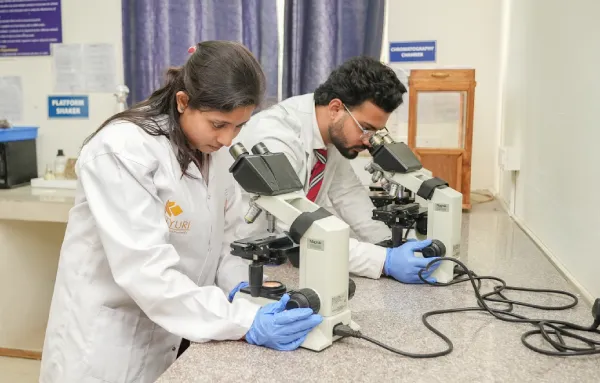
The department offers M.Sc. Chemistry (Specialization: Inorganic Chemistry, Organic Chemistry), designed to provide students with a solid grounding in theoretical concepts along with extensive practical and laboratory training. The department has developed a strong research infrastructure, supported by state-of-the-art analytical and characterization facilities such as surface area analyzers, FTIR, UV–Vis spectroscopy, GC, HPLC, etc. The department’s current research activities span a wide range of areas, including environmental chemistry, organic synthesis, natural products, organometallic chemistry, metal clusters, nanomaterials, organic–inorganic hybrid materials, and nano-biomaterials.

The MSc Chemistry program is a two-year, career-oriented postgraduate course designed to provide students with a strong foundation in chemical principles and advanced analytical skills. The program prepares graduates for successful careers in research, academia, and the chemical and pharmaceutical industries. The curriculum emphasizes organic chemistry, focusing on the synthesis, structure, and reactivity of organic molecules, which is fundamental to fields such as drug discovery, materials science, and biotechnology. In addition, students gain comprehensive knowledge of inorganic, physical, pharmaceutical, and analytical chemistry, covering areas such as reaction mechanisms, thermodynamics, kinetics, drug development, and modern instrumental techniques. With its balanced t heoretical and practical approach, the MSc Chemistry program equips students with the expertise and versatility required to meet the demands of diverse scientific and industrial sectors.


Eligibility

Bachelor’s Degree from a recognized University and admission will be based on merit, as decided by the university.

Duration : The M.Sc. Chemistry programme is of two (02) years duration, spread over four semesters, in accordance with UGC/NAAC guidelines.

Teaching Pedagogies

The M.Sc. Chemistry programme adopts a blend of traditional and modern teaching pedagogies to ensure strong conceptual understanding, practical competence, and research aptitude among students.

The lecture method is used to explain core theoretical concepts in Organic, Inorganic, Physical, and Analytical Chemistry, supported by presentations, molecular models, and problem-solving sessions. Interactive teaching through discussions, tutorials, and question–and–answer sessions encourages critical thinking and clarity of concepts.

Practical and experiential learning forms the backbone of the programme, with extensive laboratory sessions focusing on synthesis, qualitative and quantitative analysis, instrumental techniques, and safety practices. Problem-based and inquiry-based learning is promoted through numerical problem-solving, case studies, mini-projects, and research-oriented assignments, helping students apply theoretical knowledge to real chemical systems. The programme integrates ICT-enabled teaching, including smart classrooms, e-resources, virtual simulations, and access to online journals and databases, to enhance learning beyond textbooks. The seminar and presentation method develops communication skills and research awareness by engaging students with recent advances in chemistry. Continuous assessment and feedback, along with outcome-based education practices, ensure achievement of course and programme outcomes, preparing students for careers in research, academia, industry, and higher studies.

  • Problem-Based Learning (PBL) : Analyzing real-world chemical problems or case studies, such as drug synthesis challenges or environmental pollutant degradation, to develop analytical, experimental design, and critical thinking skills in organic, inorganic, and physical chemistry contexts.
  • Laboratory-Based Learning : Hands-on experimentation in advanced chemistry labs, including synthesis, purification, and characterization using techniques like NMR, IR spectroscopy, chromatography, and electrochemistry to bridge theory and practice.
  • Research Projects : Mock or real research simulations where students design experiments, hypothesize outcomes, and present findings on topics like chemosensors, photocatalysis, or anticancer agents, honing research and data interpretation skills.
  • Collaborative Group Work : Team-based projects where students from diverse backgrounds co-design experiments, interpret spectra, or solve multidisciplinary problems like renewable energy catalysis, combining expertise for innovative solutions and peer learning.
  • Service-Learning : Experiential projects partnering with local industries or communities, such as developing water quality sensors or green synthesis protocols for sustainable practices, applying chemistry to real societal needs while reinforcing ethical and civic responsibility.

Program Educational Objectives (PEOs)

PEO1

Advanced Scientific Expertise

Graduates will acquire comprehensive mastery in core chemistry disciplines including organic, inorganic, physical, and analytical chemistry, enabling them to tackle complex problems in synthesis, analysis, and molecular design.

PEO2

Research Proficiency

Graduates will demonstrate strong research skills through independent experimentation, computational modeling, spectroscopic characterization, and dissertation work, preparing them for PhD programs or R&D roles in academia and industry.

PEO3

Professional Competence

Graduates will excel in industry-relevant applications such as pharmaceuticals, materials science, renewable energy catalysis, and chemosensor development, equipped with hands-on lab skills and analytical problem-solving abilities.

PEO4

Innovation and Sustainability

Graduates will innovate sustainable chemical solutions, including green synthesis, photocatalysis, and environmental sensors, addressing global challenges in health, energy, and pollution control.

PEO5

Ethical and Interdisciplinary Leadership

Graduates will uphold ethical scientific practices, collaborate across disciplines like biology and engineering, and communicate findings effectively for leadership in research, policy, and entrepreneurial ventures.

Program Specific Outcomes (PSO)

PSO1

Perform advanced synthesis, characterization, and analysis of chemical compounds using modern spectroscopic and analytical techniques.

PSO2

Apply specialized knowledge in areas such as catalysis, materials chemistry, environmental chemistry, biophysical chemistry, and nanoscience to address real-world problems.

PSO3

Conduct literature surveys, formulate research problems, and execute independent or guided research projects using scientific methodology.

Career Pathways

The MSc in Chemistry is a significant academic degree that equips graduates with various dexterities and is acknowledged highly by employers across diverse industries. After completing an MSc Chemistry degree, graduates have job opportunities in various industries. Some of the job opportunities for MSc Chemistry graduates include:

  • Research and Development Scientist
  • Quality Control and Quality Assurance Analyst
  • Analytical Chemist
  • Process Development Chemist
  • Academia
  • Government and Regulatory Agencies
  • Chemical Sales and Marketing
  • Patent Law
  • Entrepreneurship

Program Outcomes

Core Knowledge

Acquire advanced understanding of organic, inorganic, physical, and analytical chemistry.

Practical Skills

Perform experiments using modern techniques and instruments with accuracy and safety.

Analytical Ability

Solve complex chemical problems using scientific reasoning and quantitative methods.

Research Competence

Design experiments, analyze data, and undertake independent research projects.

Instrumentation Expertise

Operate and interpret data from advanced instruments (UV-Vis, IR, NMR, chromatography).

Critical Thinking

Evaluate scientific literature and develop innovative solutions.

Communication

Present scientific results effectively through reports, seminars, and publications.

Ethics & Sustainability

Follow professional ethics and understand environmental and safety concerns.

Interdisciplinary Approach

Apply chemistry knowledge to fields like nanotechnology, materials science, and life sciences.

Career Readiness

Prepare for careers in academia, research, pharmaceuticals, and chemical industries.

Notes: Semester 1 and 2 are applicable only for regular entry students. Lateral entry students begin from Semester 3.

Course Curriculum

Semester 1

  • Inorganic Chemistry I
  • Organic Chemistry I
  • Physical Chemistry I
  • Computer for Chemists
  • General Proficiency
  • Inorganic Chemistry Lab
  • Organic Chemistry Lab
  • Physical Chemistry Lab

Semester 2

  • Inorganic Chemistry II
  • Organic Chemistry II
  • Physical Chemistry II
  • Essential Mathematics & Bio stats
  • Seminar and Research Orientation
  • General Proficiency
  • Inorganic Chemistry Lab
  • Organic Chemistry Lab
  • Physical Chemistry Lab

Semester 3

Specialization- Organic Chemistry

  • Analytical & Separation Techniques
  • Specialization Electives - One Paper in Organic Chemistry Group
  • Specialization Electives - One Paper in Organic Chemistry Group
  • Seminar and Research Orientation
  • General Proficiency
  • Specialization Electives - First Paper Labs in Organic Chemistry Group
  • Specialization Electives - Second Paper Labs in Organic Chemistry Group

Specialization- Inorganic Chemistry

  • Analytical & Separation Techniques
  • Specialization Electives - One Paper in Inorganic Chemistry Group
  • Specialization Electives - One Paper in Inorganic Chemistry Group
  • Seminar and Research Orientation
  • General Proficiency
  • Specialization Electives - First Paper Labs in Inorganic Chemistry Group
  • Specialization Electives - Second Paper Labs in Inorganic Chemistry Group

Semester 4

  • Spectroscopy
  • Dissertation and Presentation
  • Spectroscopy Lab
  • General Proficiency

Specialization Electives- Two papers in Organic Chemistry Group

  • a. Chemistry of Natural Products
  • b. Photochemistry & Pericyclic Reactions
  • c. Medicinal Chemistry
  • d. Heterocyclic Chemistry
  • e. Any Other

Specialization Electives- Two papers in Inorganic Chemistry Group

  • a. Physical Methods in Inorganic Chemistry & Group Theory
  • b. General and Organometallic chemistry
  • c. Inorganic Polymers and Supra-molecular Chemistry
  • d. Environmental & Green Chemistry
  • e. Any Other

Frequently Asked Questions

The M.Sc. Chemistry programme is of two years duration, consisting of four semesters, in accordance with UGC guidelines.

Candidates must have a B.Sc. degree with Chemistry as a core/major subject from a recognized university, with the prescribed minimum marks as per UGC norms.

Admission is based on merit followed by counseling, as per university regulations.

The programme covers Organic Chemistry.

Yes, the curriculum includes extensive laboratory courses, seminars, and a research project/dissertation in the final semester.

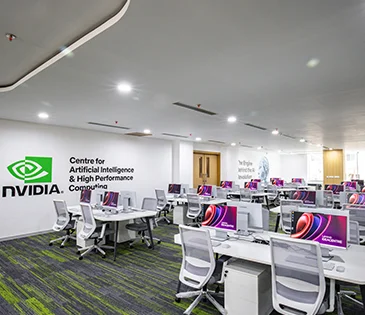
Students have access to well-equipped laboratories, advanced analytical instruments, library resources, and computational facilities.

Yes, students receive hands-on training in spectroscopic, electrochemical, chromatographic, and thermal analysis techniques.

Graduates can pursue careers in research and development, chemical and pharmaceutical industries, teaching, quality control, environmental analysis, or opt for doctoral studies and competitive examinations.

Yes, the programme is designed in compliance with UGC regulations and follows outcome-based education (OBE) principles recommended by NAAC.

Yes, the curriculum provides a strong foundation for Ph.D. programs, CSIR-NET, GATE, and other national and international competitive examinations.

Contact Us

GEU
GEU

566/6, Bell Road, Society Area,
Clement Town, Dehradun,
Uttarakhand