GEU
facilities
Level
Undergraduate
facilities
Duration
4 Years
facilities
Fee Structure
Click Here
B.Tech in Electrical and Computer Engineering with specilisation in Electrical Vehicle

Admission Procedure

Merit prepared on basis of the qualifying exam

Provisional Admission

All interested candidates should have passed Class XII from a recognized board of examination

About The Program

An undergraduate degree program, the Bachelor of Technology (B.Tech.) in Electrical and Computer Engineering with a specialization in Electric Vehicle Technology at Graphic Era Deemed to be University, emphasizes the design, development, and application of electric vehicle technology.

Specialized Courses:

Beginning with core subjects like electrical circuit analysis, signals and systems, power systems, control systems, and power electronics, students advance to specialized courses, earning an additional 18 credits through the courses such as:

  • Fundamentals and Architecture of Electric Vehicles
  • Fundamentals of Electric Vehicles Lab
  • Energy Storage Systems for Electric Vehicles
  • Electric Drives and Controllers for Electric Vehicles
  • Electric Drives and Controllers Lab
  • Advanced Power Electronics
  • Electrical Simulation Lab
  • Electric Vehicle Batteries and Charging System

Also, this program provides practical learning opportunities through internships and project work. Students can engage in exciting projects like designing and constructing electric vehicles, creating innovative charging systems, or enhancing battery efficiency.

Eligibility Criteria for the admissions in the Program

All interested candidates should have passed Class XII from a recognized board of examination with Physics, Mathematics, and Chemistry or equivalent, as per AICTE guidelines, and admission will be granted as per merit decided by the university.

Teaching Pedagogies

  • Foundation learning through core electrical & computing courses
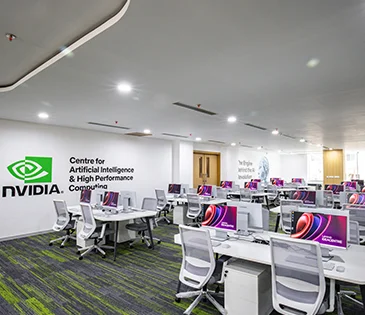
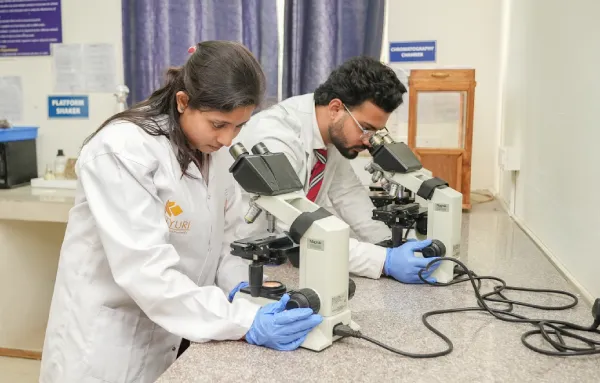
  • Hands-on labs focused on EV systems, drives, controllers, and energy storage
  • Simulation-driven learning using MATLAB/Simulink, PSIM, Ansys, and EV modelling tools
  • Project-based learning in electric vehicle design, charging systems, and battery technologies
  • Case studies on EV brands, battery tech, powertrain design, and charging ecosystems
  • Industry-integrated learning through internships, expert lectures, and EV workshops
  • EV-specific experiential learning (battery testing, drivetrain analysis, charging setups)
  • Interdisciplinary learning combining electrical, electronics, mechanical, and computer engineering
  • Flipped classroom approach for advanced EV concepts
  • Problem-based learning (PBL) focusing on real EV engineering challenges
  • Collaborative learning through EV clubs, student teams, and innovation projects
  • Continuous assessment through assignments, mini-projects, lab evaluations, and presentations

Program Educational Objectives (PEOs)

PEO1

To train students in such a manner that they will demonstrate global competency and innovative thinking by applying electrical engineering principles and cutting-edge technologies to solve complex, real-world problems in various industries and research fields.

PEO2

To prepare students in such a manner that they will actively contribute to society by applying their engineering skills in an ethical and socially responsible manner.

PEO3

To develop a strong theoretical and analytical foundation, enabling students to address diverse industrial and research challenges while pursuing continuous skill development.

PEO4

To prepare students in such a manner that they will engage in research and development activities, utilizing well-equipped laboratories to push the boundaries of electrical engineering, while demonstrating leadership in multidisciplinary teams and projects.

PO1

Engineering Knowledge

Apply knowledge of mathematics, natural science, computing, engineering fundamentals, and an engineering specialization to develop solutions for complex engineering problems.

PO2

Problem Analysis

Identify, formulate, review research literature, and analyze complex engineering problems to reach substantiated conclusions considering sustainable development.

PO3

Design/Development of Solutions

Design creative solutions for complex engineering problems and develop systems, components, or processes that meet specified needs considering public health, safety, whole-life cost, net zero carbon, culture, society, and environment.

PO4

Conduct Investigations of Complex Problems

Conduct investigations of complex engineering problems using research-based knowledge, including design of experiments, modelling, analysis, and interpretation of data to produce valid conclusions.

PO5

Engineering Tool Usage

Create, select, and apply appropriate techniques, resources, and modern engineering and IT tools, including prediction and modelling, while recognizing their limitations to solve complex engineering problems.

PO6

The Engineer and The World

Analyze and evaluate societal and environmental aspects while solving complex engineering problems, considering sustainability, economy, health, safety, legal frameworks, culture, and environment.

PO7

Ethics

Apply ethical principles and commit to professional ethics, human values, diversity and inclusion, and adhere to national and international laws.

PO8

Individual and Collaborative Team Work

Function effectively as an individual, and as a member or leader in diverse and multidisciplinary teams.

PO9

Communication

Communicate effectively within the engineering community and society at large, including the ability to write reports, design documentation, and deliver presentations considering cultural, linguistic, and learning differences.

PO10

Project Management and Finance

Apply knowledge of engineering management principles and economic decision-making to manage projects in multidisciplinary environments as an individual or team member/leader.

PO11

Life-long Learning

Recognize the need for, and demonstrate ability in, independent and life-long learning, adaptability to new and emerging technologies, and critical thinking in the context of technological change.


Career Pathways

Graduates of the B. Tech in Electrical and Computer Engineering with Specialization in Electrical Vehicle are well-equipped for diverse career opportunities in electric mobility, power electronics, energy storage, and technology-driven industries. Some potential career pathways include:

Core Engineering Roles

EV Design Engineer / Systems Engineer

Battery & BMS Engineer

Electric Drives and Power Electronics Engineer

Charging Infrastructure & Smart Mobility Engineer

Embedded Systems / Automotive Software Developer

EV Manufacturing, Testing & Quality Control Engineer

R&D Engineer in Electric Mobility

EV Policy, Consulting, and Government Sector Roles

Entrepreneur in EV components, charging solutions, or smart mobility startups

Placements

Graphic Era Deemed to be University has a strong connection to various industries, and its track record for successfully placing students in reputable positions is outstanding, with graduates being placed in internships and permanent roles. The university has formed valuable relationships with globally recognized companies such as Amazon, Microsoft, Google, Walmart, Adobe, and many more, providing students with ample opportunities to kick-start their careers.

Graduates from Graphic Era Deemed to be University can be confident in their ability to succeed in the workforce due to the exceptional training and real-world experience they gain from their internships and placements with these top-tier companies.

Notes: Semester 1 and 2 are applicable only for regular entry students. Lateral entry students begin from Semester 3.

Course Curriculum

Semester 1

  • Professional Communication
  • Engineering Physics
  • Engineering Mathematics-I
  • Basic Electrical Engineering
  • Fundamentals of Computer & Introduction to Programming
  • Design Thinking
  • Basic Electrical Engineering Lab
  • Physics Lab
  • Workshop and Manufacturing Practices
  • Computer Lab - I

Semester 2

  • Advanced Professional Communication
  • Engineering Chemistry
  • Engineering Mathematics-II
  • Programming for Problem Solving
  • Basic Electronics Engineering
  • Chemistry Lab
  • Engineering Graphics and Design Lab
  • Computer Lab - II
  • Basic Electronics Engineering Lab
  • Basic Civil Engineering Lab

Semester 3

  • Mathematics-III
  • Electrical Circuit Analysis
  • Electromagnetic Field Theory
  • Data Structures with C
  • Analog Electronics
  • Career Skills-I
  • Universal Human Value -II
  • Electrical Circuits and Measurements Lab
  • Data Structures Lab
  • Analog Electronics Lab

Semester 4

  • Electrical Machines
  • Microprocessor and Interfacing
  • Signals and Systems
  • Programming in Java
  • Logic Design and Computer Organization
  • Career Skill - II
  • Electrical Machines Lab
  • Microprocessor Lab
  • Programming in Java Lab

Semester 5

  • Power Systems–I
  • Control Systems
  • Computer Networks
  • Design and Analysis of Algorithms
  • Open Elective
  • Career Skills-III
  • Disaster Management
  • Power Systems Lab - I
  • Control Systems Lab
  • Algorithms Lab
  • Minor Project
  • Fundamentals and Architecture of Electric Vehicles
  • Fundamentals of Electric Vehicles Lab
  • Energy Storage Systems for Electric Vehicles

Department Specific Elective-I

  • Electrical Machine Design
  • Electrical and Electronics Measuring Instruments
  • Digital Signal Processing
  • Introduction to Electrical Energy Sources
  • Web Designing and Management
  • Scientific Computing using MATLAB
  • Object Oriented Programming with C++
  • Machine Learning

Semester 6

  • Power Electronics
  • Power Systems – II
  • Power System Protection
  • Operating Systems
  • Open Elective
  • Career Skills-IV
  • Power Electronics Lab
  • Power Systems – II Lab
  • Operating Systems Lab
  • Electric Drives and Controllers for Electric Vehicles
  • Electric Drives and Controllers Lab

Department Specific Elective – II

  • Digital Control Systems
  • Industrial Automation
  • High Voltage Engineering
  • Industrial Instrumentation
  • Non-Conventional Energy Resources and Energy Systems
  • Electrical and Hybrid Vehicles
  • Battery Management System
  • Database Management System
  • Number Theory and Cryptography
  • Data Mining and Data Warehousing
  • Graph Theory
  • Computer Architecture
  • Network Programming and Wireless Technologies
  • Image Processing and Computer Vision

Semester 7

  • Electrical Drives
  • Open Elective
  • Electrical Drives Lab
  • Industrial Seminar
  • Project Phase - I
  • Advanced Power Electronics
  • Electrical Simulation Lab

Department Elective - III

  • Utilization of Electrical Energy
  • Electrical Energy Management and Auditing
  • HVDC Transmission Systems
  • Electrical Design Estimating and Costing
  • Special Electrical Machines
  • Biomedical Electronics
  • Optimization Techniques
  • Advanced Systems Engineering
  • Human Computer Interaction
  • Mobile Computing and Communication
  • Big Data Analytics
  • Cloud Computing
  • Advanced Computer Architecture

Semester 8

Department Elective - IV

  • Robotics
  • Robust Control Theory
  • Power System Dynamics and Control
  • Modelling and Simulation of EHV
  • Distributed Generation
  • Power Plant Instrumentation
  • Wind and Solar Energy Systems
  • Smart Grid Technology
  • Grid Integration of Renewable Sources
  • Artificial Neural Network and Fuzzy Logic
  • Power System Planning and Reliability
  • Open Elective
  • Project Phase - II
  • General Proficiency
  • Electric Vehicle Batteries and Charging System

Department Elective - V

  • Data Communication
  • System Programming
  • Software Engineering
  • Compiler Design
  • Fundamentals of IoT
  • Mobile Application Development
  • Quantum Computing

Frequently Asked Questions

To earn the specialization, students must successfully complete an additional 18 credits through designated EV-focused courses, including subjects such as Electric Vehicle Fundamentals, Energy Storage Systems, Electric Drives and Controllers, Advanced Power Electronics, EV Batteries and Charging Systems, along with associated laboratory courses and project work.

The specialization offers comprehensive knowledge of electric vehicle technology, covering EV architecture, battery systems, electric drives, charging infrastructure, and advanced power electronics. It prepares students for fast-growing EV industry roles in India and abroad.

Graduates can pursue roles such as EV design engineer, battery systems engineer, charging infrastructure engineer, power electronics engineer, and R&D specialist. Top recruiters include Tata Motors, Mahindra Electric, Tesla, Ola Electric, Ather Energy, Exide, Bosch, Siemens, ABB, and other EV manufacturers and technology firms.

Contact Us

GEU
GEU

566/6, Bell Road, Society Area,
Clement Town, Dehradun,
Uttarakhand