





GEU
facilities
Level
Postgraduate
facilities
Duration
2 Years
M.Des. (User Experience and Interaction Design)

Admission Procedure

Seats to be allocated based on projected scores (Bachelor’s Degree), and calculated basis the candidate’s 12th percentage.

Provisional Admission

Merit will be prepared on the basis of the qualifying exam.

About The Program

Strategic design for next-generation intelligent systems – advances transdisciplinary practice by leveraging Human Intelligence (HI), Artificial Intelligence (AI) and Emerging Technologies to drive innovation in systemic design, organizational strategy, and the augmentation of Human Environment Cognition (HEC).

The Master of Design (M.Des.) program is an advanced, post-professional specialization designed for passionate thinkers and leaders who want to move beyond conventional practice and operational execution. This program cultivates a new generation of design strategists equipped to engage with the highest levels of complexity.

The curriculum is focused on deep theoretical inquiry and transdisciplinary application, driving innovation in systemic design and organizational strategy by integrating the analytical power of Artificial Intelligence (AI) with the ethical, creative capacities of Human Intelligence (HI). Graduates learn to design product-services-systems, the policies, and intelligent frameworks that govern future technologies.

This program focuses on tackling complex, systemic challenges, navigating disruptive technologies, and meticulously considering their long-term consequences across society and the environment. Rather than focusing on product or interface specializations, the M.Des. program concentrates on advanced domains such as Design for Complexities, Future-Proofing Organizational Strategy, and Computational Ethics. A core specialization is the augmentation of Human Environment Cognition (HEC), the capacity to design intelligent systems that enhance human awareness and decision-making within highly complex and dynamic environmental and operational contexts (e.g., smart infrastructure, public health systems, or ecological networks).

Students are equipped to investigate, critically envision, and strategically shape preferred societal, technological, and environmental futures. Graduates utilize advanced design methodologies to build positive, resilient, and sustainable outcomes, translating theoretical knowledge into actionable strategies.

Eligibility

Academic Qualification

To be eligible for the Master of Design (M.Des.) program, a candidate must have a Bachelor’s Degree of minimum 4 years duration in any specialization.

The candidate must have obtained at least 50% marks (45% marks in case of candidates belonging to reserved category) in the qualifying examination.

Entrance Exam

Candidate’s admission may be based on Graphic Era’s entrance test, or a personal interview, unless they have a valid score from a national-level entrance exams like GATE / CEED / NID-DAT / NIFT Entrance Exam.

Entrance Exam is exempted for GEU Alumni.

Teaching Pedagogies

The design pedagogy is aimed at empowering future designers with building-in enhanced human intelligence (HI) for creative problem-solving with AI assisted holistic curriculum that cultivates intelligence, capacity, skills, tools, method, technique, and crucial additional factors in a developmental sequence, fostering well-rounded creative minds.

Design education embraces the synergy of Al and HI, forging a 'hyper-transdisciplinary' approach. This empowers learners to tackle complex challenges through deep integration of knowledge, Al-augmented creativity, and ethically guided innovation. Cultivating both Al literacy and enhanced human intelligence will be central to shaping impactful design solutions for tomorrow's world.

Building-in Areas of Expertise in Innovation

Design Strategy

Defines the overarching vision and framework for design decisions to achieve specific goals.

  • User research
  • Design direction
  • Culture & context
  • Design impact
  • Socio-business design
  • Strategic design

Design Tools & Technologies

Equips students with the practical skills to translate concepts into tangible outputs using relevant software and methods.

  • Design thinking
  • CAD softwares
  • Human intelligence & Artificial intelligence
  • Ergonomics
  • Prog. languages
  • XR Lab (AR+VR+MR)
  • Emerging technologies

Design Innovation

Fosters creative problem-solving and the development of novel and impactful design solutions.

  • Design process
  • HCI - Human Factors
  • Inclusive Design
  • Systems thinking
  • Managing uncertainty
  • Value realization & creation

Experience Design

Focuses on understanding and shaping meaningful and user-centric interactions across touchpoints.

  • Multi-sensory design
  • Human interface
  • Nature & sustainability
  • Design futures
  • Product lifestyle
  • Holistic User Experience

Business Design Management

Integrates design thinking with business principles for strategic decision-making and value creation.

  • Business tools for Design
  • Leadership & change maker
  • Design management
  • Professional communication
  • Promotion & awareness
  • Business strategy
  • Project management

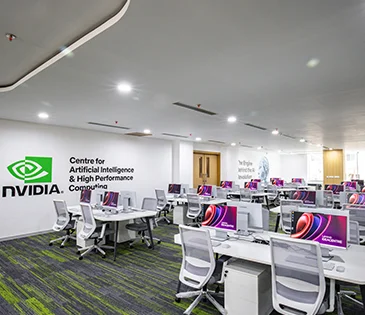
Infrastructure

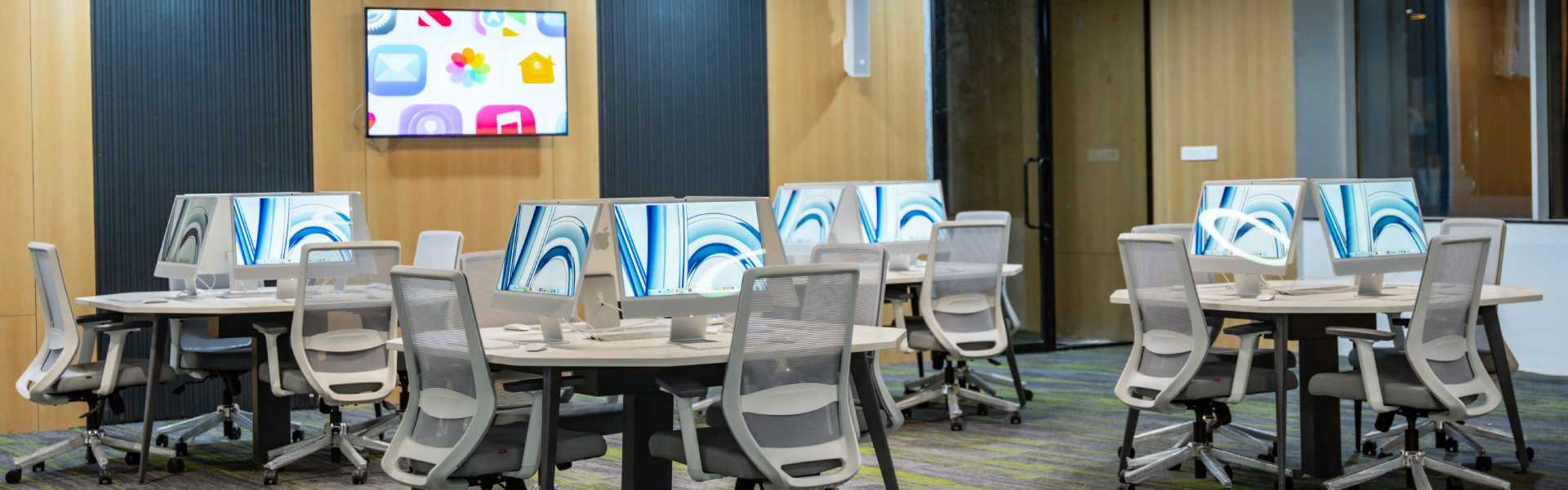
  • Drawing Studios
  • Illustration and Graphic Design Studios
  • Photography Studio
  • Sound Mixing and Recording Studio
  • Cinematography Studio
  • CAD Studio
  • Visual Merchandising Studio
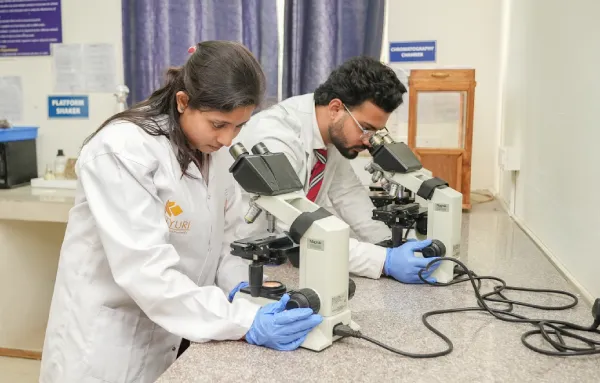
  • Ergonomics Lab
  • Fabrication Lab
  • Mechatronics lab
  • CNC Lab and Laser Cutting Shop Floor
  • 3D Printing Facility
  • Material Testing lab
  • IoT Lab
  • AR/VR Lab & Usability Lab
  • Creative Display Studio
  • Prototyping Workshops (such as Wood, Metal, Plastic, Paint shop, Assembly workshop)

Specialization

Stream: M.Des. (User Experience and Interaction Design)

The goal of ‘User Experience and Interaction Design’ stream is to create meaningful, usable, and desirable interactive products, systems, and services that effectively meet user needs within their environment, while also considering the impact on life and the broader ecosystem, aiming for both user well-being and sustainable outcomes.

The stream advocates that effective User Experience (UX) design is achieved by integrating three core components: Technology, the platforms and tools used, a deep understanding of Human evolution, how users think and act, and Foresight anticipating future needs and trends. This comprehensive approach ensures the resulting UX is consistently intuitive, valuable, and seamless.

User Experience (UX) and Interaction Design (IxD) determine how people interact with products, services, and systems. UX focuses on the overall feeling and journey a user has, while Interaction Design specifically shapes the moments of interaction to be intuitive, efficient, and delightful.

User Experience and Interaction Design determines the value of a communication service to its users, and the quality of experience they have when using it.

User Experience and Interaction Design (UX-UI) involves developing the full range of engagement a person has with a product or service. This interaction is not just functional; it’s a physical and emotional discourse that is brought to life by how the user experiences the combination of form, function, and technology over time.

Highlight Areas

Augmented Cognition and Decision Support Systems, Interaction Design for Human-AI Partnership, End-to-End Service Design Strategy and Blueprinting, Experience Ethics, Inclusion, and Privacy Design, Strategic Foresight and Trend Integration in UX, Social-Tech and many more.

Program Educational Objectives (PEOs)

PEO1

To prepare graduates for advanced leadership careers in diverse UX and interaction design domains by building mastery in theoretical knowledge, research methodologies, and advanced problem-solving capabilities applicable to complex, multidisciplinary design challenges in emerging technological contexts.

PEO2

To develop responsible and ethical design leaders capable of driving innovation and strategic thinking both as independent design practitioners and as collaborative team leaders in dynamic, technology-driven work environments while demonstrating cultural sensitivity and inclusive design practices.

PEO3

To equip graduates with advanced research competencies and scholarly aptitude necessary to pursue doctoral studies, engage in cutting-edge design research, or lead research and development initiatives within industry and academic institutions in UX, interaction design, and allied fields.

PEO4

To instill in graduates the ability to anticipate, embrace, and drive evolving design practices, emerging technologies, and future interaction paradigms through a mindset of lifelong learning, continuous innovation, and thought leadership in the rapidly advancing field of experience design.

Program Outcomes (POs)

PO1

Analyzing

Identify and analyze complex design challenges by applying critical thinking and contextual awareness across cultural, societal, and technological domains.

PO2

Understanding

Understand user needs, behaviors, and values through empathy-driven approaches to create inclusive, human-centered design outcomes.

PO3

Applying

Apply design thinking methodologies and creative problem-solving processes to address real-world design problems effectively.

PO4

Evaluating

Conduct and evaluate design research using appropriate qualitative and quantitative methods to generate informed insights.

PO5

Synthesizing

Integrate diverse inputs—technical, emotional, and aesthetic—into cohesive and impactful design solutions.

PO6

Reflecting

Demonstrate professional ethics, self-awareness, and reflective practice in individual and collaborative design work.

PO7

Creating

Conceptualize and develop original, adaptive, and future-oriented design ideas using imagination, iteration, and prototyping.

PO8

Sustaining

Evaluate the social, environmental, and ethical implications of design choices, promoting sustainability and responsible innovation.

PO9

Collaborating

Function effectively in interdisciplinary teams, managing roles and responsibilities across the design and development process.

PO10

Communicating

Express design ideas, processes, and outcomes clearly through visual, verbal, and written communication tailored to varied audiences and contexts.

Program Specific Outcomes (PSOs)

PSO1

Apply user-centered design principles and methodologies to create meaningful, intuitive, and engaging digital experiences.

PSO2

Conduct user research and usability testing using appropriate tools and methods to gather actionable insights and improve interaction design.

PSO3

Design effective information architectures and interaction flows that support usability, accessibility, and responsive behavior across devices.

PSO4

Prototype interactive systems using low-fidelity and high-fidelity tools, incorporating feedback to iterate design solutions.

PSO5

Apply visual and motion design principles to enhance user interface aesthetics and micro-interactions for improved user satisfaction.

PSO6

Integrate ethical, inclusive, and sustainable practices in UX design, ensuring accessibility for users of diverse backgrounds and abilities.

PSO7

Collaborate with multidisciplinary teams to align user needs, business goals, and technological feasibility in the design process.

PSO8

Communicate research findings, design rationales, and interaction strategies effectively to stakeholders using industry-standard documentation and tools.

PSO9

Critically evaluate emerging technologies and UX trends to develop future-ready and innovative interaction solutions.

PSO10

Demonstrate professionalism, adaptability, and commitment to lifelong learning in the rapidly evolving field of user experience design.

Career Prospects

Design permeates virtually every facet of modern industry, making it an indispensable discipline across a vast array of sectors. Graduates from design programs find opportunities in established fields where shaping human experiences and creating meaningful solutions are paramount in the industry domains such as:

  • Technology
  • Healthcare
  • Banking & Finance
  • Fashion
  • E-Commerce
  • Education
  • Entertainment
  • Media & Publishing
  • Automotive
  • Telecommunication
  • Aviation
  • Agriculture
  • Logistics & Supply Chain
  • Manufacturing
  • Clean Energy / Greentech
  • Government,
  • Consulting
  • Smart Home & IoT
  • Robotics
  • Food & Beverage technology
  • Sports Tech.
  • Sustainable development
  • Travel & Hospitality
  • Urban planning
  • User research agencies
  • Nonprofit organizations
  • Design Studio / Entrepreneurship

Graduates of the M.Des. in User Experience and Interaction Design program are highly sought-after professionals in the modern design industry. The list of potential employment opportunities as following:

  • UX-UI Designer
  • User Researcher Information Architect
  • User Experience Strategist
  • Accessibility Expert
  • Design Researcher
  • UX Writer
  • Usability Tester
  • Product Designer
  • Front-end Developer
  • Service Designer
  • Usability Analyst
  • Accessibility Specialist
  • UX-UI Design Manager
  • Innovation Consultant
  • Creative Technologist
  • Freelance/Independent Designer
  • Academic/Researcher
Graphic Era (Deemed to be University)

Placements

Graphic Era Deemed to be University has a strong connection to various industries, and its track record for successfully placing students in reputable positions is outstanding, with graduates being placed in internships and permanent roles. The university has formed valuable relationships with globally recognized companies such as Amazon, Microsoft, Google, Walmart, Adobe, and many more, providing students with ample opportunities to kick-start their careers.

Graduates from Graphic Era Deemed to be University can be confident in their ability to succeed in the workforce due to the exceptional training and real-world experience they gain from their internships and placements with these top-tier companies.

Notes: Semester 1 and 2 are applicable only for regular entry students. Lateral entry students begin from Semester 3.

Course Curriculum

Semester 1

Core Courses

  • Cultural Context & Design Practices
  • Design Innovation Strategy & Impact
  • AI-Augmented Creativity & Programming
  • Human-Computer Interaction
  • Interaction Design
  • Interactive Media & Processes
  • Program Elective 1
  • Program Elective 2
  • Healthy Living and Fitness
  • Environmental Science

Program Electives

  • Form & Function
  • Object Studies & Technical Drawing
  • Interaction Fundamentals
  • Design Thinking Methods
  • Visual Composition & Layout
  • Basics of Typography & Letterform
  • Animation Principles
  • Gesture & Anatomy Sketching
  • Design Research for Product Design
  • Design Research Methods
  • Visual Research & Analysis
  • Language of Moving Images
  • Sustainable Materiality & Circularity
  • MOOC course (such as Swayam course, iLearn courses)

Semester 2

Core Courses

  • Systems Thinking & Circularity
  • Special Needs, Inclusive & Assistive Design
  • User Interface Systems & Architecture
  • Prototyping for Emerging Interaction Technologies
  • Program Elective 3
  • Program Elective 4
  • Program Elective 5
  • Program Elective 6
  • Industry Visit
  • The Constitution of India
  • Nature Studies

List of Electives

  • Digital Interface & Visualisation 2
  • Form & Function Integration
  • Programming 2
  • Biophilic Design
  • Typography Design
  • Composition in Context
  • Design for and with AI
  • Sensing Nature
  • Factory Visit
  • Manufacturing & Assembly Techniques
  • UX Content Strategy
  • Design for Publication
  • Animation Production Pipeline
  • Spatial Media & Interactive Narratives
  • More than Human Design
  • Product Interface Design
  • Behavioral Design & Gamification
  • Design for Social Change
  • Craft of Direction
  • Design for Social Change & Inclusive Cities
  • MOOC course (such as Swayam course, iLearn courses)

Semester 3

Core Courses

  • Strategic Design & Entrepreneurship
  • Research Methodology
  • Design Industry Internship
  • UX Strategy & Service Design
  • Usability Engineering & Testing
  • Program Elective 7
  • Program Elective 8
  • Universal Human Values and Professional Ethics
  • Indian Knowledge System

Program Electives

  • Product Packaging & Detailing
  • Data-Driven UX Design
  • Packaging Graphics
  • 2D & 3D Animation
  • Game Development
  • Studio Visit
  • Interior Immersive Technologies
  • MOOC course (such as Swayam course, iLearn courses)

Semester 4

Core Courses

  • Graduation Capstone Project
  • Design Research Publication
  • Professional Portfolio & Case Studies

Contact Us

GEU
GEU

566/6, Bell Road, Society Area,
Clement Town, Dehradun,
Uttarakhand