


GEU
facilities
Level
Postgraduate
facilities
Duration
2 Years
facilities
Fee Structure
Click Here
M.Sc. Food Technology

Admission Procedure

Merit prepared on basis of the qualifying exam

Provisional Admission

Candidates with B. Sc. Food Technology/B. Sc. Foods and Nutrition/B. Sc. Nutrition and Dietetics/B. Sc. Agriculture/Bachelors in Biological Sciences and relevant stream

About The Program

The Department of Food Science & Technology at Graphic Era (Deemed to be University) offers excellent courses at the postgraduate level, providing students with a solid foundation in food science and technology and preparing them for careers in various sectors of the food industry.

The state-of-the-art facilities, highly qualified faculty members, and opportunities for practical experience make it an ideal place for students to pursue a career in the food technology. The postgraduate courses offered by the department include M.Sc. Food Technology.

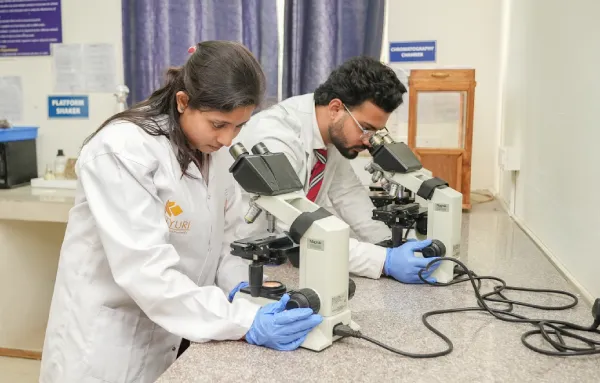
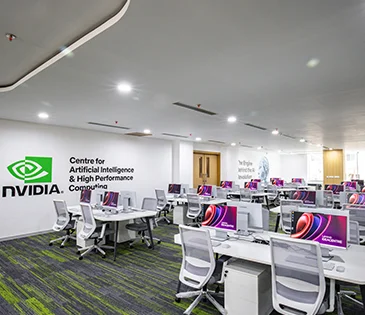
The Department has well-equipped laboratories, research facilities, and a library with a vast collection of books and journals. The department has highly qualified faculty members who are experts in their fields and have extensive experience in teaching and research. The university also provides students with opportunities for internships, industrial visits, and research projects to gain practical experience in the field. The department has collaborations with various industries and research institutions, providing students with exposure to real-world problems and the latest developments in the field.


Eligibility

Candidates with B. Sc. Food Technology/B. Sc. Foods and Nutrition/B. Sc. Nutrition and Dietetics/B. Sc. Agriculture/Bachelors in Biological Sciences and relevant stream

Teaching Pedagogies

  • Industry Exposure
    Internships, industrial visits, and collaborative projects with industries and research institutes to connect theory with real-world applications.
  • Practical Skill Development
    Hands-on laboratory sessions, research-oriented activities, and access to advanced facilities for skill enhancement.
  • Integrated Learning
    Learner-centric and outcome-based teaching through interactive lectures, case studies, and conceptual discussions.
  • Holistic Evaluation & Growth
    Continuous assessment through assignments and practical, supported by expert talks and workshops for overall academic and professional development.

Program Educational Objectives (PEOs)

PEO1

Post-graduates will be able to further their careers in companies, R&D facilities, academia, or entrepreneurship in the field of food processing.

PEO2

Food science & technology course enhances the potential of students and meets the food requirements of modern society.

PEO3

To produce professional post-graduates ready to work with a sense of responsibility, ethics and enabling them to work efficiently individually and also as a team.

PEO4

To impart the competency in students so that they are able to pursue higher studies and research in areas of technology and other professionally related fields.

Program Outcomes (POs)

PO1

Science knowledge

Apply the knowledge of technological principles underlying food science to the solution of complex science problems.

PO2

Problem analysis

Identify, formulate, review research literature, and analyze complex engineering problems reaching substantiated conclusions using first principles of sciences and technology.

PO3

Design/development of solutions

Skills and knowledge necessary to design solutions that address the complexities of the food technology industry while prioritizing public health, safety, and environmental sustainability, as well as considering cultural and societal factors.

PO4

Conduct investigations of complex problems

Use research-based knowledge and research methods including design of experiments, analysis and interpretation of data, and synthesis of the information to provide valid conclusions for complex problems.

PO5

Modern tool usage

Utilize, select, and apply modern tools, including prediction and modeling techniques, effectively in complex food technology activities while recognizing their limitations.

PO6

The technologist and society

Apply contextual reasoning to assess societal, health, safety, legal, and cultural issues in food technology practice, ensuring ethical and responsible professional conduct.

PO7

Environment and sustainability

Understand the environmental and societal impacts of food technology solutions, and integrate sustainable development principles into professional practice.

Program Specific Outcomes (PSOs)

PSO 1

Post-graduate will acquire knowledge of food science and technology through theory and practical.

PSO 2

Post-graduate will develop the essential skills of food safety and quality.

PSO 3

Post-graduate will gain knowledge to solve problems related to sustainable development.

Career Pathways

They have various career opportunities as:

  • Food Technologist
  • Quality Assurance Manager
  • Product Development Scientist
  • Food Safety Officer
  • Research Scientist
  • Regulatory Affairs Officer
  • Supply Chain Manager
  • Entrepreneur in the Wellness Industry

Notes: Semester 1 and 2 are applicable only for regular entry students. Lateral entry students begin from Semester 3.

Course Curriculum

Semester 1

  • Food Chemistry
  • Emerging Technology for Food Processing and Preservation
  • Milling Technology and Processing of Grains and Oilseeds
  • Food Microbiology and Safety
  • Food Chemistry Lab
  • Emerging Technology for Food Processing and Preservation Lab
  • Milling Technology and Processing of Grains and Oilseeds Lab
  • Food Microbiology and Safety Lab

Semester 2

  • Unit Operations in Food
  • Food Packaging Technology
  • Processing of Livestock and Marine
  • Nutraceuticals and Health Foods / Food Analytical Methods
  • Unit Operations in Food Lab
  • Food Packaging Technology Lab
  • Processing of Livestock and Marine Lab
  • Nutraceuticals and Health Foods Lab / Food Analytical Methods Lab

Semester 3

  • Post-Harvest Technology of Fruits and Vegetables
  • Food Quality and Sensory Evaluation
  • Food Product Development and Entrepreneurship
  • Baking and Confectionery Technology / Technology of Dairy
  • Post-Harvest Technology of Fruits and Vegetables Lab
  • Food Quality and Sensory Evaluation Lab
  • Food Product Development and Entrepreneurship Lab
  • Baking and Confectionery Technology Lab / Technology of Dairy Lab

Semester 4

  • Dissertation / Research Project
  • Seminar
  • General Proficiency

Frequently Asked Questions

Yes, through labs and industrial visits.

Yes, collaborations provide internships, expert talks, and real-world exposure.

Food Technologist, QA Manager, Food Safety Officer, Product Developer, Research Scientist, and more.

Yes, students are encouraged to participate in research projects, conferences, workshops, and publications.

Contact Us

GEU
GEU

566/6, Bell Road, Society Area,
Clement Town, Dehradun,
Uttarakhand