



GEU
facilities
Level
Undergraduate
facilities
Duration
4 Years
facilities
Fee Structure
Click Here
B.Sc. / B.Sc. (Hons.)  Graphic and Interaction Design

Admission Procedure

Merit will be prepared on the basis of the qualifying exam.

Provisional Admission

Seats to be allocated based on projected scores (12th), calculated based on the candidate’s 10th percentage.

About The Program

The B.Sc. (Hons.) Graphic and Interaction Design program is a future-focused undergraduate program that integrates visual communication, digital storytelling, user experience, interaction design, motion, creative technology and emerging media. It prepares students to design meaningful digital content, interfaces and interactive experiences for a world in which media, technology and human behavior are continuously converging.

The seamless integration of human and artificial cognition leveraged through Emerging Technologies is the core of our practice. This dynamic, transdisciplinary method builds a foundation for leading innovation in user-environment-centered problem-solving and creative product development.

The curriculum develops well-rounded creative professionals by combining the expressive strengths of graphic and visual communication design with the research, systems and prototyping capabilities of user experience and interaction design. Students build strong foundations in visualisation, composition, materials, narrative, digital interfaces and creative coding before advancing into user-centered design, information architecture, branding, digital media, interface design, motion and interactive systems.

Studio-based learning enables students to investigate user needs and cultural contexts, translate research into concepts, prototype interactions, create visual and motion assets, and evaluate design outcomes across screens, connected products and immersive environments. The program encourages the responsible use of AI-assisted workflows while reinforcing human judgment, originality, accessibility, intellectual property awareness and ethical communication.

The first three years establish integrated professional capability and conclude with an intensive Industrial Internship in Semester 6. The honours year deepens expertise in new media interaction, inclusive design, motion and microinteractions, strategic design and entrepreneurship, culminating in an independent Graduation Project and Design Colloquium. Graduates are prepared to contribute across digital product teams, media and entertainment, creative technology, experience design, branding, research, consulting and entrepreneurial practice.

Eligibility Criteria for Admission

  • Academic Qualification : To be eligible for the B.Sc. (Hons.) Graphic and Interaction Design program, a candidate must have passed the 10+2 examination.
  • Entrance Exam : Candidate admission may be based on Graphic Era's entrance test or a personal interview, unless the candidate has a valid score from a national-level entrance examination such as UCEED / NID-DAT / NIFT Entrance Exam.

Teaching Pedagogies

The design pedagogy is aimed at empowering future designers with building-in enhanced human intelligence (HI) for creative problem-solving with AI assisted holistic curriculum that cultivates intelligence, capacity, skills, tools, method, technique, and crucial additional factors in a developmental sequence, fostering well-rounded creative minds.

Design education embraces the synergy of AI and HI, forging a 'hyper-transdisciplinary' approach. This empowers learners to tackle complex challenges through deep integration of knowledge, AI-augmented creativity, and ethically guided innovation. Cultivating both AI literacy and enhanced human intelligence will be central to shaping impactful design solutions for tomorrow's world.

Design Strategy

Defines the overarching vision and framework for design decisions to achieve specific goals.

  • User research
  • Design direction
  • Culture & context
  • Design impact
  • Socio-business design
  • Strategic design

Design Tools & Technologies

Equips students with the practical skills to translate concepts into tangible outputs using relevant software and methods.

  • Design thinking
  • CAD softwares
  • Human intelligence & Artificial intelligence
  • Ergonomics
  • Prog. languages
  • XR Lab (AR+VR+MR)
  • Emerging technologies

Experience Design

Fosters creative problem-solving and the development of novel and impactful design solutions.

  • Design process
  • HCI - Human Factors
  • Inclusive Design
  • Systems thinking
  • Managing uncertainty
  • Value realization & creation

Experience Design

Focuses on understanding and shaping meaningful and user-centric interactions across touchpoints.

  • Multi-sensory design
  • Human interface
  • Nature & sustainability
  • Design futures
  • Product lifestyle
  • Holistic User Experience

Business Design Management

Integrates design thinking with business principles for strategic decision-making and value creation.

  • Business tools for Design
  • Leadership & change maker
  • Design management
  • Professional communication
  • Promotion & awareness
  • Business strategy
  • Project management

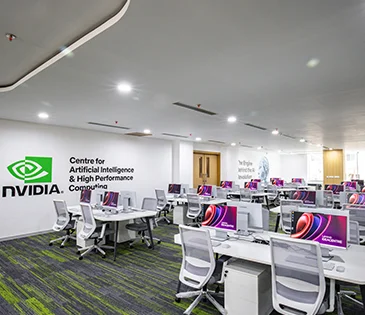
Infrastructure

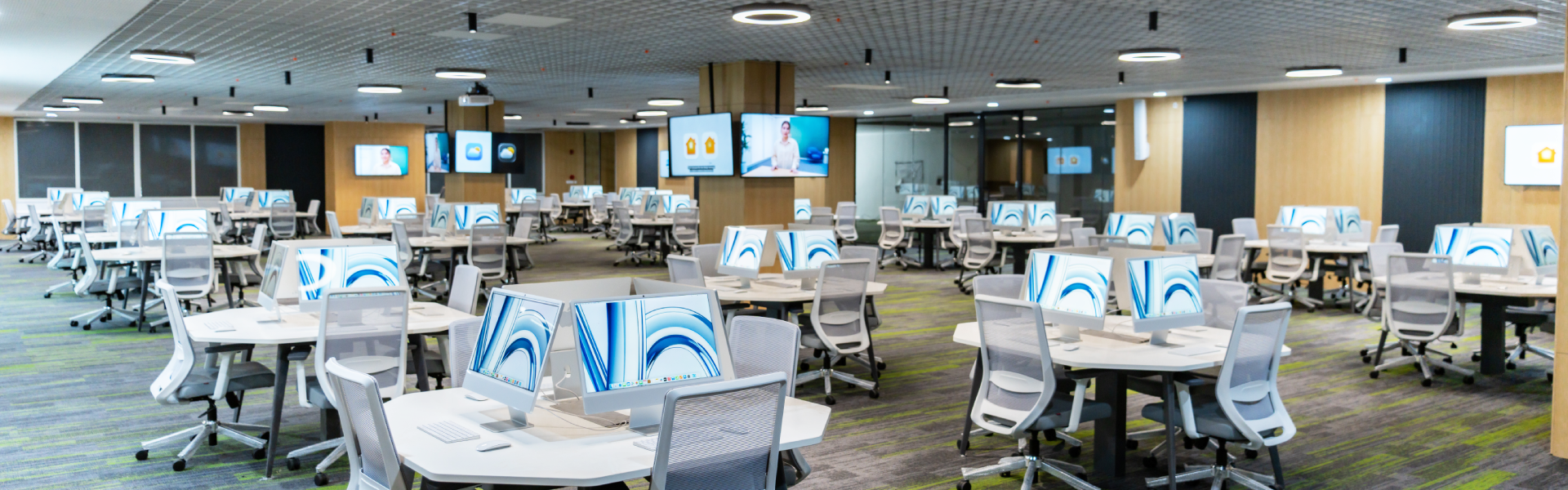
  • Drawing Studios
  • Illustration and Graphic Design Studios
  • Photography Studio
  • Sound Mixing and Recording Studio
  • Cinematography Studio
  • CAD Studio
  • Visual Merchandising Studio
  • Prototyping Workshops (such as Wood, Metal, Plastic, Paint shop, Assembly workshop)
  • Ergonomics Lab
  • Fabrication Lab
  • Mechatronics lab
  • CNC Lab and Laser Cutting Shop Floor
  • 3D Printing Facility
  • Material Testing lab
  • IoT Lab
  • AR/VR Lab & Usability Lab
  • Creative Display Studio

Specializations

B.Sc. (Hons.) Graphic and Interaction Design

This interdisciplinary program prepares designers and creative technologists to shape compelling digital media and intuitive interactive experiences across platforms. It strengthens Human Intelligence (HI) through visual literacy, critical inquiry, empathy, systems thinking and iterative making, enabling students to communicate ideas clearly while designing technology that is usable, inclusive and socially responsible.

The curriculum brings together typography, composition, branding, digital media, motion and narrative with user research, information architecture, interface design, prototyping and interaction systems. Students learn to move fluently between content and behavior: they can construct a visual language, define an experience flow, prototype interaction, refine microinteractions and evaluate the result with users.

Through studio projects, industry exposure and an Industrial Internship, students address contemporary briefs for websites, mobile applications, digital platforms, interactive campaigns, installations and emerging media. The honours year extends this learning into accessible new media experiences, motion-led interaction, strategic design and entrepreneurship before students synthesize their capabilities in a substantial Graduation Project.

The program therefore produces adaptable graduates who can collaborate across design, technology, content and business teams; make informed use of AI and emerging technologies; and create coherent digital experiences that deliver cultural, social and commercial value.

Highlight Areas

  • Digital Media Design
  • User Experience and Interaction Design
  • Visual Interface Design
  • Creative Coding and Interactive Prototyping
  • Motion Design and Microinteractions
  • Digital Storytelling and Narrative
  • Branding and Identity Systems
  • Information Architecture
  • Inclusive and Accessible Design
  • New Media and Emerging Technologies
  • Immersive Media (AR/VR/XR)
  • Strategic Design and Entrepreneurship

Program Educational Objectives (PEOs)

PEO1

To prepare students for successful careers in diverse design domains by building a strong foundation in theoretical knowledge, practical skills, and problem-solving methodologies applicable to real-world, interdisciplinary challenges.

PEO2

To develop responsible and ethical design professionals capable of contributing effectively both as independent practitioners and as collaborative team members in dynamic work environments.

PEO3

To equip students with the academic and research aptitude necessary to pursue higher education and engage in scholarly or professional advancement within the field of design and allied disciplines.

PEO4

To instill in students the ability to embrace and adapt to evolving design practices, tools, and technologies through a mindset of lifelong learning and continuous improvement.

Program Outcomes (POs)

PO1

Analyzing

Identify and analyze complex design challenges by applying critical thinking and contextual awareness across cultural, societal, and technological domains.

PO2

Understanding

Understand user needs, behaviors, and values through empathy-driven approaches to create inclusive, human-centered design outcomes.

PO3

Applying

Apply design thinking methodologies and creative problem-solving processes to address real-world design problems effectively.

PO4

Evaluating

Conduct and evaluate design research using appropriate qualitative and quantitative methods to generate informed insights.

PO5

Synthesizing

Integrate diverse inputs - technical, emotional, and aesthetic - into cohesive and impactful design solutions.

PO6

Reflecting

Demonstrate professional ethics, self-awareness, and reflective practice in individual and collaborative design work.

PO7

Creating

Conceptualize and develop original, adaptive, and future-oriented design ideas using imagination, iteration, and prototyping.

PO8

Sustaining

Evaluate the social, environmental, and ethical implications of design choices, promoting sustainability and responsible innovation.

PO9

Collaborating

Function effectively in interdisciplinary teams, managing roles and responsibilities across the design and development process.

PO10

Communicating

Express design ideas, processes, and outcomes clearly through visual, verbal, and written communication tailored to varied audiences and contexts.

PO11

Evolving

Recognize the necessity for independent, life-long learning by maintaining the agility to adapt to emerging technologies and applying critical thinking to navigate continuous socio-technological change.

Program Specific Outcomes (PSOs)

PSO1

Integrate principles of visual communication, interaction design and digital media to create coherent experiences across screen-based, spatial and emerging platforms.

PSO2

Conduct contextual inquiry, user research and usability evaluation to identify audience needs, behaviors and cultural factors, and translate findings into actionable design directions.

PSO3

Develop effective information architectures, user flows and interface systems that support clarity, responsiveness, accessibility and meaningful engagement across devices.

PSO4

Apply typography, composition, illustration, branding and digital media principles to produce distinctive visual languages and communication assets for interactive contexts.

PSO5

Prototype and test interactive systems using appropriate low-fidelity and high-fidelity methods, creative coding, digital tools and emerging technologies.

PSO6

Use animation, motion design and microinteractions purposefully to communicate system status, guide attention, strengthen narrative and improve the quality of user experience.

PSO7

Design inclusive, accessible, ethical and environmentally responsible media experiences that address the needs of users with diverse abilities, identities and contexts.

PSO8

Synthesize user value, technological feasibility, visual expression and business objectives into strategic design solutions for contemporary digital products and services.

PSO9

Collaborate effectively with designers, researchers, developers, content creators and stakeholders, communicating concepts, evidence, prototypes and design rationales through professional documentation and presentation.

PSO10

Demonstrate professional practice through portfolio-quality outcomes, intellectual property awareness, entrepreneurial thinking, critical reflection and continued learning in a rapidly evolving media landscape.

Career Prospects

Graphic and Interaction Design now influence how people learn, work, communicate, transact, access services and participate in culture. Graduates of this program can contribute wherever organizations need to connect content, technology and human experience through clear visual systems, intuitive interactions and engaging digital narratives.

The program's combination of media-making, user research, interface design, motion, prototyping and strategic thinking enables graduates to enter creative studios and technology teams, pursue postgraduate study and research, work independently as consultants, or establish entrepreneurial design practices.

Relevant industry domains include:

  • Digital Products and Technology Platforms
  • Media, Entertainment and OTT
  • Advertising, Branding and Creative Agencies
  • Gaming and Interactive Entertainment
  • E-Commerce and Retail Technology
  • Education and EdTech
  • Healthcare and HealthTech
  • Banking, Finance and FinTech
  • Publishing, News and Digital Content
  • Museums, Cultural Institutions and Digital Heritage
  • AR/VR/XR and Immersive Experience Studios
  • Smart Products, IoT and Connected Environments
  • Mobility, Automotive and Transportation Services
  • Government, Civic Technology and Public Services
  • Consulting and User Research Agencies
  • Nonprofit Organizations and Social Innovation
  • Startups, Design Studios and Entrepreneurship

Potential career paths and roles include:

  • Digital Media Designer
  • Interaction Designer
  • UX Designer
  • UI Designer
  • Digital Product Designer
  • Visual Interface Designer
  • Motion and Microinteraction Designer
  • Immersive Media Designer (AR/VR/XR)
  • Creative Technologist
  • New Media Designer
  • Information Designer
  • Digital Storytelling Designer
  • Design Systems Designer
  • UX Researcher
  • Interaction Prototyper
  • Multimedia Designer
  • Interactive Installation Designer
  • Web and Mobile Interface Designer
  • Service Experience Designer
  • Accessibility and Inclusive Design Specialist
  • Digital Brand Experience Designer
  • Content Experience Designer
  • Experience Design Strategist
  • Usability Analyst
  • Design Consultant
  • Design Entrepreneur / Studio Founder

Course Curriculum

The curriculum integrates Graphic Design, User Experience and Interaction Design programs. Semesters 7 and 8 constitute the honours year.

Semester 1

  • Visualisation and Representation
  • Elements and Principles of Design
  • Materials and Processes
  • Digital Interface and Visualisation
  • Creative Coding
  • Healthy Living and Fitness
  • Environmental Science

Semester 2

  • Scenario and Perception Sketching
  • Storytelling and Narrative Structures
  • Systems Thinking
  • Industry Visit
  • The Constitution of India
  • Nature Studies

Semester 3

  • User-Centered Design Process
  • Information Architecture and Navigation
  • Research Methodology
  • Summer Project
  • Indian Knowledge System
  • Universal Human Values and Professional Ethics
  • Digital Art and Illustration for Motion Graphics

Semester 4

  • Branding and Identity Systems
  • Digital Media Design
  • Visual Interface Design
  • Prototyping Methods
  • Indian Culture (Ethic and Values in Ancient Indian Traditions)
  • Nature Studies

Semester 5

  • Motion Graphics and Animation Basics
  • Advanced Interaction Design
  • Design Systems and UI Guidelines
  • Integrated Media Studio
  • Industry Visit
  • Disaster Management

Semester 6

Third-year culminating semester
  • Industrial Internship

Semester 7

Advanced honours coursework
  • Interaction Design for New Media
  • Inclusive and Accessible Design
  • Motion Design and Microinteractions
  • Strategic Design
  • Entrepreneurship and Innovation in Design

Semester 8

Honours culmination
  • Graduation Project
  • Design Colloquium

List of Electives - Course Names

Semester 1

  • Form and Function
  • Object Studies and Technical Drawing
  • Interaction Fundamentals
  • Design Thinking Methods
  • Visual Composition and Layout
  • Basics of Typography and Letterform
  • Animation Principles
  • Gesture and Anatomy Sketching

Semester 2

  • Form and Function Integration
  • Physical Computation
  • Biophilic Design
  • Typography Design
  • Composition in Context
  • Design for and with AI
  • Sensing Nature
  • Factory Visit
  • Responsive Interface and Interaction Design

Semester 3

  • Design Research for Product Design
  • Design Research Methods
  • Visual Research and Analysis
  • Language of Moving Images
  • Sustainable Materiality and Circularity

Semester 4

  • Manufacturing and Assembly Techniques
  • UX Content Strategy
  • Design for Publication
  • Animation Production Pipeline
  • More than Human Design
  • Spatial Media and Interactive Narratives

Semester 5

  • Product Packaging and Detailing
  • Data-Driven UX Design
  • Packaging Graphics
  • 2D and 3D Animation
  • Game Development
  • Studio Visit
  • Interior Immersive Technologies

Semester 6

  • Product Interface Design
  • Behavioral Design and Gamification
  • Design for Social Change
  • Craft of Direction
  • Design for Inclusive Spaces and Cities

Contact Us

GEU
GEU

566/6, Bell Road, Society Area,
Clement Town, Dehradun,
Uttarakhand