







GEU
facilities
Level
Undergraduate
facilities
Duration
3 Years
facilities
Fee Structure
Click Here
BCA (Cyber Security)

Admission Procedure

Merit prepared on basis of the qualifying exam

Provisional Admission

As per AICTE norms.

About The Program

The Bachelor of Computer Applications (Cyber Security) (BCA – CS) is a specialized undergraduate program aimed at equipping students with both theoretical understanding and practical expertise in securing digital infrastructures.

The program blends the core principles of computer applications with focused courses in cyber security, ensuring a strong foundation in programming, networking, databases, and operating systems, while progressively introducing students to cyber defense mechanisms, cloud security, ethical hacking, and digital forensics.

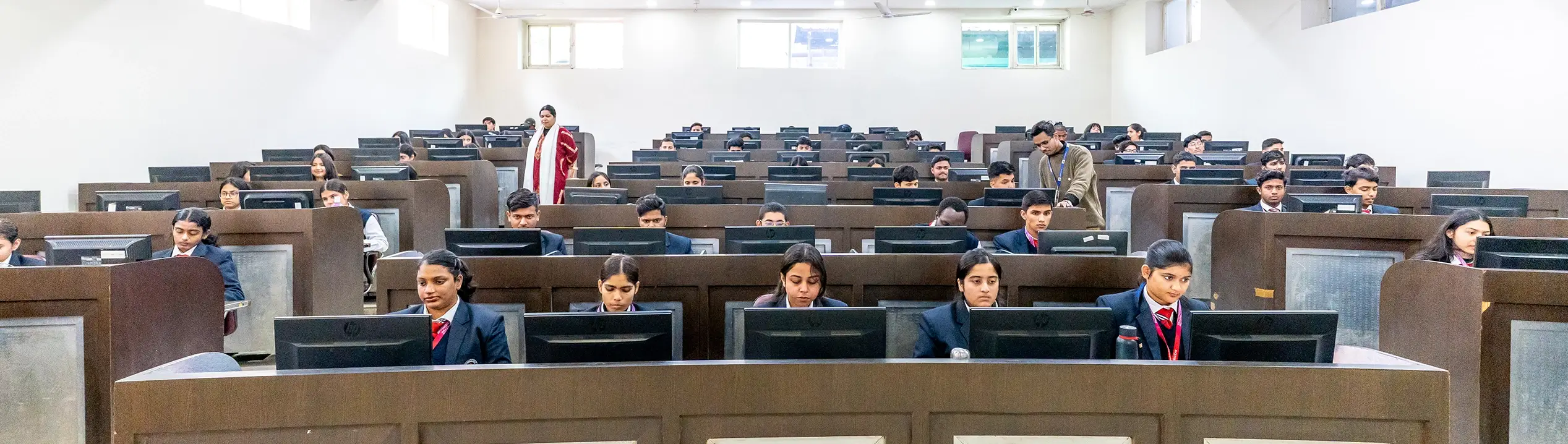
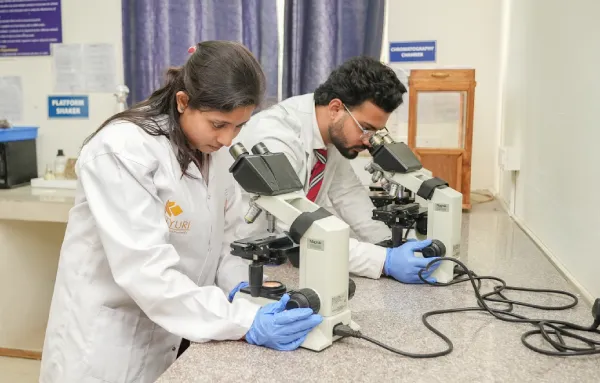
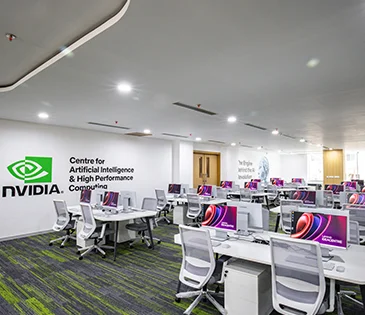
The Department of Computer Applications provides modern laboratories, advanced computing resources, and experienced faculty to support this program. Students gain exposure to industry-standard tools and frameworks, engage in mini-projects, internships, and capstone projects, and are encouraged to pursue global certifications in areas like network administration, ethical hacking, and cloud platforms.

Graduates of this program will be well-positioned for careers as cyber security analysts, ethical hackers, penetration testers, digital forensic experts, system and network administrators, or to pursue higher studies and research in related domains. The program also emphasizes holistic development through courses in soft skills, professional ethics, communication, and multidisciplinary electives, ensuring graduates are not only technically competent but also responsible and adaptive professionals.


Eligibility

As per AICTE norms.

Teaching Pedagogies

The department adopts innovative, student-centric teaching pedagogies designed to enhance conceptual understanding, practical proficiency, and industry readiness. Our approach integrates modern educational practices with advanced technological tools to create an engaging and outcome-driven learning environment. Key pedagogical practices include:

  • Outcome-Based Education (OBE)

    All courses are structured around clearly defined learning outcomes to ensure measurable academic and professional growth.

  • Experiential & Hands-On Learning

    Emphasis on laboratory work, real-time projects, coding sessions, and technical workshops to strengthen practical understanding.

  • Project-Based & Problem-Based Learning

    Students work on industry-relevant problems, case studies, mini-projects, and capstone projects to develop analytical and solution-oriented skills.

  • Flipped Classroom & Blended Learning

    Classroom time is optimized through pre-class digital content, interactive discussions, and collaborative problem-solving activities.

  • Industry-Academia Engagement

    Regular expert lectures, masterclasses, internships, and certifications through collaborations with leading MNCs enhance industry exposure.

  • Use of Modern ICT Tools

    Smart classrooms, LMS platforms, virtual labs, simulation tools, and coding environments support interactive and technology-driven learning.

  • Continuous Assessment & Feedback

    Frequent quizzes, assignments, reviews, presentations, and peer evaluations help monitor progress and encourage continuous improvement.

  • Skill Development & Holistic Learning

    Focus on communication skills, teamwork, professional ethics, and lifelong learning to prepare students for global professional environments.

Specializations

  • Bachelor of Computer Applications (Artificial Intelligence and Data Science)

  • Bachelor of Computer Applications (Cyber Security)

Program Educational Objectives (PEOs)

PEO1

Technical Proficiency

Provide graduates with a strong foundation in computer applications, programming languages, and software development, enabling them to build, maintain, and improve software systems and applications.

PEO2

Practical Problem-Solving

Develop graduates' ability to apply theoretical knowledge to real-world problems, encouraging innovative thinking and practical problem-solving skills in various domains such as business, education, and healthcare.

PEO3

Professional Growth and Learning

Foster a commitment to professional growth and lifelong learning, preparing graduates to pursue advanced studies, certifications, and adapt to the evolving landscape of technology and industry demands.

PEO4

Effective Communication and Ethical Practice

Cultivate effective communication skills and ethical practices, enabling graduates to work collaboratively in teams, communicate technical concepts clearly, and uphold ethical standards in their professional careers.

Program Outcomes (POs)

After the successful completion of the program, the BCA graduate will be able to:

PO1

Fundamental Knowledge Application

Apply foundational knowledge of mathematics, management, and computer applications to solve basic real-world problems effectively.

PO2

Basic Problem Analysis

Identify and analyze problems using fundamental principles of mathematics and computer applications to develop initial solutions.

PO3

Solution Design and Development

Design solutions for standard problems and develop system components or processes, considering essential health, safety, and societal aspects.

PO4

Research and Problem Solving

Use basic research methods and data analysis techniques to investigate computing problems and draw preliminary conclusions.

PO5

Tool Utilization

Select and apply appropriate tools and software for routine computing tasks, understanding their basic functions and limitations.

PO6

Awareness of Sustainability

Understand the impact of software engineering solutions on society and the environment and appreciate the principles of sustainable development.

PO7

Ethical Practice

Adhere to ethical principles and professional norms in software development and computing practices.

PO8

Individual and Teamwork

Work effectively as an individual and as part of a team, demonstrating basic collaboration and leadership skills in various settings.

PO9

Effective Communication

Communicate effectively on computing activities, preparing clear reports and documentation, and delivering presentations to a general audience.

PO10

Project Participation

Apply basic project management principles to contribute effectively to team projects and understand the fundamental aspects of project planning and execution.

PO11

Foundation for Lifelong Learning

Recognize the need for ongoing learning and be prepared to engage in further education or training to keep up with technological changes.

PO12

Innovation and Practical Application

Identify opportunities for practical application of innovative ideas and contribute to solving problems in a way that adds value to projects and tasks.

Program Educational Objectives (PEOs)

In addition to these twelve POs, the BCA graduate will also be able to:

PSO1

Application Development

Design, develop, and deploy basic software applications using standard programming languages and development tools, addressing typical business and organizational needs.

PSO2

Fundamental Database Management

Demonstrate proficiency in managing and using database systems, including designing database schemas, querying databases, and ensuring data integrity for various applications.

PSO3

System Analysis and Design

Apply fundamental principles of system analysis and design to develop effective solutions for common computing problems, including requirements gathering, system modelling, and process design.

Career Prospects

The BCA (Cyber Security) prepares graduates for key roles in the cyber security industry, including:

Cyber Security Analyst

Ethical Hacker

Network Security Analyst

Forensic Investigator

Cyber Security Consultant

Graphic Era (Deemed to be University)

Placements

Graphic Era Deemed to be University has a strong connection to various industries, and its track record for successfully placing students in reputable positions is outstanding, with graduates being placed in internships and permanent roles. The university has formed valuable relationships with globally recognized companies such as Amazon, Microsoft, Google, Walmart, Adobe, and many more, providing students with ample opportunities to kick-start their careers.

Graduates from Graphic Era Deemed to be University can be confident in their ability to succeed in the workforce due to the exceptional training and real-world experience they gain from their internships and placements with these top-tier companies.

Notes: Semester 1 and 2 are applicable only for regular entry students. Lateral entry students begin from Semester 3.

Course Curriculum

Semester 1

  • Computational Thinking and Fundamentals of IT
  • Fundamentals of Python Programming
  • Mathematical Foundation of Computer Science
  • Professional English Skills
  • University Open Elective / Generic Elective – 1
  • Digital Productivity Tools for Modern Workplaces Laboratory
  • Python Programming Laboratory
  • Seminar – 1

Bridge Course – 1

  • Basic Mathematics - I

Mandatory Non-Graded Course

  • Environmental Science

Semester 2

  • Programming Concepts Using C Language
  • Computer Networks
  • Cyber Security Essentials
  • Digital Principles and Computer Organization
  • Programming Concepts Using C Laboratory
  • Computer Networks and Cyber Security Laboratory
  • General Proficiency

Discipline-Specific Elective – 1

  • Probability and Statistics
  • Discrete Mathematics

Audit Course – 1

  • Indian Constitution

Bridge Course – 2

  • Basic Mathematics - II

Mandatory Non-Graded Course

  • Indian Knowledge System

Semester 3

  • Introduction to Data Structures
  • Cryptography
  • Operating Systems and Security
  • Skills for Career Success – I
  • UHV-II
  • Introduction to Data Structures Laboratory
  • Operating Systems and Security Laboratory
  • Mini Project – 1

Discipline-Specific Elective – 2

  • Ethical Hacking
  • Any certification course approved by the university (Network Administrator, Ethical Hacking, CCNA, Microsoft, RedHat, AWS ) / University-Approved MOOCs / Swayam

Semester 4

  • Database System and Security
  • Cloud Computing
  • Secure Software Development
  • Management Information Systems
  • Skills for Career Success – II
  • Database System and Security Laboratory
  • Cloud Computing Laboratory
  • Mini Project – 2
  • General Proficiency

Discipline-Specific Elective – 3

  • Linux System Administration
  • Fundamentals of IOT
  • Any certification course approved by the university (Network Administrator, Ethical Hacking, CCNA, Microsoft, RedHat, AWS…….) / University-Approved MOOCs / Swayam

Semester 5

  • Security and Privacy in Cloud
  • Web Application Security
  • Introduction to Microcontrollers
  • University Open Elective / Generic Elective – 2
  • Skills for Career Success – III
  • Security and Privacy in Cloud Laboratory
  • Web Application Security Laboratory
  • Mini Project – 3

Discipline-Specific Elective – 4

  • Introduction to Blockchain and Cryptocurrency
  • Digital and Mobile Forensics
  • Any certification course approved by the university (Network Administrator, Ethical Hacking, CCNA, Microsoft, RedHat, AWS…….) / University-Approved MOOCs / Swayam

Semester 6

  • Introduction to Cyber Forensics
  • Social Network Security
  • Disaster Management
  • Cyber Forensics Lab
  • Capstone Project / Internship / Mini-Projects for Honours
  • General Proficiency

Discipline-Specific Elective – 5

  • IOT Security
  • Malware Analysis
  • Any certification course approved by the university (Network Administrator, Ethical Hacking, CCNA, Microsoft, RedHat, AWS…….) / University-Approved MOOCs / Swayam

Semester 7

Honours

  • Advanced Networks Security
  • Digital Forensics
  • Artificial Intelligence for Cyber Security
  • Advanced Networks Security Laboratory
  • Digital Forensics Laboratory
  • Capstone Project

Discipline-Specific Elective – 6

  • Machine Learning Techniques
  • Trust Management in E-Commerce
  • Steganography And Digital Watermarking
  • Wireless Networks

Discipline-Specific Elective – 7

  • Machine Learning Techniques
  • Trust Management in E-Commerce
  • Steganography And Digital Watermarking

Honours with Research

  • Advanced Networks Security
  • Digital Forensics
  • Artificial Intelligence for Cyber Security
  • Advanced Networks Security Laboratory
  • Digital Forensics Laboratory
  • Research Project Phase - I

Semester 8

Honours

  • Advanced Ethical Hacking and Cybersecurity Strategies
  • Intrusion Detection and Prevention
  • Advanced Malware Analysis and Reverse Engineering
  • Advanced Malware Analysis and Reverse Engineering Laboratory
  • Major Project / Industry Internship
  • General Proficiency

Discipline-Specific Elective – 8

  • Machine Learning Applications in Cyber Security
  • Human-Computer Interaction
  • Wireless Networks Security
  • Secure Coding

Honours with Research

  • Ethical Hacking
  • Intrusion Detection & Prevention
  • Advanced Malware Analysis and Reverse Engineering
  • Advanced Malware Analysis and Reverse Engineering Lab
  • Research Project Phase - II
  • General Proficiency

Frequently Asked Questions

The duration is 3 years (6 semesters).

After BCA (Cyber Security), students can pursue careers such as Cyber Security Analyst, Information Security Analyst, SOC Analyst, Ethical Hacker, Network Security Engineer etc.

BCA (Cyber Security) covers subjects such as Programming, Data Structures, Computer Networks, Operating Systems, Cyber Security Basics, Cryptography, Ethical Hacking, Network Security, etc.

Contact Us

GEU
GEU

566/6, Bell Road, Society Area,
Clement Town, Dehradun,
Uttarakhand