







GEU
facilities
Level
Ph.D.
facilities
Duration
As per UGC Guidelines
Ph.D. in Computer Application

Admission Procedure

Merit prepared on basis of the qualifying exam

Provisional Admission

Master’s degree with 55% marks or equivalent. 5% relaxation for SC/ST/OBC (NCL)/PwD/EWS.

About The Program

Welcome to the PhD in Computer Application program at Graphic Era (Deemed to be University), a prestigious and innovation-driven doctoral program crafted for individuals passionate about advancing the frontiers of computing and digital technologies.

As one of the top destinations for PhD in Computer Application in India, GEU offers a stimulating research ecosystem, expert supervision, and access to cutting-edge infrastructure.

Whether your interest lies in artificial intelligence, cybersecurity, data science, cloud computing, software engineering, or emerging technologies like quantum computing and IoT, this program is designed to offer a rigorous and immersive academic experience.

Our goal is to prepare thought leaders and researchers who will shape the future of technology through groundbreaking discoveries and practical solutions.


Eligibility

  • Master’s Degree Holders:

    Master’s degree with 55% marks or equivalent. 5% relaxation for SC/ST/OBC (NCL)/PwD/EWS.

  • Bachelor’s Degree Holders:

    4-year/8-semester Bachelor’s degree with 75% marks. 5% relaxation for reserved categories

  • Final-Semester Students:

    Candidates awaiting final results may also apply.

Note: All eligibility conditions as per AICTE/UGC regulations in force.

Teaching Pedagogies

The Ph.D. program adopts advanced, research-centric teaching pedagogies aimed at developing independent, ethical, and innovative researchers. The pedagogical framework emphasizes inquiry, experimentation, mentorship, and scholarly dissemination to foster critical thinking and original contributions to knowledge. Learning is facilitated through research supervision, seminars, collaborative projects, experiential activities, and digital research platforms.

  • Research-Oriented Pedagogy

    Emphasis on learning through original research, problem identification, hypothesis formulation, experimentation, and validation.

  • Inquiry-Based Learning

    Scholars are encouraged to critically analyze existing literature, question established theories, and explore research gaps.

  • Mentor–Mentee Pedagogy

    One-to-one guidance through regular interactions with supervisors and doctoral advisory committees to ensure continuous research progress.

  • Seminar-Based Learning

    Learning through research seminars, proposal presentations, progress reviews, and pre-submission defenses.

  • Project-Based Learning

    Hands-on research projects involving model development, system design, algorithm implementation, and experimental evaluation.

  • Experiential Learning

    Learning by doing through simulations, lab experiments, field studies, case analysis, and real-world problem solving.

  • Collaborative Learning

    Interdisciplinary and team-based research through group discussions, joint publications, and collaborative projects.

  • Blended and Digital Learning

    Use of online research tools, MOOCs, virtual labs, digital libraries, research databases, and advanced software platforms.

  • Publication-Oriented Learning

    Learning through preparation of journal papers, conference publications, patents, and technical reports.

Specializations

  • AI & Machine Learning, Deep Learning, NLP
  • Cloud, Distributed & Parallel Computing
  • Cyber Security, Blockchain, Network Science
  • Computer Vision, Image Processing
  • Explainable AI, Recommender Systems, Bioinformatics
  • Robotics, Quantum Computing, IoT, 5G/6G
  • Multicore and High-Performance Computing, Software Engineering

Program Educational Objectives (PEOs)

PEO1

Technical Proficiency

Provide graduates with a strong foundation in computer applications, programming languages, and software development, enabling them to build, maintain, and improve software systems and applications.

PEO2

Practical Problem-Solving

Develop graduates' ability to apply theoretical knowledge to real-world problems, encouraging innovative thinking and practical problem-solving skills in various domains such as business, education, and healthcare.

PEO3

Professional Growth and Learning

Foster a commitment to professional growth and lifelong learning, preparing graduates to pursue advanced studies, certifications, and adapt to the evolving landscape of technology and industry demands.

PEO4

Effective Communication and Ethical Practice

Cultivate effective communication skills and ethical practices, enabling graduates to work collaboratively in teams, communicate technical concepts clearly, and uphold ethical standards in their professional careers.

Program Outcomes (POs)

After the successful completion of the program, the BCA graduate will be able to:

PO1

Fundamental Knowledge Application

Apply foundational knowledge of mathematics, management, and computer applications to solve basic real-world problems effectively.

PO2

Basic Problem Analysis

Identify and analyze problems using fundamental principles of mathematics and computer applications to develop initial solutions.

PO3

Solution Design and Development

Design solutions for standard problems and develop system components or processes, considering essential health, safety, and societal aspects.

PO4

Research and Problem Solving

Use basic research methods and data analysis techniques to investigate computing problems and draw preliminary conclusions.

PO5

Tool Utilization

Select and apply appropriate tools and software for routine computing tasks, understanding their basic functions and limitations.

PO6

Awareness of Sustainability

Understand the impact of software engineering solutions on society and the environment and appreciate the principles of sustainable development.

PO7

Ethical Practice

Adhere to ethical principles and professional norms in software development and computing practices.

PO8

Individual and Teamwork

Work effectively as an individual and as part of a team, demonstrating basic collaboration and leadership skills in various settings.

PO9

Effective Communication

Communicate effectively on computing activities, preparing clear reports and documentation, and delivering presentations to a general audience.

PO10

Project Participation

Apply basic project management principles to contribute effectively to team projects and understand the fundamental aspects of project planning and execution.

PO11

Foundation for Lifelong Learning

Recognize the need for ongoing learning and be prepared to engage in further education or training to keep up with technological changes.

PO12

Innovation and Practical Application

Identify opportunities for practical application of innovative ideas and contribute to solving problems in a way that adds value to projects and tasks.

Program Specific Outcomes (PSOs)

In addition to these twelve POs, the BCA graduate will also be able to:

PSO1

Application Development

Design, develop, and deploy basic software applications using standard programming languages and development tools, addressing typical business and organizational needs.

PSO2

Fundamental Database Management

Demonstrate proficiency in managing and using database systems, including designing database schemas, querying databases, and ensuring data integrity for various applications.

PSO3

System Analysis and Design

Apply fundamental principles of system analysis and design to develop effective solutions for common computing problems, including requirements gathering, system modelling, and process design.

Career Prospects

With the increasing demand for highly qualified researchers, academicians, and innovation leaders in the computing and technology domains, Ph.D. graduates in Computer Application can pursue a wide range of advanced research, academic, and strategic leadership roles across universities, research organizations, global technology industries, government agencies, and innovation-driven enterprises. The doctoral program equips scholars with deep domain expertise, independent research capability, and problem-solving skills required for high-impact roles.Ph.D. graduates may pursue the following opportunities:

  • Research Scientist / Senior Research Scientist (AI / ML / Data Science / Cyber Security)
  • Principal Investigator / Lead Researcher
  • Post-Doctoral Researcher
  • Chief Scientist / R&D Head
  • Professor / Associate Professor / Assistant Professor
  • AI Architect / Machine Learning Architect
  • Data Science Research Lead
  • Computer Vision Research Engineer
  • Cyber Security Researcher / Security Architect
  • Blockchain Researcher / Distributed Systems Expert
  • High-Performance Computing (HPC) Research Engineer
  • Systems Architect / Software Architect
  • Technology Consultant / Research Consultant
  • Innovation Manager / Product Research Lead
  • Entrepreneur / Start-up Founder (Deep Tech, AI, Data-driven Solutions)
  • Policy Advisor / Technical Expert (Government & Research Bodies)
Graphic Era (Deemed to be University)

Placements

Graphic Era Deemed to be University has a strong connection to various industries, and its track record for successfully placing students in reputable positions is outstanding, with graduates being placed in internships and permanent roles. The university has formed valuable relationships with globally recognized companies such as Amazon, Microsoft, Google, Walmart, Adobe, and many more, providing students with ample opportunities to kick-start their careers.

Graduates from Graphic Era Deemed to be University can be confident in their ability to succeed in the workforce due to the exceptional training and real-world experience they gain from their internships and placements with these top-tier companies.

Notes: Semester 1 and 2 are applicable only for regular entry students. Lateral entry students begin from Semester 3.

Course Curriculum

  • Research Methodology and IPR
  • Mobile Computing
  • Advanced Operating Systems
  • Networking Protocols
  • Data Warehousing and Mining
  • Cloud Computing
  • Internet of Things
  • Algorithm Design and Techniques
  • Wireless Sensor Networks
  • Applied Data Science
  • Applied Cyber Security
  • Applied AI using Python
  • Machine Learning
  • Computer Vision and its Applications
  • Distributed Computing
  • Artificial Intelligence & Expert Systems

Frequently Asked Questions

Candidates with a valid UGC-NET (Category 1, 2 or 3) or GATE score are exempted from the written test. However, they must attend the online interview.

  • Mode :  Online
  • Type : MCQ
  • Sections : 50% Research Methodology + 50% Subject-Specific (as per GATE/UGC-NET syllabus)
  • Qualifying marks : 50%
  • Interview : Same day (online), where candidates discuss their research interests.

Yes. Final-semester candidates can apply, but admission will be provisional until submission of final results.

Yes. The University offers: Rs. 36,000/month (for UGC-NET Category 1) Up to Rs. 32,000/month (for UGC-NET Category 2 & 3 or GEU Entrance Top Rankers) Meritorious Scholars’ Research Grant up to Rs. 2,00,000 per year Merit-cum-means tuition fee waivers

Scholars have access to:

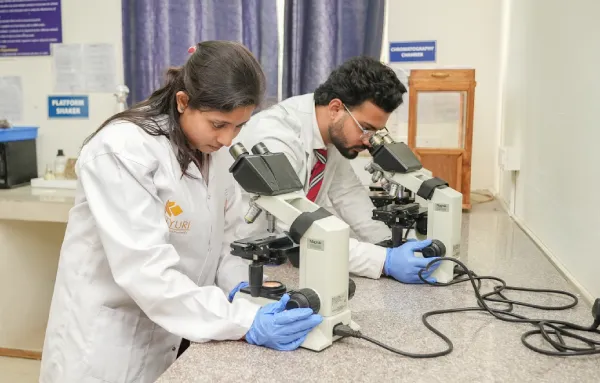
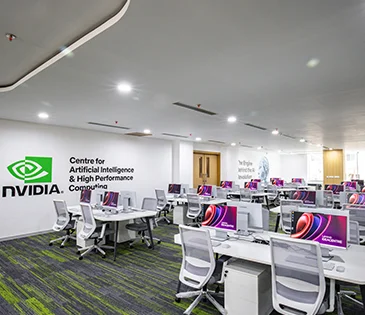
  • Advanced laboratories & research centres
  • Technology Business Incubator support
  • Publication & patent guidance
  • International workshops and conferences
  • Experienced supervisors and interdisciplinary research culture

Yes. Part-Time applicants must submit a No Objection Certificate (NOC) from their employer.

Yes. Fee structure varies for Full-Time and Part-Time candidates.

All information—exam link, schedule, and interview details—will be sent to the registered mobile number and email.

Contact Us

GEU
GEU

566/6, Bell Road, Society Area,
Clement Town, Dehradun,
Uttarakhand