







GEU
facilities
Level
Undergraduate
facilities
Duration
3 Years
facilities
Fee Structure
Click Here
BBA with Business Analytics (Industry Partner Grant Thornton)

Admission Procedure

Merit prepared on basis of the qualifying exam

Provisional Admission

Students typically need to have completed 10+2 (or equivalent) from a recognized board.

About The Program

Graphic Era University, in collaboration with Grant Thornton – Globally recognized leading consulting and professional services firms—offers a future-ready BBA in Business Analytics. This program is designed to build strong foundations in business management, analytics, consulting orientation, and technology-enabled decision-making.

The program is offered in collaboration with Grant Thornton (GT), one of India’s leading consulting and professional services firms, making it highly relevant for today’s data-centric business environment.

The curriculum is built to help learners understand how businesses use data to solve real problems across marketing, finance, HR, operations, customer experience, digital strategy, and business planning. It combines business fundamentals with hands-on analytics learning, helping students become industry-ready from the undergraduate stage itself.

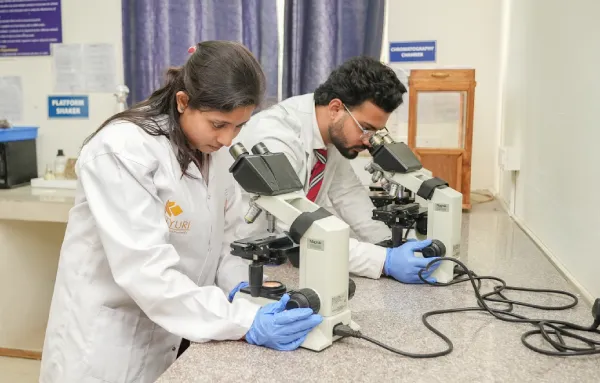
A key strength of the program is its balance between classroom learning and practical exposure. Students engage in lab sessions, live datasets, consulting-style assignments, case competitions, internships, and industry interactions, which helps them move beyond theory and develop real problem-solving capability.


Eligibility

Students typically need to have completed 10+2 (or equivalent) from a recognized board. Some institutions may require minimum percentage criteria or entrance exams.

Teaching Pedagogies

The program follows an application-oriented and industry-connected learning model. Official program details highlight a combination of classroom teaching, lab-based practice, mentoring, consulting exposure, and internship-linked learning.

Core Teaching Pedagogies

  • Conceptual classroom learning for management, business, and analytics foundations.
  • Hands-on lab sessions for analytics tools and data interpretation.
  • Case study discussions to develop business judgement and structured thinking.
  • Real consulting projects and live datasets for applied learning.
  • Mentorship and masterclasses by GT Bharat experts to bring industry insights into the classroom.
  • Case competitions, workshops, and corporate interactions to improve communication, presentation, and problem-solving ability.
  • Internship opportunities to build workplace readiness and industry exposure.

Capstone / Experiential Learning Components

Capstone Experience, where students work on business problems such as:

  • Customer segmentation and campaign effectiveness
  • Sales and CRM reporting dashboard,
  • Market trend interpretation
  • HR or workforce analytics
  • Financial or operational reporting insights.
  • Case competitions, workshops, and corporate interactions to improve communication, presentation, and problem-solving ability.
  • Internship opportunities to build workplace readiness and industry exposure.

These projects will culminate in a final presentation and recommendation deck, reflecting the program’s analytics + consulting + AI orientation.

Key highlights of the program

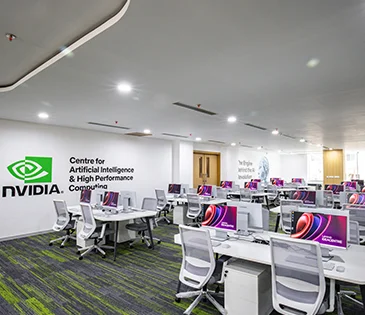
The Department of Commerce has consistently upheld a reputation for academic excellence and has played a pivotal role in shaping successful commerce professionals. The department boasts a highly qualified and experienced faculty members dedicated to delivering quality education and fostering holistic development of the students. The Department of Commerce offers Undergraduate, Postgraduate and Ph.D. programs in Commerce. The Department is well-equipped with modern infrastructure to support effective teaching and learning. Students are benefitted from state-of-the-art IT resources and extensive library facilities that enhance their academic experience. In addition to its strong academic foundation, the department is actively engaged in high-quality research. It provides robust support for research activities, contributing significantly to the scholarly output of the university. Further, its commitment to global academic standards, the department has entered into MoUs with international and national institutes: ISDC, ACCA, Wiley, CMA, Miles Education, Bombay Stock Exchange and ICAI to offer programs that are increasingly sought after in the field of commerce and accountancy.

Program Educational Objectives (PEOs)

PEO1

Foundation in Business Management and Analytical Decision-Making

The graduate of BBA with business analytics program will equipped on building a strong foundation in core business disciplines along with analytical reasoning skills. Students learn to interpret data, evaluate alternatives, and make informed decisions. The program integrates theoretical knowledge with practical applications, enabling learners to solve complex business problems effectively in dynamic environments.

PEO2

Application of Modern Analytics and AI Tools

Program graduate will be prepared on how to use modern analytics, data visualization, and AI-enabled tools in business contexts. It emphasizes hands-on learning and practical exposure to emerging technologies. Graduate develop the ability to transform data into actionable insights, helping organizations improve efficiency, innovation, and decision-making processes.

PEO3

Communication, Consulting, and Teamwork Skills

The PEO aims to enhance communication, teamwork, and consulting capabilities among Graduate. It develops their ability to present ideas clearly, collaborate in diverse teams, and engage in problem-solving. Through projects and presentations, students gain essential professional skills required for corporate and entrepreneurial success.

PEO4

Ethical and Responsible Professional Development

Graduate will be nurtured on ethically responsible professional’s behaviors who will demonstrate integrity and accountability in business practices. Graduate are trained to consider social and environmental impacts while making decisions. The program promotes responsible behavior across business functions, preparing graduates to handle ethical challenges and contribute positively to organizations and society.

PEO5

Career Growth and Higher Education Pathways

his objective focuses on preparing students for higher education, professional development, and analytics-driven careers. It equips them with relevant skills, industry exposure, and adaptability. Graduates are encouraged to pursue advanced studies and certifications while being capable of building successful careers in a competitive global business environment.

Program Outcomes (POs)

PO1

Apply core principles of management, economics, accounting, finance, marketing, and organizational behaviour to business decision-making.

PO2

Collect, organize, analyze, and interpret business data using analytical and visualization tools.

PO3

Build dashboards, summaries, and business reports that support managerial insights and strategic action.

PO4

Use basic statistical, quantitative, and analytical methods to identify trends, patterns, and opportunities in real-world business datasets.

PO5

Demonstrate proficiency in contemporary business analytics tools and digital technologies relevant to entry-level analytics roles.

PO6

Communicate insights effectively through presentations, reports, and data storytelling for technical and non-technical audiences.

PO7

Work collaboratively in teams to solve business problems through structured thinking and analytical reasoning.

PO8

Demonstrate ethical awareness, data responsibility, and professional conduct in analytics-driven business environments.

PO9

Develop an orientation toward innovation, continuous learning, and application of emerging technologies such as AI and GenAI in business.

Program Specific Outcomes (PSOs)

PSO1:

Use business analytics tools such as Excel, Power BI, Tableau, Python, and related platforms to analyze and present business data meaningfully.

PSO2:

Interpret business datasets across domains such as marketing, finance, HR, sales, and operations to support evidence-based decision-making.

PSO3:

Apply consulting-oriented problem-solving and business storytelling to convert raw data into actionable recommendations.

PSO4:

Demonstrate readiness for entry-level analytics, reporting, business intelligence, and strategy-support roles in modern organizations.

PSO5:

Understand the role of AI, GenAI, and emerging digital technologies in transforming business analysis and managerial workflows.

Specializations / Program Focus Areas

The BBA with Business Analytics is a specialized undergraduate business program focused on applying analytics to managerial decision-making. Based on the official program page and the career roles highlighted there, the following program focus areas fit naturally within the specialization:

Focus Areas Within the Specialization

  • Marketing Analytics
    campaign analysis, customer insights, sales trends, consumer behavior.
  • Financial & Reporting Analytics
    business reporting, profitability interpretation, performance tracking
  • HR / People Analytics
    workforce insights, retention patterns, people-data interpretation
  • Operations Analytics
    process performance, demand patterns, efficiency improvement
  • Sales & CRM Analytics
    pipeline reporting, customer interaction analysis, business growth metrics
  • Business Intelligence & Dashboarding
    visualization, KPI reporting, management dashboards
  • AI & GenAI for Business
    exposure to modern AI-enabled business workflows and productivity tools

Career Pathways

BBA with Business analytics will be ready for multiple analytics-oriented roles after graduation, including Business Analyst, AI Business Analyst, Data Analyst, Marketing Analyst, Sales & CRM Analyst, HR/People Analytics Associate, Operations Analyst, Financial/Data Reporting Analyst, Business Associate, Research & Insights Analyst, Management Trainee, and Client Delivery Analyst.

Analytics & Reporting Roles
  • Business Analyst
  • Data Analyst
  • MIS / Reporting Analyst (website-friendly extension of financial/data reporting roles)
  • Research & Insights Analyst
Functional Analytics Roles
  • Marketing Analyst
  • Sales & CRM Analyst
  • HR / People Analytics Associate
  • Operations Analyst
  • Financial / Data Reporting Analyst
Business & Consulting Roles
  • Business Associate
  • Management Trainee (Analytics / Strategy)
  • Client Delivery Analyst
  • Consulting & Strategy Roles

Recruiters of BBA with Business Analytics Program

The official BBA with Business Analytics page states that graduates are prepared for opportunities across consulting firms, IT and technology companies, BFSI, e-commerce & retail, FMCG & manufacturing, education technology, healthcare analytics, and start-ups / AI-driven ventures.

GEU
GEU
GEU
GEU
GEU
GEU
GEU
GEU
GEU
GEU
GEU
GEU
GEU
GEU
GEU

Notes: Semester 1 and 2 are applicable only for regular entry students. Lateral entry students begin from Semester 3.

Course Curriculum

Semester 1

  • Principles and Practices of Management
  • Applied Foundations of Business Analytics using Excel
  • Financial Accounting
  • Business Statistics and Logic
  • English Based Seminar
  • Indian Knowledge System
  • Environmental Science and Sustainability

Semester 2

  • Human Behavior and Organization
  • Marketing Management
  • Business Economics
  • Data Management & Structured Querying using SQL
  • Multidisciplinary Electives / Courses / SWAYAM (any one course of student’s choice)
  • Universal Human Values-II
  • General Proficiency

Semester 3

  • Management Accounting
  • Human Resource Management
  • Business Intelligence and Data Visualization with Power BI and Tableau
  • Multidisciplinary Electives / Courses / SWAYAM – II (any one course of student’s choice)
  • Management Information System
  • Career Skills

Semester 4

  • Corporate and Business Law
  • Financial Management
  • Business Research Methodology
  • Applied Business Analytics with Python
  • Value Added Course
  • Design Thinking and Innovation
  • General Proficiency

Semester 5

  • Strategic Management
  • Logistics and Supply Chain Management
  • Entrepreneurship and Start-up Ecosystem
  • Applied Analytics for Strategic Management Domains
  • Internship / Capstone Project

Semester 6

  • Project Management
  • Business Taxation & Corporate Governance
  • Managing Personal Finance
  • Applied Generative AI for Business Solutions
  • Major Project
  • General Proficiency

Frequently Asked Questions

A BBA in Business Analytics is an undergraduate program that combines business management education with data analysis, statistics, and technology. It prepares students to interpret data, generate insights, and support decision-making in various business domains.

The program typically includes subjects like business management, statistics, data analytics, financial management, marketing, operations, data visualization, machine learning basics, and use of analytical tools such as Excel, Python, and BI software.

Students develop analytical thinking, problem-solving, data interpretation, communication, teamwork, and technical skills. They also learn to use modern tools and technologies for analyzing and visualizing business data effectively.

Graduates can work as business analysts, data analysts, marketing analysts, financial analysts, or consultants. Opportunities exist across industries such as banking, consulting, IT, e-commerce, and healthcare.

No, the program starts from foundational levels, so prior coding experience is not mandatory.

Students typically need to have completed 10+2 (or equivalent) from a recognized board. Some institutions may require minimum percentage criteria or entrance exams.

Unlike a traditional BBA, this program focuses more on data-driven decision-making, analytics tools, and technology integration, making graduates more suitable for modern, data-centric business roles.

Yes, most programs include internships, live projects, or industry training. These provide practical exposure and help students apply their knowledge in real-world business scenarios.

Graduates can pursue MBA (Business Analytics, Finance, Marketing), MSc in Analytics, Data Science programs, or professional certifications like CFA, FRM, or specialized analytics courses.

Yes, business analytics is a rapidly growing field due to increasing reliance on data for decision-making. It offers strong career prospects, competitive salaries, and opportunities across diverse industries globally.

Contact Us

GEU
GEU

566/6, Bell Road, Society Area,
Clement Town, Dehradun,
Uttarakhand