GEU
facilities
Level
Undergraduate
facilities
Duration
3 Years
facilities
Fee Structure
Click Here
B.Sc Food Technology

Admission Procedure

Merit prepared on basis of the qualifying exam

Provisional Admission

Seats to be allocated based on projected scores(12th), calculated basis the candidate’s 10th percentage – only meritorious students

About The Program

The Department of Food Science & Technology at Graphic Era (Deemed to be University) offers excellent courses at the undergraduate level, providing students with a solid foundation in food science and technology and preparing them for careers in various sectors of the food industry.

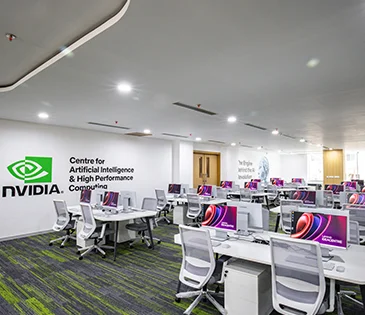
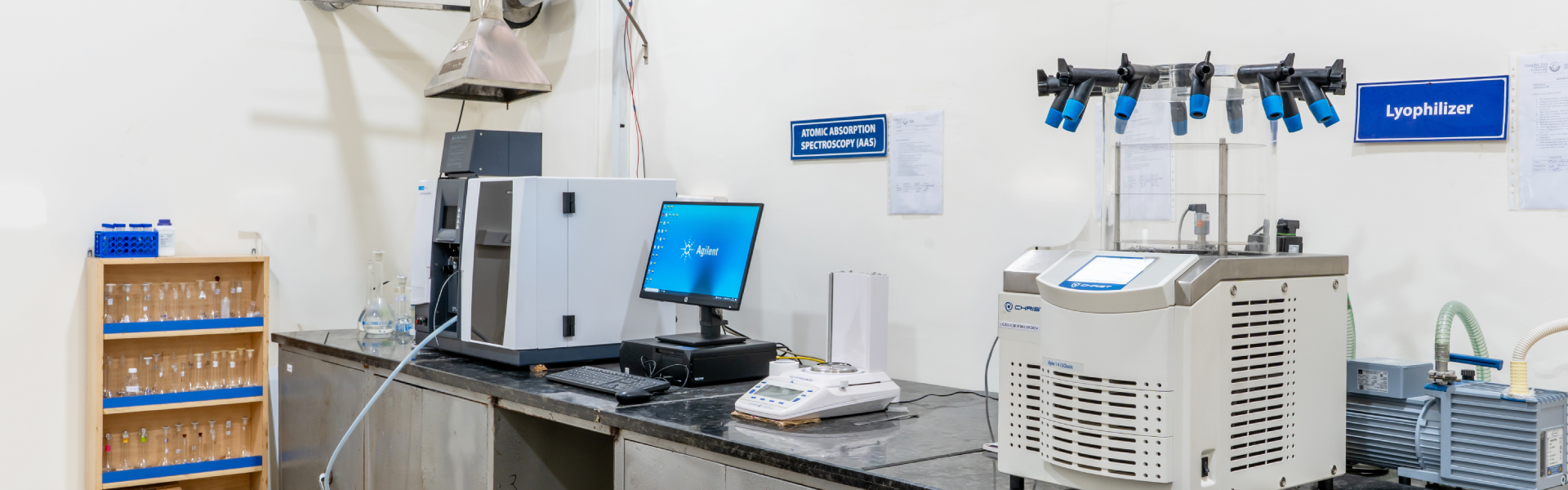
The state-of-the-art facilities, highly qualified faculty members, and opportunities for practical experience make it an ideal place for students to pursue a career in the food technology.

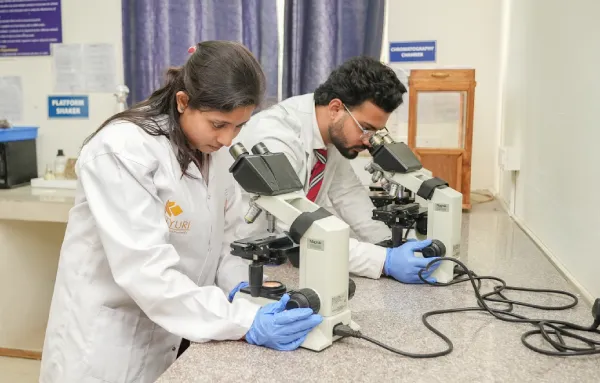
The undergraduate courses offered by the department includes B.Sc. Food Technology, B.Sc. (Honours) Food Technology, and B.Sc. (Honours) Food Technology (With Research). The Department has well equipped laboratories, research facilities, and a library with a vast collection of books and journals.

The department has highly qualified faculty members who are experts in their fields and have extensive experience in teaching and research. The university also provides students with opportunities for internships, industrial visits, and research projects to gain practical experience in the field. The department has collaborations with various industries and research institutions, providing students with exposure to real-world problems and the latest developments in the field.

Eligibility

All interested candidates should have passed Class XII from a recognized board of examination with Physics, Mathematics, and Chemistry or equivalent, as per AICTE guidelines, and admission will be granted as per merit decided by the university.

Teaching Pedagogies

  • Industry Exposure
    Internships, industrial visits, and collaborative projects with industries and research institutes to connect theory with real-world applications.
  • Practical Skill Development
    Hands-on laboratory sessions, research-oriented activities, and access to advanced facilities for skill enhancement.
  • Integrated Learning
    Learner-centric and outcome-based teaching through interactive lectures, case studies, and conceptual discussions.
  • Holistic Evaluation & Growth
    Continuous assessment through assignments and practical, supported by expert talks and workshops for overall academic and professional development.

Specializations

  • B.Sc. Food Technology
  • B.Sc. (Honors) Food Technology
  • B.Sc. (Honors) Food Technology with research

Program Educational Objectives (PEOs)

PEO1

To comprehend and implement the principles of latest advances in Food Technology by inculcating a culture of lifelong learning through both theoretical insights and hands-on practical experience.

PEO2

To apply food application tools and techniques within the context of social and global frameworks.

PEO3

To impart competency in students to grasp the interdisciplinary nature of Food Technology, facilitating their seamless transition into both industry and academic fields.

PEO4

To create competent professional graduates with leadership qualities and ethical responsibilities and empowering them to excel both independently and collaboratively within teams.

Program Outcomes (POs)

PO1

Problem-solving

Students will acquire basic knowledge of principles and processes underlying Food Technology and will apply this learning to real-life situations as well as solve different problems in the field.

PO2

Critical Thinking and Creativity

Students will develop essential analytical skills and apply reasoning and thought to innovate and conduct independent work in Food Technology areas.

PO3

Research-related Skills

Students will be able to appropriately use statistical and other analytical tools and techniques to develop methodologies that enable them to problematize, synthesize, articulate issues, and design research proposals.

PO4

Team Work and Leadership Qualities

Students will function effectively as individuals and as members or leaders in diverse teams and multidisciplinary settings.

PO5

Skill Development

Students will acquire the knowledge and skills necessary for working independently, along with organizational and time-management skills to set self-defined goals and targets within timelines. They will also develop lifelong learning abilities aimed at personal development, meeting social, economic, and cultural objectives, and adapting to changing workplace demands.

PO6

Modern Tool Usage

Students will be able to demonstrate the capability to create, select, and apply appropriate techniques, resources, and modern IT tools and software for data analysis in a variety of learning and work situations.

PO7

Multicultural Competence and Inclusive Spirit

Students will be able to demonstrate knowledge of multiple cultural values and beliefs with respect for cultural diversity, gender sensitivity, a gender-neutral approach, and empathy for the less advantaged, differently abled, or those with learning disabilities.

PO8

Value Inculcation

Students will be able to demonstrate the acquisition of knowledge and attitudes required to embrace and practice constitutional values, humanities, ethics, human and moral values, and responsible global citizenship. They will also understand regulatory norms and adopt ethical practices in the pursuit of science.

PO9

Autonomy, Responsibility and Accountability

Students will be able to apply knowledge, understanding, and skills independently while exercising responsibility and accountability in their work.

PO10

Society, Environment and Sustainability

Students will be able to demonstrate the acquisition and application of knowledge, skills, attitudes, and values for mitigating problems related to society, health, environment, food security, and sustainable development.

PO11

Communication

Students will acquire oral and written communication skills and will be able to communicate effectively with the community and society at large, including comprehending and writing effective reports, preparing design documentation, making presentations, and giving and receiving clear instructions.

PO12

Community Engagement and Service

Students will be able to demonstrate the capability to engage in community services and activities for promoting the well-being of society.


Program Specific Outcomes (PSOs)

PSO1

Acquire comprehensive knowledge in food technology integrated with allied disciplines based on principles and standard practices.

PSO2

Acquire skills to recognize, analyze, and resolve technical challenges within modern food sector, with a focus on delivering safe and nutritious food.

PSO3

Develop technological and managerial skills to become entrepreneurs, inventors, or pursue advanced research and emerge as a responsible leader in the food sector.

Career Prospects

They have various career opportunities as:

Food Technologist

Quality Assurance Manager

Product Development Scientist

Food Safety Officer

Research Scientist

Regulatory Affairs Officer

Supply Chain Manager

Notes: Semester 1 and 2 are applicable only for regular entry students. Lateral entry students begin from Semester 3.

Course Curriculum

Semester 1

  • Fundamentals of Food Science and Technology
  • Introduction to Food & Nutrition
  • Elementary Biology / Elementary Mathematics
  • Healthy Living and Fitness
  • Disaster Management
  • Professional Communication
  • Fundamentals of Food Science and Technology Lab
  • Introduction to Food & Nutrition Lab

Semester 2

  • Food Microbiology
  • Basics of Human Nutrition
  • Basics of Computer
  • Environmental Studies / SWAYAM
  • Universal Human Values-II
  • Career Skills
  • Food Microbiology Lab
  • Basics of Human Nutrition Lab

Semester 3

  • Food Processing and Preservation Technology
  • Food Chemistry
  • Basic Nutritional Biochemistry
  • Soft Skills
  • Literature in Translation / Modern English Language
  • Food Processing and Preservation Technology Lab
  • Food Chemistry Lab
  • Basic Nutritional Biochemistry Lab

Semester 4

  • Dairy Technology
  • Food Engineering
  • Technology of Cereals, Pulses & Oilseeds
  • Fundamentals of Life Cycle Nutrition
  • Internship
  • Intellectual Property Rights / SWAYAM
  • Dairy Technology Lab
  • Food Engineering Lab
  • Technology of Cereals, Pulses & Oilseeds Lab
  • Fundamentals of Life Cycle Nutrition Lab

Semester 5

  • Technology of Fruits and Vegetables
  • Technology of Spices and Plantation Crops
  • Bakery & Confectionary Technology
  • Technology of Meat, Poultry, Fish and Egg
  • Nutrition Counselling
  • Technology of Fruits and Vegetables Lab
  • Technology of Spices and Plantation Crops Lab
  • Bakery & Confectionary Technology Lab
  • Technology of Meat, Poultry, Fish and Egg Lab
  • Nutrition Counselling Lab

Semester 6

  • Sensory Evaluation
  • Food Packaging
  • Food Additives
  • Food Safety and Toxicology
  • Nutrition for Community
  • Sensory Evaluation Lab
  • Food Packaging Lab
  • Food Additives Lab
  • Food Safety and Toxicology Lab
  • Nutrition for Community Lab

Semester 7

  • Food Plant Design & Sanitation
  • Food Quality Management
  • Analytical Instrumentation in Food
  • Introduction to Nutrition Education
  • Nutraceutical and Functional Foods
  • Food Plant Design & Sanitation Lab
  • Food Quality Management Lab
  • Analytical Instrumentation in Food Lab
  • Introduction to Nutrition Education Lab
  • Nutraceutical and Functional Foods Lab

Semester 8

With Research

  • New Food Product Development
  • Institutional Food Service Management
  • Dissertation / Research Project
  • New Food Product Development Lab
  • Institutional Food Service Management Lab

Without Research

  • New Food Product Development
  • Institutional Food Service Management
  • Principles of Economics and Marketing in Foods
  • Food Waste Management
  • Food Biotechnology for Health and Nutrition
  • New Food Product Development Lab
  • Institutional Food Service Management Lab
  • Principles of Economics and Marketing in Foods Lab
  • Food Waste Management Lab
  • Food Biotechnology for Health and Nutrition Lab

Frequently Asked Questions

Yes, through labs and industrial visits.

Food Technologist, QA Manager, Food Safety Officer, Product Developer, Research Scientist, and more.

Yes, especially in the Honours with Research programs.

Yes, collaborations provide internships, expert talks, and real-world exposure.

Contact Us

GEU
GEU

566/6, Bell Road, Society Area,
Clement Town, Dehradun,
Uttarakhand