GEU
facilities
Level
Ph.D.
facilities
Duration
As per UGC Guidelines
Ph.D.  in Mechanical Engineering

Admission Procedure

Merit prepared on basis of the qualifying exam

Provisional Admission

Seats to be allocated based on projected scores(12th), calculated basis the candidate’s 10th percentage – only meritorious students

About The Program

The Doctor of Philosophy (PhD) in Mechanical Engineering at Graphic Era (Deemed to be University), Dehradun is a rigorous, research-intensive program structured in accordance with UGC PhD Regulations. The program aims to develop scholars into independent researchers, academicians, and innovators capable of generating original knowledge and addressing complex engineering and societal challenges.

The program emphasizes strong theoretical foundations, advanced research methodologies, and scholarly contributions through high-impact publications, patents, and technology development. Scholars are trained to undertake analytical, computational, and experimental research aligned with contemporary and emerging

Eligibility

  • Master’s degree (M.Tech./M.E.) in Mechanical Engineering or related fields with minimum 55% marks (5% relaxation for reserved categories as per UGC norms).
  • Candidates with B.Tech. + exceptional academic record + valid research experience may be considered as per UGC guidelines.
  • Candidates must qualify PhD Entrance Test (PET) conducted by Graphic Era or must have a valid GATE/NET score (as per university rules).
  • Shortlisted candidates must clear the interview/viva conducted by the Department Research Committee (DRC).

Teaching Pedagogies

The PhD program follows a research-centric instructional model combining:

  • Coursework-based learning aligned with UGC guidelines
  • Research Methodology training (mandatory for all scholars)
  • Advanced elective courses in specialized areas of Mechanical Engineering are namely
  • Regular Research Seminars
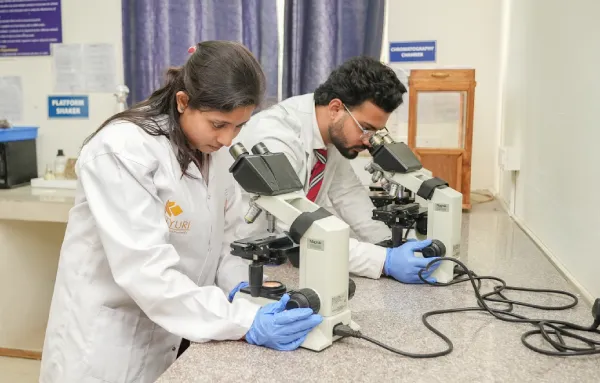
  • Hands-on training with high-end laboratories and simulation tools (ANSYS, Abaqus, MATLAB, SolidWorks, Python, etc.)
  • International and industry expert lectures
  • Continuous research progress evaluation through presentations, publications, and review committee meetings

Specializations

  • Computational Mechanics and Finite Element Analysis
  • Thermal and Fluid Sciences (CFD, combustion, heat transfer)
  • Design Engineering and Product Development
  • Smart Materials and Functionally Graded Materials
  • Biomechanics and Biomedical Engineering Applications
  • Manufacturing Technology and Advanced Composites
  • Robotics, Mechatronics, and Automation
  • Sustainable Engineering, Green Manufacturing, and Renewable Energy
  • Vibration Engineering and Structural Health Monitoring
  • Materials Science, Tribology, and Surface Engineering

Teaching Pedagogies

The curriculum is designed in faculty meetings after exhaustive discussion asperNEPandAICTE/UGCrecommendations.Theschemeincludes internships, SWAYAM courses, minor courses, open electives, mandatory non-graded, Project-based learning (PBL) and other required courses that make the curriculum industry-oriented and enhance employability. Further, the following inputs are considered as guidelines for the curriculum design process:

Program Educational Objectives (PEOs)

broad career goals for graduates (e.g., successful careers in design)

PEO1

PhD. Graduates will establish themselves as independent researchers capable of producing original, high-quality contributions to Mechanical Engineering through impactful publications, patents, and innovative research.

PEO2

PhD.Graduates will demonstrate leadership and expertise in academic, industrial, or research organizations by applying advanced analytical, computational, and experimental skills to solve complex engineering problems.

PEO3

PhD. Graduates will uphold ethical research practices and professional integrity, contributing responsibly to scientific advancement and fostering a culture of honesty, rigour, and transparency in research.

PEO4

PhD. Graduates will engage in lifelong learning, interdisciplinary collaboration, and knowledge dissemination, strengthening the engineering community through teaching, mentoring, and participation in national and global research initiatives.

Program Outcomes (POs)

Program Outcomes specific skills/abilities by graduation for example analyzing data, communicating effectively, applying theory to practice, solving complex problems, or demonstrating professional ethics, preparing them for careers or further study)

PO1

Advanced and In-Depth Knowledge

The PhD graduate will demonstrate deep, comprehensive knowledge of the chosen discipline, including advanced theories, recent developments, and research frontiers as expected at the highest academic level.

PO2

Research Problem Identification

The PhD graduate will be able to identify research gaps, define original research problems, and formulate objectives that contribute new knowledge or innovation in the field.

PO3

Research Methodology Mastery

The PhD graduate will be able to design and conduct rigorous research using appropriate analytical, computational, experimental, qualitative, or quantitative methods.

PO4

Critical Thinking and Scholarly Analysis

The PhD graduate will critically evaluate existing literature, theories, and methodologies, and develop independent interpretations or perspectives supported by evidence.

PO5

Innovation and Knowledge Creation

The PhD graduate will create new knowledge through original research, developing new models, methods, technologies, concepts, or theoretical frameworks that advance the discipline.

PO6

Advanced Use of Tools and Technologies

The PhD graduate will be able to apply state-of-the-art tools, research software, instruments, and emerging technologies for problem-solving and data analysis.

PO7

Ethical Research and Academic Integrity

The PhD graduate will conduct research responsibly and ethically, adhering tonorms on plagiarism, data integrity, intellectual property, and professional conduct.

PO8

Scholarly Communication

The PhD graduate will effectively communicate research findings through publications in peer-reviewed journals, conference presentations, thesis writing, and technical reports following global academic standards.

PO9

Independent and Lifelong Learning

The PhD graduate will demonstrate autonomy in research, self-directed learning, and continuous professional development in emerging areas of the discipline.

PO10

Leadership, Collaboration, and Societal Contribution

The PhD graduate will lead research teams, collaborate across disciplines, and apply research outcomes toward societal, industrial, environmental, or national development.


Program Specific Outcomes (PSOs)

PSO1

Ability to independently design, execute, and validate original research in specialized areas such as FEA/CFD, vibrations, composites, biomechanics, thermal sciences, smart materials, or robotics.

PSO2

Ability to develop new models, theories, methodologies, algorithms, materials, or mechanical systems that contribute to scientific and technological innovation.

PSO3

Ability to produce SCI/Scopus-indexed publications, patents, design innovations, prototypes, or technology solutions relevant to industrial and societal needs.

Career Prospects

Graduates of the PhD program can pursue careers in:
  • Academia (Assistant Professor, Postdoctoral Researcher, Faculty positions)
  • Research and Development laboratories
  • Aerospace, Automotive, Energy, Manufacturing, Robotics sectors
  • Simulation Analyst / FEA Specialist / CFD Engineer
  • Product Design Engineer / Research Scientist
  • Government and Public Sector Research Organizations
  • Entrepreneurship and Technology Startups
  • Consultancy in Design, Thermal Systems, Materials, or Testing
Graphic Era (Deemed to be University)

Placements

Graphic Era Deemed to be University has a strong connection to various industries, and its track record for successfully placing students in reputable positions is outstanding, with graduates being placed in internships and permanent roles. The university has formed valuable relationships with globally recognized companies such as Amazon, Microsoft, Google, Walmart, Adobe, and many more, providing students with ample opportunities to kick-start their careers.

Graduates from Graphic Era Deemed to be University can be confident in their ability to succeed in the workforce due to the exceptional training and real-world experience they gain from their internships and placements with these top-tier companies.

Course Curriculum

As per UGC PhD Regulations and university guidelines

  • Research and Publication Ethics (4 credits -Mandatory)
  • Advanced Elective–I (4 credits)
  • Advanced Elective–II (4 credits)
  • Seminar (2 credits)

Frequently Asked Questions

Minimum 3 years; maximum 6 years (as per UGC regulations).

Yes. Coursework (minimum 8 credits) is compulsory for all scholars.

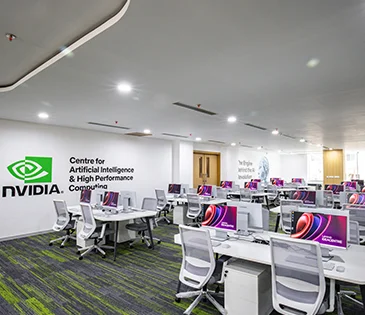
Yes. The Mechanical Engineering department has advanced labs for FEA, CFD, robotics, materials testing, vibrations, and heat transfer.

Yes. Scholars must publish research papers as per university guidelines before thesis submission.

Yes. Part-time PhD options may be available for eligible candidates.

Entrance test → Interview → Coursework → Comprehensive exam → Research work → Thesis submission.

Contact Us

GEU
GEU

566/6, Bell Road, Society Area,
Clement Town, Dehradun,
Uttarakhand