







GEU
facilities
Level
Postgraduate
facilities
Duration
2 Years
M.Com

Admission Procedure

Merit prepared on basis of the qualifying exam

Provisional Admission

Candidates must hold a Bachelor's degree in Commerce, management or related subjects, with at least 50% marks. Relevant work experience may be considered.

About The Program

The Master of Commerce (M. Com) is a prestigious postgraduate 2 or 1-year full time program designed to provide advanced knowledge and skills in commerce, finance, and business management.

This program equips students with a strong foundation in theoretical concepts and practical applications, preparing them for leadership roles in the corporate world, academia, and research.

Starting from July 2025, the Master of Commerce (M.Com.) programme for new entrants has been structured according to the Postgraduate Curriculum Framework (PGCF), aligned with the National Education Policy (NEP) 2020. This framework offers students the flexibility to pursue either a two-year degree, as traditionally offered by the department, or a one-year degree option for those who have completed a four-year undergraduate degree.

For the award of the M. Com degree, students must successfully earn a minimum of 44 credits per academic year. Consequently, the two-year M. Com degree requires a total of 88 credits, while the one-year degree option requires 44 credits. Course content and readings are curated based on the latest developments in commerce, finance, management, and related fields.


Eligibility

Candidates must hold a Bachelor's degree in Commerce, management or related subjects, with at least 50% marks. Relevant work experience may be considered.

Key highlights of the program

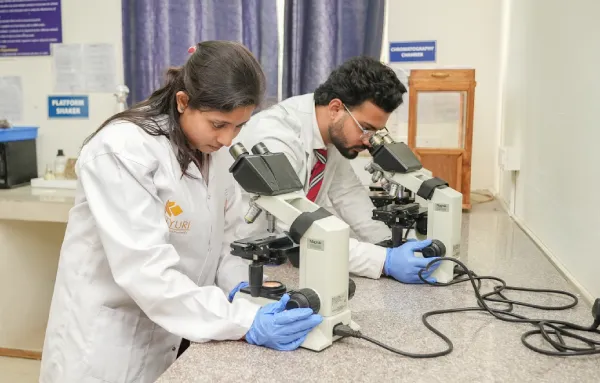
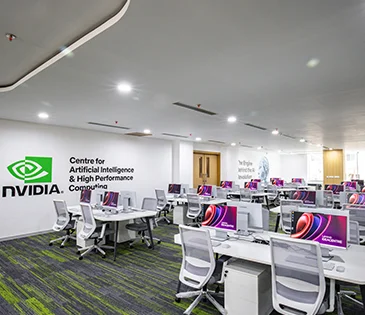
The Department of Commerce has consistently upheld a reputation for academic excellence and has played a pivotal role in shaping successful commerce professionals. The department boasts a highly qualified and experienced faculty members dedicated to delivering quality education and fostering holistic development of the students. The Department of Commerce offers Undergraduate, Postgraduate and Ph.D. programs in Commerce. The Department is well-equipped with modern infrastructure to support effective teaching and learning. Students are benefitted from state-of-the-art IT resources and extensive library facilities that enhance their academic experience. In addition to its strong academic foundation, the department is actively engaged in high-quality research. It provides robust support for research activities, contributing significantly to the scholarly output of the university. Further, its commitment to global academic standards, the department has entered into MoUs with international and national institutes: ISDC, ACCA, Wiley, CMA, Miles Education, Bombay Stock Exchange and ICAI to offer programs that are increasingly sought after in the field of commerce and accountancy.

Teaching Pedagogies

The Department of Commerce follows a blended, outcome-oriented teaching approach designed to build conceptual clarity, analytical ability and professional competence. The major pedagogical practices include:

Lecture-Based Learning

  • Structured classroom sessions for core theoretical concepts.
  • Use of multimedia presentations and real-world examples.

Case Study Method

  • Analysis of real business scenarios to develop problem-solving and decision-making skills.
  • Encourages critical thinking and application of theory to practice.

Experiential Learning

  • Internships, industry visits, and live projects to provide hands-on experience.
  • Exposure to financial software, accounting tools, and analytics platforms.

Research-Oriented Approach

  • Assignments and dissertations to foster independent research skills.
  • Use of statistical tools (SPSS, R, Excel) for data analysis.

Group Discussions & Seminars

  • Interactive sessions to enhance communication and leadership skills.
  • Student-led presentations on emerging trends in commerce and finance.

ICT-Enabled Learning

  • Integration of Learning Management Systems (LMS), e-resources, and virtual classrooms.
  • Online simulations for financial markets and business analytics.

Problem-Based Learning

  • Real-time problem-solving exercises in taxation, auditing, and financial management.
  • Encourages analytical thinking and creativity.

Blended Learning

  • Combination of traditional classroom teaching with online modules.
  • Recorded lectures and MOOCs for flexible learning.

Skill Development Workshops

  • Training in soft skills, digital literacy, and professional certifications.
  • Workshops on entrepreneurship, leadership, and corporate ethics.

Continuous Assessment

  • Regular quizzes, assignments, and presentations for formative evaluation.
  • Feedback-driven improvement for students.

Program Educational Objectives (PEOs)

PEO1

Equip graduates with advanced knowledge in commerce, finance, taxation, and business management to excel in professional and academic careers.

PEO2

Develop analytical, research, and problem-solving skills to address complex business challenges and contribute to policy-making and economic development.

PEO3

Foster ethical values, social responsibility, and sustainable business practices for effective leadership in diverse organizational settings.

PEO4

Prepare students for lifelong learning and adaptability to emerging technologies, global business trends, and professional certifications.

PEO5

Cultivate entrepreneurial mind set and managerial competencies to create and manage innovative business ventures.

Program Outcomes (POs)

PO1

Disciplinary Knowledge

Acquire advanced knowledge in accounting, finance, taxation, economics, and business laws.

PO2

Critical Thinking & Problem Solving

Analyse complex business situations and apply logical and quantitative techniques.

PO3

Research & Analytical Skills

Design and conduct research using statistical and analytical tools.

PO4

Digital & Technological Skills

Use accounting software, data analytics tools, and digital platforms effectively.

PO5

Communication Skills

Demonstrate effective written and oral communication in academic and professional contexts.

PO6

Leadership & Teamwork

Work collaboratively and lead teams in organizational settings.

PO7

Ethics & Professional Values

Apply ethical principles in business decision-making and research practices.

PO8

Global Perspective

Understand international business, trade practices, and global financial systems.

PO9

Entrepreneurship & Innovation

Develop entrepreneurial mind-set and business planning skills.

PO10

Lifelong Learning

Adapt to changing business environments through continuous learning.

Program Specific Outcomes (PSOs)

PSO 1:

Apply advanced concepts of accounting, finance, taxation, and auditing to solve complex business problems and ensure compliance with regulatory frameworks.

PSO 2:

Demonstrate proficiency in financial analysis, investment planning, and risk management using modern tools and techniques.

PSO 3:

Utilize research methodologies and statistical tools to conduct independent and applied research in commerce and business domains.

PSO 4:

Integrate knowledge of international trade, global markets, and economic policies to make informed business decisions in a globalized environment.

PSO 5:

Employ digital technologies and analytical software for e-commerce, financial modeling, and data-driven decision-making.

PSO 6:

Exhibit entrepreneurial skills and strategic thinking to establish and manage business ventures effectively.

PSO 7:

Uphold ethical standards, corporate governance principles, and social responsibility in professional and business practices.

Career Prospects

  • Corporate Sector
  • Banking & Insurance
  • Accounting & Finance
  • Government & Public Sector
  • Academia & Research
  • Professional Certifications
  • Entrepreneurship
  • Emerging Domains

Notes: Semester 1 and 2 are applicable only for regular entry students. Lateral entry students begin from Semester 3.

Course Curriculum

Semester 1

  • MANAGEMENT CONCEPTS
  • MANAGERIAL ECONOMICS
  • MANAGERIAL ACCOUNTING
  • FINANCIAL PLANNING
  • COMPUTER APPLICATIONS IN BUSINESS
  • CAREER SKILLS
  • SEMINAR
  • GENERAL PROFICIENCY I

Semester 2

  • BUSINESS STATISTICS
  • ECONOMIC ANALYSIS
  • LEGAL ASPECTS OF BUSINESS
  • FINANCIAL MANAGEMENT
  • MARKETING MANAGEMENT
  • CAREER SKILLS
  • GENERAL PROFICIENCY
  • COMPUTERIZED ACCOUNTING
  • SEMINAR II
  • GENERAL PROFICIENCY II

Semester 3

  • CORPORATE ACCOUNTING
  • STRATEGIC MANAGEMENT
  • INTERNATIONAL BUSINESS
  • Elective Paper I*
  • Elective Paper II*
  • SEMINAR III
  • GENERAL PROFICIENCY III
  • ADVANCED EXCEL IN BUSINESS

Semester 4

  • ENTREPRENEURSHIP
  • BUSINESS RESEARCH
  • PORTFOLIO MANAGEMENT
  • ELECTIVE PAPER III
  • ELECTIVE PAPER IV
  • RESEARCH PROJECT
  • SEMINAR

Frequently Asked Questions

Graphic Era stands out with its NAAC A+ accreditation and NIRF 2025 ranking of 48 in the University category, offering state-of-the-art labs, industry collaborations, and a research-driven curriculum aligned with NEP 2020 and PGCF 2025. The department's experienced faculty and focus on hands-on training ensure high employability in industry, research, academics and policy making backed by strong placement records and global exposure opportunities.

It is a 2-year program (4 semesters) with 88 credits for under graduate students (3 years duration) and 1 year programme of 44 credits for students with graduation in research (4 years duration).

Candidates must hold a Bachelor's degree in Commerce, management or related subjects, with at least 50% marks. Relevant work experience may be considered.

Admissions are based on merit from qualifying degree marks, plus entrance exams like CUET-PG or university-specific tests. Online applications open in May-June for the July session.

Visit https://geu.ac.in/admissions/fee-structure/ for current rates and financial aid options.

Contact Us

GEU
GEU

566/6, Bell Road, Society Area,
Clement Town, Dehradun,
Uttarakhand