





GEU
facilities
Level
Undergraduate
facilities
Duration
4 Years
facilities
Fee Structure
Click Here
B.Tech. Mechanical Engineering

Admission Procedure

Merit prepared on basis of the qualifying exam

Provisional Admission

Seats to be allocated based on projected scores(12th), calculated basis the candidate’s 10th percentage – only meritorious students

About The Program

The B.Tech. in Mechanical Engineering program is structured to provide students with a strong foundation in engineering sciences, core mechanical subjects, laboratory practice, and design-based learning, in line with NEP 2020 and AICTE guidelines.

The curriculum progresses systematically from basic sciences and engineering fundamentals in the initial semesters to core mechanical engineering subjects such as thermodynamics, fluid mechanics, heat transfer, machine design, manufacturing processes, and automation. Emphasis is placed on hands-on laboratory work, computer-aided engineering tools, mini-projects, major projects, internships, and industry exposure to ensure effective application of theory to practice.

Advanced learning is supported through discipline-specific electives, open electives, and honours specializations in Robotics & Automation and Automobile Engineering, enabling students to gain domain-specific expertise. The program also integrates skill enhancement courses, value-added courses, project-based learning (PBL), internships, and research-oriented activities, preparing graduates for careers in industry, entrepreneurship, and higher studies.

By the end of the program, students develop competencies in design, analysis, simulation, manufacturing, automation, sustainability, teamwork, and professional ethics, making them well-prepared to meet contemporary engineering challenges and evolving industry requirements.

Eligibility

All interested candidates should have passed Class XII from a recognized board of examination with Physics, Mathematics, and Chemistry or equivalent, as per AICTE guidelines, and admission will be granted as per merit decided by the university.

Teaching Pedagogies

The curriculum is designed in faculty meetings after exhaustive discussion asper NEP and AICTE/UGC recommendations. The scheme includes internships, SWAYAM courses, minor courses, open electives, mandatory non-graded, Project-based learning (PBL) and other required courses that make the curriculum industry-oriented and enhance employability. Further, the following inputs are considered as guidelines for the curriculum design process:

Specializations/ Program

B.Tech. Mechanical Engineering Hons. (Robotics and Automation):

The B.Tech Mechanical Engineering (Hons.) program with a focus on Robotics and Automation offers expertise in advanced robotics, automation, and manufacturing processes. It covers principles of mechanics, automation technologies, and industrial applications, equipping students with the skills to optimize production, improve efficiency, and innovate solutions. The curriculum emphasizes practical learning through projects, internships, and research, preparing students to excel in the evolving field of robotics and automation across various industries.

B.Tech Mechanical Engineering (Hons) Automobile:

The B.Tech Mechanical Engineering (Hons) in Automobile focuses on the application of advanced technologies in the automotive industry, integrating theoretical knowledge with practical skills. The program emphasizes innovation, design, and system analysis to create efficient and eco-friendly solutions for transportation. Students are equipped with the expertise to address challenges in vehicle development, enhance safety, and contribute to sustainable transportation systems, with hands-on experience in cutting-edge engineering technologies.

PEOs (Program Educational Objectives)

The Program Educational Objectives (PEOs) for Mechanical Engineering students typically center around the broad goals that the program seeks to achieve for its graduates. There are four commonly stated objectives:

PEO1

To enable students to apply core principles and emerging technologies in Mechanical Engineering to address modern industry and societal challenges.

PEO2

To equip students with a strong foundation in core principles and emerging technologies, enabling them to solve complex engineering problems and pursue advanced studies, research, and innovation in Mechanical Engineering.

PEO3

To foster communication, ethics, and leadership in students, enabling them to excel in emerging Mechanical Engineering trends and contribute to industry, society, and science globally.

PEO4

To foster lifelong learning, innovation-driven entrepreneurship, and research in emerging technologies, with a focus on ethics and environmental sustainability for societal benefit.

Program Outcomes (POs)

Engineering Graduates will be able to:

PO1

Engineering knowledge

Apply the knowledge of mathematics, science, engineering fundamentals, and an engineering specialization to the solution of complex engineering problems.

PO2

Problem analysis

Identify, formulate, review research literature, and analyze complex engineering problems reaching substantiated conclusions using first principles of mathematics, natural sciences, and engineering sciences.

PO3

Design/Development of solutions

Design solutions for complex engineering problems and design system components or processes that meet the specified needs with appropriate consideration for the public health and safety, and the cultural, societal, and environmental considerations.

PO4

Conduct investigations of complex problems

Use research-based knowledge and research methods, including design of experiments, analysis and interpretation of data, and synthesis of the information to provide valid conclusions for complex problems.

PO5

Modern tool usage

Create, select, and apply appropriate techniques, resources, and modern engineering and IT tools including prediction and modeling to complex engineering activities with an understanding of the limitations.

PO6

The engineer and society

Apply reasoning informed by the contextual knowledge to assess societal, health, safety, legal and cultural issues and the consequent responsibilities relevant to the professional engineering practice.

PO7

Environment and sustainability

Understand the impact of the professional engineering solutions in societal and environmental contexts, and demonstrate the knowledge of, and need for sustainable development.

PO8

Ethics

Apply ethical principles and commit to professional ethics and responsibilities and norms of the engineering practice.

PO9

Individual and Team Work

Function effectively as an individual, and as a member or leader in diverse teams, and in multidisciplinary settings.

PO10

Communication

Communicate effectively on complex engineering activities with the engineering community and with society at large, such as, being able to comprehend and write effective reports and design documentation, make effective presentations, and give and receive clear instructions.

PO11

Project management and finance

Demonstrate knowledge and understanding of the engineering and management principles and apply these to one’s own work, as a member and leader in a team, to manage projects and in multidisciplinary environments.

PO12

Life-long learning

Recognize the need for, and have the preparation and ability to engage in independent and life-long learning in the broadest context of technological change.

Program Specific Outcomes (PSOs)

In addition to these twelve POs, three Program Specific Outcomes (PSOs) are formulated:

PSO1

The mechanical engineering graduates will be able to perform design and analysis of mechanical systems using industrial modeling and simulation tools.

PSO2

The mechanical engineering graduates will be able to do research / pursue higher studies in the field of machine design, fluid mechanics, materials science, thermal science, production, industrial engineering, automation and mechatronics.

PSO3

The mechanical engineering graduate will be able to pursue a successful career in industries in the areas of manufacturing, design, quality, automation, operation and maintenance and serve the nation and society.

Career Pathways

The B.Tech. in Mechanical Engineering prepares graduates for various roles, such as:

They have various career opportunities as:

Mechanical Design Engineer: Create innovative mechanical systems and products.

Manufacturing Engineer: Optimize production processes and systems.

Thermal Engineer: Focus on heat transfer and thermal systems.

Automotive Engineer: Design and develop automotive systems and components.

Robotics Engineer: Build and enhance robotic systems for various applications.

Structural Engineer:Analyse and design structures for safety and functionality.

Graphic Era (Deemed to be University)

Placements

Graphic Era Deemed to be University has a strong connection to various industries, and its track record for successfully placing students in reputable positions is outstanding, with graduates being placed in internships and permanent roles. The university has formed valuable relationships with globally recognized companies such as Amazon, Microsoft, Google, Walmart, Adobe, and many more, providing students with ample opportunities to kick-start their careers.

Graduates from Graphic Era Deemed to be University can be confident in their ability to succeed in the workforce due to the exceptional training and real-world experience they gain from their internships and placements with these top-tier companies.

Notes: Semester 1 and 2 are applicable only for regular entry students. Lateral entry students begin from Semester 3.

Course Curriculum

Semester 1

  • Professional Communication
  • Engineering Physics
  • Engineering Mathematics-I
  • Basic Electrical Engineering
  • Fundamental of Computer & Introduction to Programming
  • Design Thinking
  • Basic Electrical Engineering Lab
  • Physics Lab
  • Workshop and Manufacturing Practices
  • Computer Lab-I
  • Healthy Living & Fitness

Semester 2

  • Advanced Professional Communication
  • Engineering Chemistry
  • Engineering Mathematics-II
  • Basic Electronics Engineering
  • Programming for Problem Solving
  • Basic Electronics Engineering Lab
  • Basic Civil Engg. Lab
  • Chemistry Lab
  • Engineering Graphics and Design Lab
  • Computer Lab-II
  • General Proficiency-II
  • Environmental Science

Semester 3

  • Engineering Mathematics III
  • Material Science
  • Engineering Mechanics
  • Thermal Engineering
  • Production Technology
  • Career Skills-I
  • Universal Human Values-II
  • Computer Aided Machine Drawing Lab
  • Thermal Lab-I
  • Production Technology Lab
  • Engineering Design Project
  • Social Internship / Community Services
  • B.Tech (Hons.) Mechanical Engineering with Specialization in Robotics and Automation: Microprocessor and Microcontroller, Tear Down and Benchmarking Lab
  • B.Tech (Hons.) Mechanical Engineering with Specialization in Automobile Engineering: Automotive Systems, Tear Down and Benchmarking Lab

Semester 4

  • Mechanics of Materials
  • Fluid Mechanics and Machines
  • Industrial Automation
  • Industrial Engineering
  • Discipline Electives-1
  • General Proficiency-IV (NSS/YOGA, NCC/Research)
  • Career Skills-II
  • Fluid Mechanics and Machines Lab
  • Mechanics of Materials Lab
  • Industrial Automation Lab
  • Indian Knowledge System
  • Discipline Specific Elective-I
  • Additive Manufacturing
  • Principles of Management
  • Venture Development
  • Entrepreneurship for Engineers
  • B.Tech (Hons.) Mechanical Engineering with Specialization in Robotics and Automation: Embedded Systems, Automobile Electrical and Electronics Lab
  • B.Tech (Hons.) Mechanical Engineering with Specialization in Automobile Engineering: Automotive Materials and Manufacturing Techniques, Automobile Electrical and Electronics Lab

Semester 5

  • Heat Transfer
  • Design of Machine Elements-I
  • Theory of Machines
  • Automotive Technologies
  • Mechanical Measurement and Metrology
  • Mini-Project-I (Research, Innovation & Entrepreneurship)
  • Discipline Electives-2
  • Career Skills-III
  • Theory of Machines Lab
  • Computer Aided Engineering Lab
  • Total Quality Management
  • Constitution of India
  • Discipline Specific Elective-II
  • Solar Energy Utilization
  • Sustainable System Design
  • Supply Chain Management
  • MATLAB for Engineers
  • Python for Engineers
  • Robotics and Automation: Robotics, Advanced Manufacturing Lab
  • Automobile Engineering: Automotive Fuels and Lubricants, Advanced Manufacturing Lab

Semester 6

  • Design of Machine Elements-II
  • Mechanical Vibrations
  • Heating Ventilation and Air Conditioning
  • Discipline Electives-3
  • Discipline Electives-4
  • Thermal Lab-II
  • University Open Elective / Generic Elective-I
  • Mini-Project-II (Research, Innovation & Entrepreneurship)
  • General Proficiency-VI (NSS/YOGA, NCC/Research)
  • Career Skills-IV
  • Python with Data Science
  • Discipline Specific Elective-III
  • Renewable Energy
  • Industry 4.0
  • Tribology
  • Discipline Specific Elective-IV
  • Computational Fluid Dynamics
  • AI/ML in Mechanical Engineering
  • Finite Element Method
  • Robotics and Automation: Control Theory, Robotics Simulation Lab
  • Automobile Engineering: Vehicle Dynamics, Automotive Simulation Lab

Semester 7

  • Operation Research
  • University Open Elective / Generic Elective-II
  • Discipline Electives-5
  • Industrial Summer Training
  • Major Project-I
  • Research Methodology
  • Seminar
  • Discipline Specific Elective-V
  • Non-Destructive Testing
  • Advanced Manufacturing
  • Product Design and Development
  • Gas Turbine
  • Robotics and Automation: Industrial Automation and Control, Industrial Robotics Lab
  • Automobile Engineering: Vehicle Inspection and Maintenance, Advanced Computer Aided Engineering Lab

Semester 8

  • Power Plant Engineering
  • University Open Elective / Generic Elective-III
  • Major Project-II
  • General Proficiency-IV (NSS/YOGA, NCC/Research)
  • Disaster Management
  • Professional Ethics
  • Manufacturing Execution Systems Lab
  • Robotics and Automation: Automobile Engineering, Manufacturing Execution Systems Lab

Frequently Asked Questions

Graphic Era consistently ranks among the top private engineering universities in India, often placed in the NIRF Top 100 engineering institutions. Its strong academic performance, research output, and placement record contribute to its ranking.

Mechanical Engineering placements are moderate to good, depending on student skill and industry demand.Core companies visit regularly for roles in design, production, quality, and manufacturing.

Many mechanical students also get placed in IT, analytics, and service-based companies through interdisciplinary hiring.Skill-building, internships, and projects greatly enhance placement outcomes.

  • Tata Group companies (Tata Motors, Tata Steel)
  • L&T
  • Mahindra & Mahindra
  • Bosch
  • Thermax
  • JBM, Hero, Maruti Suzuki (occasionally)
  • Global IT recruiters such as Wipro, TCS, Infosys, etc.

Yes. Students can opt for Honors in Mechanical Engineering

Specializations like Robotics & Automation, Automobile Engineering. These options help students build interdisciplinary skills and improve placement prospects.

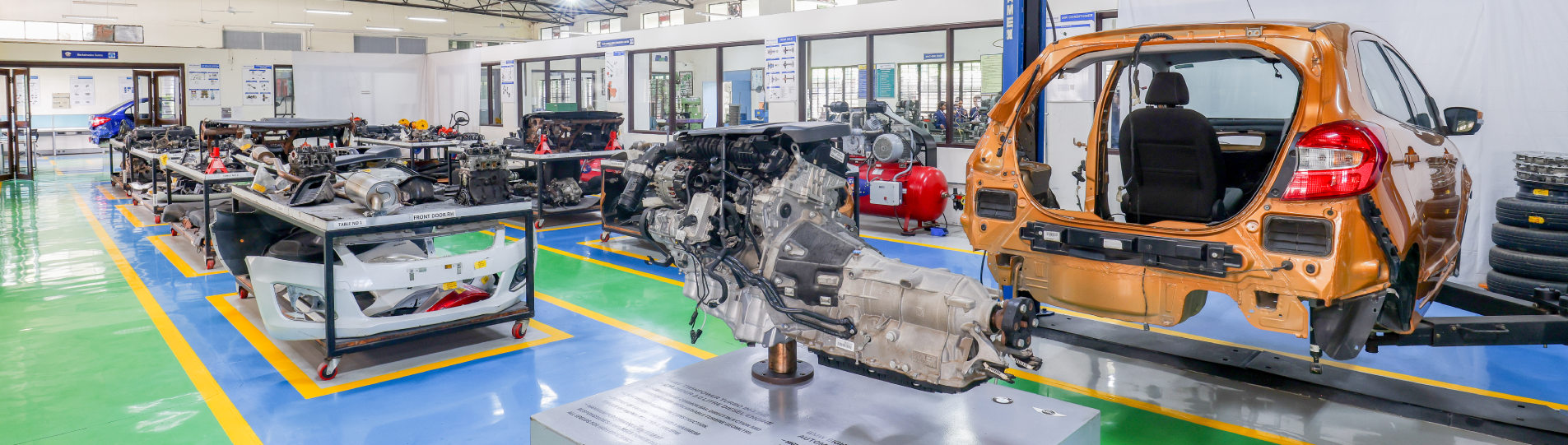
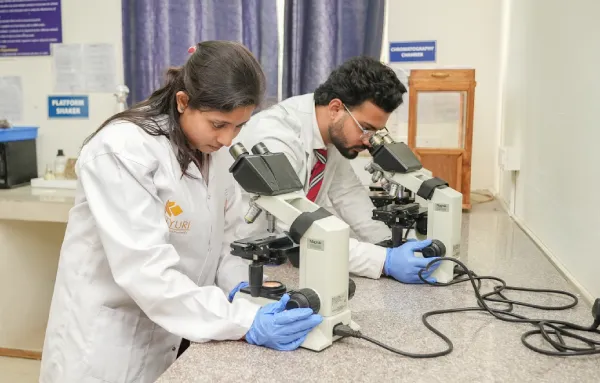
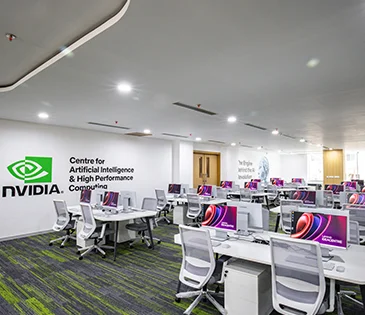
Graphic Era has well-equipped labs including:

  • Thermal & Fluid Mechanics Labs
  • CNC & Manufacturing Labs
  • CAD/CAM & Simulation Labs
  • Robotics, Mechatronics & Automation Labs
  • Students also gain access to industry-grade CAD tools like SolidWorks, CATIA, Ansys, MATLAB, etc.

Yes, the university offers several active clubs:

  • GEU-motorsports Collegiate Club (vehicle design, BAJA, SUPRA activities)
  • Robotics & Automation Club
  • CAD/CAE Innovation Club
  • Maker’s Club for 3D Printing and prototyping
  • ISTE Student Chapter

These clubs organize competitions, workshops, hackathons, industrial projects, and hands-on sessions.

Graphic Era provides:

  • Soft skill and personality development training
  • Industry-oriented certification programs
  • Summer internships & industrial visits
  • Mentor–mentee system for personalized academic support
  • Start-up incubation support for student innovators.

The total course fee is optimized for 4 years, excluding hostel charges. Fees may vary slightly depending on specialization or year of admission.

Yes. Graduates pursue M.Tech, MS, and research in areas like:

  • Advanced manufacturing
  • Materials & composites
  • Robotics & automation
  • Thermal and aerospace engineering
  • The department encourages research projects and publications, providing good exposure for higher studies.

  • Strong academic foundation aligned with modern industry needs
  • Well-established labs and hands-on learning
  • Active clubs and student communities
  • Good exposure through internships, competitions, and industry certifications
  • Decent placements with opportunities in both core and IT sectors
  • Safe, vibrant campus environment in Dehradun

Contact Us

GEU
GEU

566/6, Bell Road, Society Area,
Clement Town, Dehradun,
Uttarakhand