





GEU
facilities
Level
Undergraduate
facilities
Duration
4 Years
facilities
Fee Structure
Click Here
B.Tech in Aerospace Engineering

Admission Procedure

Merit prepared on basis of the qualifying exam

Provisional Admission

If yes, seats to be allocated based on projected scores(12th), calculated basis the candidate’s 10th percentage – only meritorious students

About The Program

The undergraduate program B. Tech in Aerospace Engineering designed in accordance with the National Education Policy (NEP) 2020. Aerospace engineering is a gateway to exploring new frontiers in air and space travel.

Specialization

The Department of Aerospace Engineering established in 2023 with a vision to provide world-class education and training in the field of aerospace engineering is committed to pushing the boundaries of innovation while addressing real-world challenges.

With a strong foundation in domain courses of aerospace engineering including aerodynamics, propulsion, structure, avionics, control system, and material science, the program prepares students to excel in designing next-generation aircrafts, spacecrafts, and sustainable aviation solutions. Our faculty comprises highly qualified and experienced professionals from top institutes in India and abroad.

The program offers various opportunities for students to gain exposure to the latest trends in the aerospace industry, including industrial visits, summer internships, flight training, value-added courses, and certification programs. Many renowned personalities in the area of aerospace engineering have been interacted with our students through guest lectures, seminars, and workshops.

The curriculum not only composed of core courses but also includes specialized courses such as Aerospace CAD, Advanced Manufacturing Lab, Unmanned Aerial Systems, Flight Training, Aeromodelling, Advanced MATLAB for Aerospace Engineers, Python Programming, and Artificial Intelligence (AI) & Machine Learning (ML) for Aerospace Applications, to ensure students are industry-ready.

Cutting-edge research opportunities and collaborations with global aerospace leaders ensure experiential learning and industry exposure. As the aerospace industry evolves with advancements in urban air mobility and exploration, we empower our students to lead and contribute to groundbreaking innovations.

Eligibility Criteria for the admissions in the Program

B.Tech in Aerospace Engineering

Duration: 4 Years / 8 Semesters 

Candidate should have passed Class XII from a recognized board with Physics, Chemistry, and Mathematics (PCM) or equivalent or as per AICTE guidelines with a minimum of 55% marksin PCM or aggregate.

Teaching Pedagogies

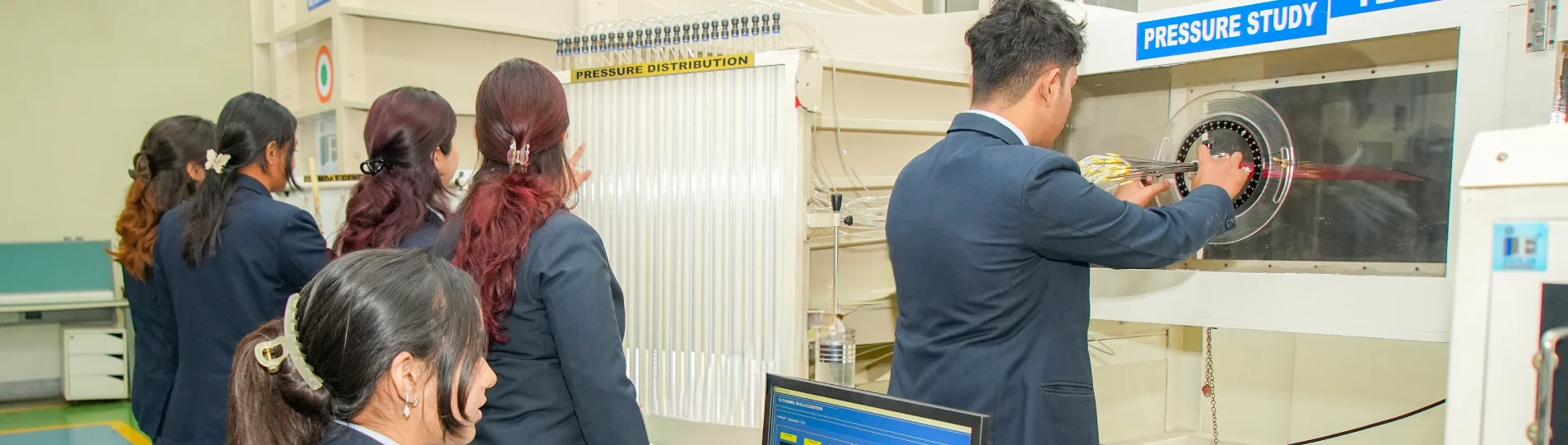
Aerospace engineering is fundamentally multidisciplinary, drawing upon fluid dynamics, structures, materials, thermodynamics, control systems, and avionics. To ensure students gain a coherent understanding across these domains, the curriculum emphasizes project-based and lab-based learning. Simulations, virtual laboratories, and scaled prototypes provide safe, accessible, and repeatable learning environments.

These approaches cultivate essential engineering competencies, including design thinking, teamwork, analytical problem-solving, and experimental testing, thereby preparing students for careers in industry, research, and advanced studies. The Department of Aerospace Engineering adopts the following key pedagogical strategies:

  • Multidisciplinary curriculum design
  • Project-based learning
  • Hands-on experimental training
  • Physical prototype development and fabrication
  • Use of modern digital tools (Simulation, Virtual Labs, Digital/Software-Based Learning)
  • Interactive, collaborative, and student-centric teaching methodologies (Active learning, group projects, seminars, and workshops)
  • Encourages creativity, innovation and lifelong learning
  • Emphasis on Real-World Aerospace Engineering Task (Design-build-fly tasks (radio-controlled aircraft)
  • Interactive teaching, group learning, video/animation demonstrations, lab work, workshops, seminars, project-work, industry visits

Specialization

(a) Specialization in Space Technology

The Space Technology specialization equips students with the knowledge and skills required to design, analyze, and operate modern space systems. The curriculum covers, launch vehicles, Space propulsion, orbital mechanics, hypersonic aerodynamics and design of aerospace vehicle. Students gain exposure to cutting-edge areas such as design, build, and launch rockets to experiment, innovate, and explore the technologies shaping the future of aerospace. Unique features include hands-on training through simulation tools, space system modeling, and opportunities to work on student satellite projects, payload development, and collaborations with national space organizations. This specialization prepares students for careers in the growing global space ecosystem.

Unique Features

Students receive practical experience through simulation tools, space system modeling platforms, and software used for orbital analysis and mission design.

Opportunities are provided to participate in student-led satellite missions, including basic CubeSat design, subsystem development, and payload integration.

Learners gain experience in designing scientific or technological payloads meant for atmospheric, near-Earth, or deep-space missions.

The program encourages collaborations with national space organizations and research agencies for internships, projects, and expert interactions.

Students are guided to explore current advancements in areas such as reusable launch systems, space robotics, planetary missions, and space manufacturing technologies.

The specialization equips graduates with technical and analytical skills required for employment in the rapidly expanding global space technology sector, including satellite companies, research centers, and aerospace industries.

(b) Specialization in Drone Technology

The Drone Technology specialization provides in-depth knowledge of the design, development, and operation of Unmanned Aerial Vehicles (UAVs). The curriculum covers key technical domains such as aerodynamics, flight mechanics, propulsion systems, avionics, navigation and control, and UAV-specific regulatory frameworks. Students learn to design, assemble, and operate autonomous drones while understanding mission planning, payload integration, and system optimization. The program prepares learners to apply drone technology across multiple sectors including agriculture, surveillance, environmental monitoring, logistics, and emergency response.

Unique Features

Students gain practical skills in drone building, including frame design, motor–propeller selection, electronics integration, and system calibration.

The specialization provides structured exposure to mission design, autonomous flight operations, and real-time testing of UAV systems.

Learners explore emerging areas such as AI-enabled drones, swarm technology, intelligent navigation, and computer-vision-based autonomous systems.

Students understand the role of drones in precision agriculture, surveillance and security, mapping and surveying, and disaster management applications.

The program offers opportunities to participate in hands-on workshops, collaborative projects, and internships aligned with industry requirements.

Students are encouraged to engage in national and regional UAV competitions, fostering innovation, teamwork, and problem-solving abilities.

The specialization equips graduates with strong technical and operational competencies required for roles in drone manufacturing, UAV services, R&D organizations, and the growing global drone industry.

Program Educational Objectives (PEOs)

PEO1

Apply the knowledge to find novel solutions to challenging problems facing the nation and society and show leadership in aerospace and allied engineering

PEO2

Engage in entrepreneurial ventures to develop innovative solutions for benefit to society.

PEO3

Perform efficiently as an individual and as a team member with ethics and environmental concern.

PEO4

Enhance their skills by lifelong learning and adapt to the changing professional requirements.

Program Outcomes (POs)

PO1

Engineering Knowledge

Apply knowledge of mathematics, natural science, computing, engineering fundamentals and an engineering specialization (WK1 to WK4) to develop solutions for complex engineering problems.

PO2

Problem Analysis

Identify, formulate, review research literature, and analyze complex engineering problems to reach substantiated conclusions with consideration for sustainable development (WK1 to WK4).

PO3

Design / Development of Solutions

Design creative solutions for complex engineering problems and develop systems, components, or processes that meet identified needs with consideration for public health, safety, whole-life cost, net zero carbon, culture, society, and environment (WK5).

PO4

Conduct Investigations of Complex Problems

Conduct investigations of complex engineering problems using research-based knowledge including design of experiments, modelling, analysis, and interpretation of data to provide valid conclusions (WK8).

PO5

Engineering Tool Usage

Create, select, and apply appropriate techniques, resources, and modern engineering and IT tools, including prediction and modelling, while recognizing their limitations to solve complex engineering problems (WK2 and WK6).

PO6

The Engineer and the World

Analyze and evaluate societal and environmental aspects of complex engineering problems and assess their impact on sustainability with reference to economy, health, safety, legal framework, culture, and environment (WK1, WK5, WK7).

PO7

Ethics

Apply ethical principles and commit to professional ethics, human values, diversity, and inclusion; and adhere to national and international laws (WK9).

PO8

Individual and Collaborative Team Work

Function effectively as an individual and as a member or leader in diverse and multidisciplinary teams.

PO9

Communication

Communicate effectively and inclusively within the engineering community and society at large by writing effective reports and design documentation, making presentations, and considering cultural, language, and learning differences.

PO10

Project Management and Finance

Apply engineering management principles and economic decision-making to one’s own work, as a member or leader of a team, and to manage projects in multidisciplinary environments.

PO11

Life-Long Learning

Recognize the need for and demonstrate the ability for independent and lifelong learning, adaptability to new and emerging technologies, and critical thinking in the context of technological change (WK8).

Knowledge and Attitude Profile (WK)

WK1

A systematic, theory-based understanding of the natural sciences applicable to the discipline and awareness of relevant social sciences.

WK2

Conceptually-based mathematics, numerical analysis, data analysis, statistics and formal aspects of computer and information science to support detailed analysis and modelling applicable to the discipline.

WK3

A systematic, theory-based formulation of engineering fundamentals required in the engineering discipline.

WK4

Engineering specialist knowledge that provides theoretical frameworks and bodies of knowledge for the accepted practice areas in the engineering discipline; much is at theforefront of the discipline.

WK5

Knowledge, including efficient resource use, environmental impacts, whole-life cost, re-use of resources, net zero carbon, and similar concepts, that supports engineering design and operations in a practice area.

WK6

Knowledge of engineering practice (technology) in the practice areas in the engineering discipline.

WK7

Knowledge of the role of engineering in society and identified issues in engineering practice in the discipline, such as the professional responsibility of an engineer to public safety and sustainable development.

WK8

Engagement with selected knowledge in the current research literature of the discipline, awareness of the power of critical thinking and creative approaches to evaluate emerging issues.

WK9

Ethics, inclusive behavior and conduct. Knowledge of professional ethics, responsibilities, and norms of engineering practice. Awareness of the need for diversity by reason of ethnicity, gender, age, physical ability etc. with mutual understanding and respect, and of inclusive attitudes

Program Specific Outcomes (PSOs)

PSO1

To apply concepts of aerodynamics, structures, propulsion, space engineering and simulation skills to provide solutions for critical and niche sectors of the industry and government.

PSO2

Ability to conceive, design and implement holistic solutions for the immediate and future needs of the aerospace and allied engineering.

PSO3

The Aerospace Engineering Graduates will design, develop and incubate ethical and sustainable solutions creating wealth for the nation and society.

Career Pathways

The aerospace industry is set for rapid growth, fueled by tech advancements and rising interest in space exploration and sustainable aviation. Aerospace engineering offers an exciting, rewarding career for those eager to push the limits of air and space.

Aviation Sector

Space Exploration

Defense Industry

Research & Development

Airline MRO (Maintenance, Repair, and Overhaul)

Manufacturing

Engineering Services

Management

Higher Studies: Higher education in Aerospace Engineering offers avenues for specialization, research, and leadership roles in cutting-edge technologies. A Master/PhD degree provides advanced expertise in areas like:

Aerodynamics and Propulsion

Structures and Materials

Avionics

Systems and Control

Space Engineering

UAV and Drone Technology

Graphic Era (Deemed to be University)

Placements

Graphic Era Deemed to be University has a strong connection to various industries, and its track record for successfully placing students in reputable positions is outstanding, with graduates being placed in internships and permanent roles. The university has formed valuable relationships with globally recognized companies such as Amazon, Microsoft, Google, Walmart, Adobe, and many more, providing students with ample opportunities to kick-start their careers.

Graduates from Graphic Era Deemed to be University can be confident in their ability to succeed in the workforce due to the exceptional training and real-world experience they gain from their internships and placements with these top-tier companies.

Notes: Semester 1 and 2 are applicable only for regular entry students. Lateral entry students begin from Semester 3.

Course Curriculum

Semester 1

  • Engineering Physics
  • Engineering Mathematics-I
  • Basic Electrical Engineering
  • Fundamental of Computer & Introduction to Programming
  • Workshop And Manufacturing Practices
  • Professional Communication
  • Design Thinking

Semester 2

  • Engineering Chemistry
  • Engineering Mathematics-II
  • Programming for Problem Solving
  • Basic Electronics Engineering
  • Engineering Graphics and Design Lab
  • Basic Civil Engineering Lab
  • Advanced Professional Communication

Semester 3

  • Career Skills-I
  • Entrepreneurship
  • Universal Human Values
  • Engineering Mathematics III
  • Introduction to Aerospace Engineering
  • Aero Thermodynamics
  • Aero Fluid Mechanics
  • Applied Mechanics
  • Aero Fluid Mechanics Lab
  • Aerospace CAD

Semester 4

  • Academic Report writing and IPR
  • Career Skills-II
  • Aerodynamics I
  • Propulsion I
  • Aircraft Performance
  • Aerospace Material and Manufacturing Technology
  • Solid Mechanics
  • Advanced Manufacturing Lab
  • Mechanics of Material Lab

Discipline Electives-I

  • Introduction to Unmanned Aerial System
  • Introduction to Space Science
  • Aircraft System and Instruments
  • Aero Composites Materials

Semester 5

  • Career Skills-III
  • Aircraft Structure I
  • Aerodynamics II
  • Propulsion II
  • Aircraft Stability and Control
  • Mini-Project-I
  • Aerodynamics Lab
  • Propulsion Lab

Discipline Electives-II

  • Control Engineering
  • Aircraft System and Instruments
  • Heat and Mass Transfer
  • Finite Element Method

Semester 6

  • Career Skills-IV
  • Aircraft Structure II
  • Orbital Mechanics
  • Mini-Project-II
  • Aircraft Structures Lab

Discipline Electives-III

  • Sensor Actuators and Data Acquisition
  • Rocket Propulsion
  • Wind Tunnel Techniques
  • Fatigue and Fracture Mechanics

Discipline Electives-IV

  • Navigation Guidance and Control
  • Spacecraft Dynamics and Altitude Control
  • Rotary Wing Technology
  • Non-Destructive Testing

Semester 7

  • Computational Fluid Dynamics
  • Industrial Summer Training
  • Major Project -I

Discipline Electives-V

  • Unmanned Aerial System Design
  • Space Communication
  • Theory of Vibration and Aero-elasticity
  • Smart Structures

Semester 8

  • Aircraft Design
  • Major Project -II

Frequently Asked Questions

Candidates must have passed Class XII or equivalent examination with Physics, Chemistry, and Mathematics (PCM) as compulsory subjects and must meet the minimum aggregate percentage prescribed by the university.

Admission is based on merit, university-level entrance test (GECET), and applicable national-level examination scores, followed by counseling conducted by the university.

Yes. The department offers specializations in Space Technology and Drone Technology, in addition to the core aerospace engineering curriculum.

No prior Aerospace or Drone-related experience is required. The curriculum is structured to build foundational knowledge from the first year onward.

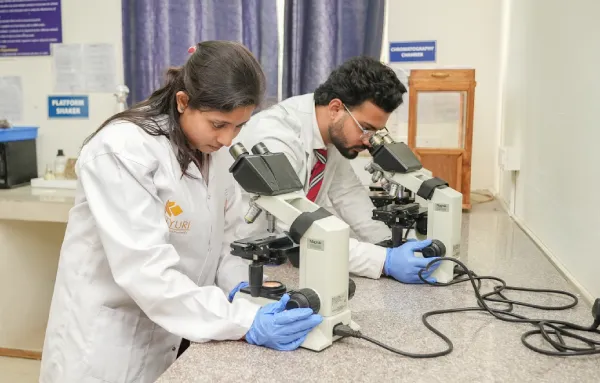
Students undergo extensive laboratory training, participate in design projects, receive UAV/Drone assembly and flight-testing training, and engage in hands-on experience through industry-certified programs.

Yes. The department regularly conducts guest lectures, workshops, internships and seminars with experts from ISRO, DRDO, NASA, BrahMos Aerospace, HAL, NAL, Airbus, and leading drone-technology companies.

Graduates receive excellent placement support, with opportunities in aerospace companies, drone industries, defence organizations, research institutions, and global aviation firms.

Yes. Students are provided internship opportunities through established industry collaborations with reputed national and international aerospace and drone organizations.

Students are trained in industry-standard tools such as MATLAB, Python, ANSYS, CFD software, CATIA, SolidWorks, XFLR5, OpenVSP, and specialized drone simulation tools.

Yes, undergraduate students are encouraged to participate in research projects, paper publications, innovation challenges, hackathons, and IPR-focused activities under faculty mentorship.

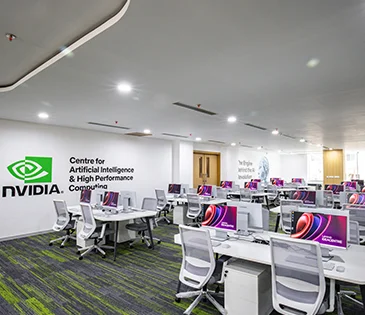
The department houses dedicated aerodynamics lab, structural lab, propulsion lab, high performance computing lab, aeromodelling lab, simulation facilities and many more.

Yes. Students are encouraged to participate in competitions related to aircraft design, UAV innovation, model rocketry, space technology, and robotics, supported by faculty mentorship.

Yes. The university offers merit-based and need-based scholarships according to university guidelines, subject to meeting eligibility criteria.

Graduates can work as aerospace engineers, space systems engineers, drone engineers, flight test engineers, propulsion specialists, avionics engineers, researchers, and technical officers in aviation and defence sectors or can go for higher education like M.Tech/MS or direct PhD.

Contact Us

GEU
GEU

566/6, Bell Road, Society Area,
Clement Town, Dehradun,
Uttarakhand