








GEU
facilities
Level
Undergraduate
facilities
Duration
3 Years
facilities
Fee Structure
Click Here
B.Com (Hons.) in Business Analytics & Artificial Intelligence

Class XII pass from any Indian Board / Equivalent Foreign BoardAdmission Procedure

Merit prepared on basis of the qualifying exam

Provisional Admission

Yes, Under the process of Provisional Admission, a candidate may proceed for provisional admission on the basis of his/ her 12th preboard marks for undergraduate program and aggregate of all semesters for post graduate students. This shall be indicative of the marks that may be secured by the candidate in his/ her 12th Examination/ Graduation within a permissible range of 7%.

About The Program

The B.Com (Hons.) in Business Analytics & Artificial Intelligence is a future-focused undergraduate programme offered by the Department of Commerce at Graphic Era (Deemed to be University) in collaboration with EY Learning Solutions. The programme is designed to equip students with a powerful combination of core commerce knowledge, analytical thinking, and technology-driven business capabilities.

The curriculum integrates foundational commerce disciplines accounting, finance, taxation, economics, and management with emerging domains including data analytics, artificial intelligence, machine learning, predictive modelling, financial analytics, and business intelligence. This prepares students for the rapidly evolving digital economy, where organizations rely on data-driven insights and intelligent systems to make strategic decisions.

Through industry-integrated learning, real-world case studies, hands-on projects, and expert-led sessions by EY Subject Matter Experts, students gain practical exposure to contemporary business challenges and develop the competencies to leverage analytics and AI for informed, high-impact decision-making.

Students build proficiency in Python, Advanced Excel, Data Visualization, Financial Modelling, Predictive Analytics, Tableau, and Power BI while earning an industry-recognized Certificate of Completion from EY Learning Solutions. Graduates are prepared for rewarding careers in finance, consulting, analytics, banking, fintech, business intelligence, corporate strategy, and AI-driven business functions.


Eligibility

  • Candidates must have passed 10+2 / Class XII or an equivalent examination from any recognized Indian Board or Equivalent Foreign Board.
  • Students from Commerce, Science, and Arts streams are all eligible to apply.
  • No prior programming or technical knowledge is required. All skills are developed from foundational levels within the programme.
  • Admissions are granted as per the University's norms and merit prepared on the basis of the qualifying examination.

Key highlights of the program

Academic Excellence

  • Industry-Integrated Curriculum
  • NEP 2020 Aligned
  • Outcome-Based Education
  • Choice Based Credit System (CBCS)
  • Merit-Based Admission
  • Multiple Entry & Exit Options

Industry & Technology

  • 8 EY Specialist Modules (45 hrs each)
  • EY Certificate of Completion
  • Delivered by EY Subject Matter Experts
  • AI & Analytics-Focused Content
  • Financial Modelling & Business Intelligence
  • Real-World Business Case Studies

Teaching Pedagogies

The programme adopts a blended, outcome-oriented pedagogical approach that combines academic rigour with industry immersion:

  • Interactive Lectures: Structured sessions covering core commerce concepts, analytics theory, and AI fundamentals.
  • EY Industry Expert Sessions: Live sessions delivered by EY Subject Matter Experts with real-world practitioner experience across finance, analytics, and consulting.
  • Case-Based Learning: In-depth analysis of Indian and global business cases, including EY-curated case studies from finance, fintech, banking, and corporate sectors.
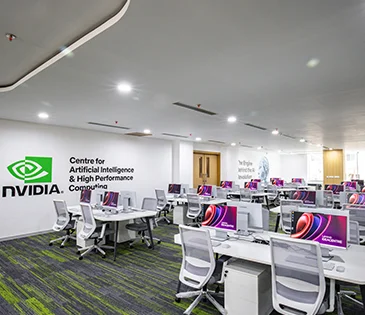
  • Hands-On Analytics Laboratories: Practical labs in Python, Advanced Excel, Tableau, Power BI, and financial modelling tools.
  • Project-Based Learning: Mini and major industry projects applying analytics and AI techniques to real business datasets and scenarios.
  • Financial Modelling Workshops: Dedicated training on financial model building, scenario simulation, valuation, and forecasting.
  • Business Simulations: Role-play and simulation exercises replicating corporate analytics and decision-making scenarios.
  • Experiential Learning: Internships and field assignments where students engage with real organizations and business problems.
  • Collaborative Learning: Team-based assignments, peer reviews, group presentations, and problem-solving activities.
  • Continuous Assessment and Feedback: Regular quizzes, assignments, project reviews, and structured feedback loops to track and improve learning outcomes.

Program Educational Objectives (PEOs)

The Programme Educational Objectives define the career and professional outcomes that graduates of this programme are expected to achieve within a few years of graduation.

PEO1

To develop competent commerce professionals with strong analytical, financial, and managerial capabilities who can operate effectively in data-driven and technology-integrated business environments.

PEO2

To prepare graduates who can leverage business analytics, artificial intelligence, and emerging digital technologies to support strategic, data-driven decision-making across commerce, finance, and business functions.

PEO3

To nurture ethical, socially responsible, and professionally competent individuals capable of applying analytical and AI-enabled tools in a responsible, transparent, and governance-compliant manner.

PEO4

To encourage a culture of innovation, entrepreneurship, and continuous learning, enabling graduates to create value-driven ventures, adapt to technological change, and pursue sustained professional growth.

PEO5

To prepare graduates for successful careers in analytics, finance, consulting, fintech, and allied industries, as well as for higher education, applied research, and globally recognized professional certifications.

Program Outcomes (POs)

Upon successful completion of the B.Com (Hons.) in Business Analytics & Artificial Intelligence, students will be able to:

PO1

Apply integrated knowledge of commerce, finance, accounting, economics, and management to analyse and solve real-world business problems.

PO2

Analyse complex business and financial problems using quantitative, statistical, and analytical techniques to generate actionable insights.

PO3

Apply data analytics methodologies including descriptive, diagnostic, predictive, and prescriptive analytics to derive meaningful business intelligence.

PO4

Utilize modern digital tools and technologies including Python, Advanced Excel, Tableau, Power BI, and AI platforms for business analysis and data-driven decision-making.

PO5

Demonstrate proficiency in financial analysis, financial modelling, forecasting, and valuation using both traditional methods and AI-enhanced analytical techniques.

PO6

Apply artificial intelligence and machine learning concepts including supervised learning, classification, regression, and neural network principles to finance and business applications.

PO7

Conduct evidence-based research, formulate hypotheses, collect and process data, and undertake structured problem-solving using appropriate analytical frameworks.

PO8

Work effectively as an individual and as a collaborative member or leader of diverse teams on analytics projects, industry assignments, and business simulations.

PO9

Communicate analytical findings, data stories, financial insights, and business recommendations effectively through reports, dashboards, visualizations, and presentations.

PO10

Demonstrate ethical responsibility and professional integrity in the use of data, digital tools, AI systems, and business practices, recognizing the governance and privacy implications of analytics.

PO11

Recognize the sustainability, regulatory, and societal implications of data-driven business decisions and apply responsible analytics practices in organizational contexts.

PO12

Engage in lifelong learning, remain adaptable to emerging technologies, and pursue continuous professional development in a rapidly evolving analytics and AI-driven business landscape.

Program Specific Outcomes (PSOs)

In addition to the Programme Outcomes, graduates of this programme will demonstrate the following specific competencies directly aligned with Business Analytics and Artificial Intelligence:

PSO 1

Apply business analytics tools and techniques including descriptive statistics, data mining, and machine learning to solve commerce, finance, and management-related business problems.

PSO 2

Develop predictive and prescriptive analytical models using Python, statistical techniques, and machine learning algorithms to support strategic business decision-making.

PSO 3

Demonstrate hands-on proficiency in Python, Advanced Excel (including Power Query and advanced functions), Tableau, Power BI, and related analytical tools to process, analyse, and interpret business and financial data.

PSO 4

Perform financial modelling, scenario analysis, cash flow forecasting, valuation, and risk analysis using both traditional financial methods and AI-enabled analytical techniques.

PSO 5

Apply Artificial Intelligence and Machine Learning concepts to finance, banking, accounting, risk management, and business intelligence including fraud detection, credit scoring, algorithmic insights, and portfolio optimization.

PSO 6

Design end-to-end data-driven solutions from data collection and cleaning to modelling, visualization, and insight communication and present findings effectively to business stakeholders through dashboards and structured reports.

Career Prospects

Graduates of the B.Com (Hons.) in Business Analytics & Artificial Intelligence are positioned for high-demand, future-ready careers across a broad spectrum of industries. The combination of commerce knowledge, analytics expertise, and AI literacy opens doors that a traditional commerce degree alone cannot.

They have various career opportunities as:
  • Business Analyst
  • Data Analyst
  • Analytics Consultant
  • Business Intelligence Analyst
  • Research Associate
  • Financial Analyst
  • Investment Analyst
  • Risk Analyst
  • Credit Analyst
  • Management Consultant
  • FinTech Analyst
  • Financial Modelling Analyst
  • Corporate Strategy Associate
  • AI/ML Applications Associate
  • Entrepreneur / Start-up Founder

Course Curriculum

Module 1

Introduction to Data Analytics

This foundational module introduces students to the world of data analytics — how data is collected, processed, interpreted, and communicated to drive business decisions.

  • Foundations of Data Analytics and the data-driven decision-making framework
  • Types and Techniques of Analytics: Descriptive, Diagnostic, Predictive, and Prescriptive
  • Data Collection, Preparation, Cleaning, and Management
  • Data Visualization principles and effective communication of analytical findings
  • Applications of Data Analytics in Commerce and Business contexts
  • Ethics in Data Analytics: Data privacy, bias, and responsible use of data

Module 2

Python Programming for Commerce Applications

Students learn Python as a practical business tool — from fundamentals to automating commercial processes and analysing financial datasets.

  • Python basics: variables, data types, operators, control structures, functions, and modules
  • Data structures: lists, dictionaries, tuples; file handling with CSV and Excel
  • Pandas library for data manipulation, cleaning, and transformation in commerce applications
  • Data visualization using Matplotlib for business reporting
  • Automating repetitive business tasks and workflows using Python scripts
  • Mini Project: Real-world business data processing and analysis
  • Industry Case Study: Automated invoice processing with tax calculations and summary reports

Module 3

Advanced Excel for Finance Managers

This module builds advanced Excel capabilities tailored specifically for finance professionals — from dynamic financial models to complex MIS reporting.

  • Advanced financial formulas, functions, and dynamic arrays
  • Budgeting, Forecasting, and Scenario Analysis models
  • Financial Statement Analysis and MIS Reporting
  • Data Analysis Tools: PivotTables, Power Query, and data validation
  • Capital Budgeting and Investment Analysis models
  • Excel Automation and productivity tools for finance workflows

Module 4

Predictive Analytics in Strategic Finance

Students learn to build and interpret predictive models — applying machine learning and statistical techniques to solve real-world finance and business challenges

  • Predictive analytics fundamentals: forecasting, time series analysis, and pattern identification in financial data
  • Core machine learning techniques: regression, classification, decision trees, random forests, and customer segmentation
  • Supervised vs. unsupervised learning and their business applications
  • Model performance metrics and business interpretation of ML outcomes
  • Hands-on modelling using Python and Excel: feature engineering and end-to-end ML workflow for financial scenarios

Module 5

Accounting for Decision Making

This module moves students beyond traditional bookkeeping — applying accounting data and analytical frameworks to strategic, data-driven business decisions.

  • Accounting data frameworks and their application to management decision-making
  • Cost and Profit Analytics for Business Decisions
  • Break-Even Analysis, CVP Analysis, and Sensitivity Analysis
  • Relevant Costing and Data-Driven Decision Models
  • Budgeting, Forecasting, and Variance Analytics
  • Performance Measurement and Dashboard-Based Reporting

Module 6

AI / ML Transforming Finance

Students explore how AI and Machine Learning are fundamentally transforming financial services — from fraud detection to algorithmic trading and autonomous business agents.

  • Evolution and adoption of AI and ML in financial services and business
  • Applications in payments, fraud detection, credit risk, and customer service automation
  • Use cases: algorithmic trading, credit scoring, portfolio optimization, and RegTech compliance
  • Agentic AI: autonomous AI agents and their role in financial decision-making
  • Generative AI for business applications and financial analysis
  • Ethical considerations: bias, transparency, explainability, and data privacy in AI systems

Module 7

Data Visualization & Storytelling

This module teaches students the art and science of communicating data — turning complex analytical outputs into compelling visual narratives for business audiences.

  • Fundamentals of Data Visualization: charts, graphs, and dashboards
  • Principles of Visual Design and Data Storytelling for business communication
  • Hands-on with Microsoft Excel for financial and operational dashboards
  • Data Visualization with Tableau and / or Power BI
  • Building interactive dashboards for business intelligence and reporting
  • Ethics and best practices in data communication

Module 8

Financial Modelling & Valuation using AI

The capstone module brings together finance, analytics, and AI — training students to build intelligent financial models and AI-enhanced valuation frameworks used by industry professionals.

  • Financial Modelling foundations using intelligent and analytical tools
  • Data-Driven Forecasting and Pro-Forma Financial Statements
  • Valuation Models enhanced by AI techniques: DCF, comparables, and AI-assisted methodologies
  • Cash Flow Modelling and Scenario Simulation using AI
  • AI-Enabled Sensitivity Analysis, Risk Modelling, and Assumption Testing
  • Automated Valuation Dashboards and Decision Insights for stakeholders

Frequently Asked Questions

It is a 3-year undergraduate programme offered by the Department of Commerce at Graphic Era (Deemed to be University) in collaboration with EY Learning Solutions. The programme combines core commerce subjects with 8 specialized industry modules covering data analytics, Python, AI/ML in finance, predictive analytics, financial modelling, and data visualization. All designed and delivered by EY Subject Matter Experts.

Unlike a regular B.Com (Hons.), this programme includes 8 specialized EY Learning Solutions modules (45 hours each) covering Business Analytics, Artificial Intelligence, Python Programming, Advanced Excel, Predictive Analytics, AI/ML in Finance, Data Visualization, and Financial Modelling. Students earn an EY Certificate of Completion, gaining a significant edge in employability and industry readiness.

EY Learning Solutions is the academic collaboration arm of EY (Ernst & Young), one of the world's Big Four professional services organizations. The partnership brings globally benchmarked, practitioner-led industry learning directly to the classroom ensuring that students receive training that is directly aligned with what top employers require.

Yes. Students who successfully complete all 8 EY Learning Solutions modules and pass the associated assessments will receive an EY Certificate of Completion, which carries significant recognition among employers in finance, analytics, consulting, and technology sectors.

No. No prior programming or technical knowledge is required. All skills — including Python programming, Excel, and analytics tools — are built from foundational levels within the programme. Students from Commerce, Science, and Arts streams are equally eligible and will be supported throughout.

Python is the primary programming language taught in this programme, with a specific focus on its applications in commerce and finance including data manipulation using Pandas, visualization using Matplotlib, and building predictive models. Advanced Excel, including Power Query and financial modelling functions, is also covered in depth.

Students will gain hands-on proficiency in Python, Pandas, Matplotlib, Advanced Excel, Power Query, Tableau, and Power BI. They will also be exposed to machine learning tools and frameworks, AI applications in finance, and financial modelling software building an analytics toolkit that is highly valued by employers.

Yes. Two dedicated modules AI/ML Transforming Finance and Financial Modelling & Valuation using AI focus on AI and Machine Learning applications in the context of finance and business. Topics include algorithmic trading, credit scoring, portfolio optimization, fraud detection, Agentic AI, Generative AI for business, and AI-assisted valuation.

Yes. The programme includes mini projects within modules (such as a real-world business data processing project in the Python module), major industry projects in later semesters, EY-curated case studies, business simulations, and an internship as a mandatory component. Students will work on live data and real business scenarios throughout the programme.

Graduates can pursue roles as Business Analyst, Data Analyst, Financial Analyst, Investment Analyst, Risk Analyst, Analytics Consultant, Business Intelligence Analyst, FinTech Analyst, Financial Modelling Analyst, Credit Analyst, Corporate Strategy Associate, and Entrepreneur. Key hiring sectors include BFSI, Big Four firms, fintech companies, IT majors, e-commerce, and analytics firms.

The B.Com (Hons.) in Business Analytics & AI is a 3-year programme of 6 semesters. Under NEP 2020, students may also opt for an extended 4-year B.Com (Hons.) with Research pathway (8 semesters), or exit after Year 1 with a Certificate or after Year 2 with a Diploma.

Yes. The programme is fully aligned with the National Education Policy (NEP) 2020, following Outcome-Based Education (OBE) and the Choice Based Credit System (CBCS). Students benefit from multiple entry and exit options, interdisciplinary flexibility, and a curriculum designed around real-world competency development.

Yes. The programme's strong commerce and analytics foundation supports pathways to CA, CMA (USA), CPA (USA), ACCA (UK), CFA, FRM, and MBA admissions. The Department of Commerce at Graphic Era also has active MoUs with ISDC (for ACCA), Wiley and MILES (for CMA and CPA), and other professional bodies to support these pathways.

Yes. Module 8 — Financial Modelling & Valuation using AI is a dedicated capstone module covering financial model building, data-driven forecasting, DCF and comparables-based valuation, AI-assisted scenario simulation, cash flow modelling, and automated valuation dashboards. Module 3 (Advanced Excel for Finance Managers) also includes capital budgeting and investment analysis models.

Apply online at https://apply.geu.ac.in. Admission is merit-based on Class XII qualifying examination marks. All students who have passed Class XII from any recognized Indian or equivalent foreign board in any stream (Commerce, Science, or Arts) are eligible. For enquiries, contact admissions@geu.ac.in or call 1800 890 6027 / 1800 270 1280. For scholarship information, visit https://geu.ac.in/admissions/scholarship.

Graphic Era (Deemed to be University) is a NAAC-accredited institution with a strong commerce department, active industry partnerships, and a consistent track record of student placements. The collaboration with EY Learning Solutions adds a globally recognized industry layer to the GEU academic framework — giving students both the academic credential and the industry exposure needed to build a competitive, future-ready career. The Department of Commerce is among the most active in India in terms of industry MoUs, research, and professional certification pathways.

Contact Us

GEU
GEU

566/6, Bell Road, Society Area,
Clement Town, Dehradun,
Uttarakhand