







GEU
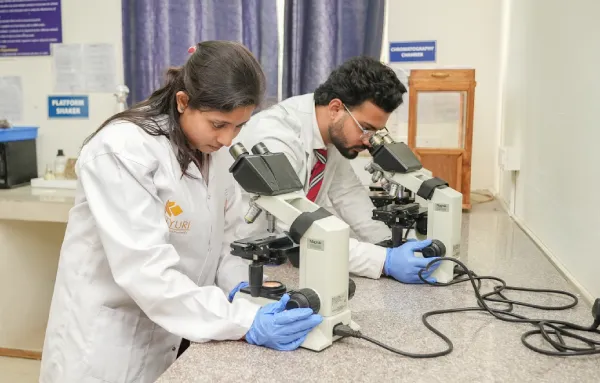
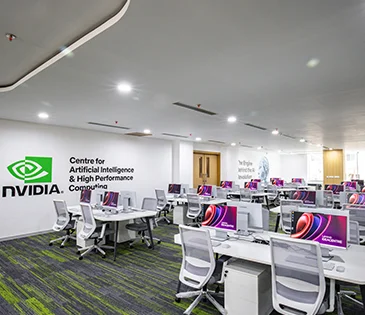
facilities
Level
Undergraduate
facilities
Duration
3 Years
BBA with Specialization in Financial Technology (In knowledge partnership with EY India)

Admission Procedure

Merit prepared on basis of the qualifying exam

Provisional Admission

Students typically need to have completed 10+2 (or equivalent) from a recognized board.

About The Program

Graphic Era (Deemed to be University), in collaboration with EY India as knowledge partner, offers a future-focused Bachelor of Business Administration (BBA) with Specialization in Financial Technology (FinTech). The program is designed to equip students with a strong foundation in business management, finance, digital technologies, and innovation-driven financial services. By integrating contemporary financial concepts with emerging technologies, the program prepares learners for the rapidly evolving digital finance ecosystem.

The curriculum has been carefully designed to provide comprehensive knowledge of financial markets, banking, investment management, digital payments, blockchain technology, artificial intelligence in finance, data analytics, cybersecurity, regulatory technology (RegTech), and emerging FinTech innovations. Students gain an understanding of how technology is transforming financial services and creating new opportunities across banking, insurance, wealth management, lending, and capital markets.

A key strength of the program lies in its industry-oriented approach, combining academic rigor with practical learning experiences. Through industry-led workshops, hands-on projects, case studies, simulations, internships, hackathons, and interactions with FinTech professionals, students develop analytical, technical, and managerial competencies required in the modern financial sector. The knowledge partnership with EY Indiacollaboration with EY provides valuable industry insights, enabling students to understand real-world challenges and emerging trends in financial technology.

The program aims to nurture future-ready professionals who can leverage technology to drive innovation, improve financial inclusion, enhance customer experiences, and contribute to the digital transformation of the global financial services industry. Graduates of the program will be well-positioned for careers in FinTech companies, digital banking, financial consulting, investment firms, payment technology organizations, insurtech companies, and technology-enabled financial services enterprises.

Eligibility

Students typically need to have completed 10+2 (or equivalent) from a recognized board. Some institutions may require minimum percentage criteria or entrance exams.

Program Educational Objectives (PEOs)

PEO1

Foundation in Business, Finance, and Financial Technology

Graduates of the BBA with Financial Technology program will possess a strong foundation in business management, financial systems, banking operations, and emerging financial technologies. They will be able to integrate business and financial knowledge to understand and address challenges in the evolving digital financial ecosystem.

PEO2

Application of Financial Technologies and Digital Innovation

Graduates will be equipped to apply contemporary financial technologies, data analytics, artificial intelligence, blockchain, digital payment systems, and related technological tools to improve financial services, enhance operational efficiency, and support innovation in the financial sector.

PEO3

Analytical Thinking, Communication, and Professional Skills

The program aims to develop analytical, communication, leadership, and teamwork skills among graduates. Students will be able to evaluate financial information, communicate effectively with stakeholders, and work collaboratively in multidisciplinary environments to solve business and financial problems.

PEO4

Ethical, Responsible, and Sustainable Financial Practices

Graduates will demonstrate ethical conduct, regulatory awareness, and social responsibility in financial decision-making. They will understand the importance of compliance, data privacy, cybersecurity, financial inclusion, and sustainable business practices while contributing positively to organizations and society.

PEO5

Career Advancement, Entrepreneurship, and Lifelong Learning

The program prepares graduates for careers in FinTech, banking, consulting, investment management, digital financial services, and entrepreneurship. Graduates will be motivated to pursue higher education, professional certifications, and continuous learning to remain competitive in the rapidly evolving financial technology landscape.

Program Outcomes (POs)

PO1

Apply principles of management, economics, accounting, finance, banking, and business analytics to support organizational and financial decision-making.

PO2

Analyze financial data and business information using quantitative, analytical, and technology-enabled approaches.

PO3

Understand and evaluate digital financial services, payment systems, banking technologies, and FinTech business models.

PO4

Apply emerging technologies such as artificial intelligence, blockchain, machine learning, and data analytics to solve financial and business problems.

PO5

Utilize contemporary digital tools, financial platforms, and technology applications relevant to the financial services industry.

PO6

Communicate financial insights, analytical findings, and strategic recommendations effectively through reports, presentations, and professional interactions.

PO7

Work collaboratively in multidisciplinary teams to address complex challenges in business, finance, and technology-driven environments.

PO8

Demonstrate ethical awareness, regulatory compliance, data security consciousness, and responsible conduct in financial and technological applications.

PO9

Develop entrepreneurial thinking, innovation capabilities, and adaptability to emerging trends in financial technology and digital transformation.

PO10

Engage in continuous learning and professional development to remain effective in a rapidly evolving global financial ecosystem.

Program Specific Outcomes (PSOs)

PSO1:

Apply financial technology tools and platforms to analyze, manage, and improve financial services, digital banking operations, and payment systems.

PSO2:

Utilize financial analytics, business intelligence, and data visualization tools to generate insights and support evidence-based financial decision-making.

PSO3:

Evaluate and implement emerging technologies such as blockchain, artificial intelligence, machine learning, and cloud-based solutions within financial services.

PSO4:

Analyze regulatory, compliance, cybersecurity, and risk management issues associated with digital financial transactions and technology-enabled financial services.

PSO5:

Demonstrate readiness for careers in FinTech, digital banking, investment technology, wealth management, insurtech, regtech, financial consulting, and technology-driven financial enterprises.

PSO6:

Develop innovative and entrepreneurial solutions that leverage technology to enhance financial inclusion, customer experience, operational efficiency, and value creation in the financial services sector.

Specializations / Program Focus Areas

The BBA with Specialization in Financial Technology (FinTech) is a future-oriented undergraduate program that integrates business management, finance, and emerging technologies to prepare students for the rapidly evolving digital financial ecosystem. The program focuses on developing expertise in technology-driven financial services, innovation, data-driven decision-making, and digital transformation within the financial sector.

Focus Areas Within the Specialization

  • Digital Banking and Financial Services
    digital banking operations, neo-banking models, customer experience management, and technology-enabled financial solutions.
  • Payments and Financial Innovation
    digital payment systems, mobile payments, payment gateways, UPI ecosystem, and emerging payment technologies.
  • Financial Analytics and Data-Driven Decision Making
    financial data analysis, business intelligence, predictive analytics, and data visualization for financial services.
  • Blockchain and Distributed Ledger Technologies
    blockchain fundamentals, smart contracts, decentralized finance (DeFi), and applications of distributed ledger systems in financial services.
  • Artificial Intelligence and Machine Learning in Finance
    AI-driven financial services, robo-advisory platforms, algorithmic decision-making, fraud detection, and intelligent financial systems.
  • Investment Technology and Wealth Management
    digital investment platforms, portfolio analytics, robo-advisory services, and technology-enabled wealth management solutions.
  • Risk Management and Financial Security
    cybersecurity in financial systems, fraud prevention, financial risk assessment, compliance monitoring, and data protection.
  • Regulatory Technology (RegTech) and Compliance
    financial regulations, digital compliance systems, anti-money laundering (AML) frameworks, and technology-enabled governance mechanisms.
  • InsurTech and Emerging Financial Innovations
    technology applications in insurance, digital underwriting, claims automation, and innovative insurance business models.
  • FinTech Entrepreneurship and Innovation Management
    startup ecosystems, innovation strategies, digital business models, venture financing, and entrepreneurship in financial technology.
  • Financial Markets and Digital Assets
    technology-driven trading platforms, market analytics, digital assets, and emerging trends in capital markets.
  • Financial Inclusion and Sustainable FinTech Solutions
    technology-enabled financial inclusion, digital lending, microfinance innovations, and sustainable financial services for underserved populations.
  • AI, Automation, and Emerging Technologies in Finance
    exposure to next-generation technologies transforming financial services, including generative AI, intelligent automation, cloud computing, and advanced analytics.

These focus areas ensure that students graduate with a balanced understanding of business management, financial systems, digital technologies, analytics, and innovation, making them well-prepared for careers in the rapidly expanding global FinTech industry.

Career Opportunities

Graduates of the BBA with Financial Technology program can pursue roles such as:

  • FinTech Analyst
  • Financial Data Analyst
  • Digital Banking Associate
  • Business Analyst
  • Investment Technology Analyst
  • Risk and Compliance Analyst
  • Payment Solutions Specialist
  • Financial Consultant
  • Wealth Management Associate
  • Product Analyst
  • RegTech Analyst
  • FinTech Product Executive
  • Digital Transformation Associate
  • Financial Services Consultant
  • FinTech Entrepreneur

Recruiters of BBA with Financial Technology (FinTech) Program

The BBA with Specialization in Financial Technology (FinTech) prepares graduates for exciting career opportunities across digital banking, financial services, consulting, investment management, insurance, payment technology, financial analytics, wealth management, fintech startups, and technology-driven financial enterprises. The program equips students with a unique blend of business, finance, analytics, and technology skills that are highly sought after in the evolving financial services industry.

GEU
GEU
GEU
GEU
GEU
GEU
GEU
GEU
GEU
GEU
GEU
GEU
GEU
GEU
GEU
GEU
GEU
GEU
GEU
GEU
GEU
GEU
GEU
GEU
GEU
GEU
GEU
GEU
GEU
GEU
GEU
GEU
GEU
GEU

<

Emerging FinTech Start-ups and Innovation Ecosystem

  • FinTech startups specializing in digital lending, wealth technology, blockchain solutions, insurtech, regtech, embedded finance, and AI-driven financial services.
  • Innovation hubs, incubators, venture capital-backed fintech ventures, and technology-enabled financial service providers.

Course Curriculum

semester 1

  • Principles and Practices of Management
  • Foundations of Financial Technology [EY India]
  • Financial accounting
  • Business Statistics and Logic
  • English Based Seminar
  • Indian Knowledge System
  • Environmental Science and sustainability

semester 2

  • Human Behavior and Organization
  • Marketing Management
  • Business Economics
  • Digital Payment System and Electronic Transactions [EY India]
  • Multidisciplinary Electives /Courses/SWAYAM (any one course of studentโ€™s choice)
  • Universal Human Values-II
  • General Proficiency

semester 3

  • Management Accounting
  • Human Resource Management
  • Block chain Technologies and Cryptocurrencies [EY India]
  • Multidisciplinary Electives /Courses/SWAYAM โ€“ II (any one course of studentโ€™s choice)
  • Artificial Intelligence and machine Learning in Finance [EY India]
  • Career Skills

semester 4

  • Corporate and Business Law
  • Financial Management
  • Business Research Methodology
  • Fintech Risk Management and Cyber Security [EY India]
  • Regulatory Framework and legal Issues in Fintech [EY India]
  • Design Thinking and Innovation
  • General Proficiency

semester 5

  • Strategic Management
  • Logistics and Supply Chain Management
  • Entrepreneurship and Start-up Ecosystem
  • Fintech Innovations and Entrepreneurship [EY India]
  • Internship/capstone Project

semester 6

  • Project Management
  • Business Taxation & Corporate Governance
  • Managing Personal Finance
  • Emerging Trends and Future of Fintech [EY India]
  • Major Project
  • General Proficiency

Frequently Asked Questions

A BBA with Specialization in Financial Technology (FinTech) is an undergraduate program that combines business management, finance, and emerging technologies. It prepares students to understand how technology is transforming financial services such as banking, payments, investments, insurance, and wealth management.

The program typically includes subjects such as Principles of Management, Financial Management, Financial Markets, Digital Banking, FinTech Ecosystem, Blockchain Technology, Artificial Intelligence in Finance, Data Analytics, Digital Payments, Investment Management, Cybersecurity, Risk Management, and Regulatory Technology (RegTech).

Students develop financial analysis, digital literacy, problem-solving, data analytics, business decision-making, communication, teamwork, and technology management skills. They also gain exposure to emerging technologies such as blockchain, artificial intelligence, machine learning, and financial analytics tools.

Graduates can pursue careers as FinTech Analysts, Digital Banking Associates, Financial Analysts, Business Analysts, Investment Analysts, Risk and Compliance Analysts, Payment Solutions Specialists, Wealth Management Associates, Financial Consultants, Product Analysts, and FinTech Entrepreneurs.

No prior coding knowledge is required for admission. The program introduces relevant technical concepts and tools from the foundational level. Students gradually learn technology applications relevant to financial services and business problem-solving.

Candidates must have successfully completed 10+2 (or equivalent) from a recognized board. Admission requirements may vary according to university regulations and applicable admission policies.

While a traditional BBA focuses primarily on business and management fundamentals, the BBA with FinTech specialization integrates finance, digital technologies, analytics, and innovation. The program prepares students for careers in the rapidly growing technology-enabled financial services industry.

Yes. The program incorporates internships, industry projects, case studies, workshops, and practical learning experiences. Students gain exposure to real-world financial and technological challenges through industry interactions and experiential learning activities.

Graduates may pursue MBA programs in Finance, FinTech, Business Analytics, Banking, or Technology Management. They may also pursue professional certifications and postgraduate programs in areas such as Financial Analytics, Data Science, Investment Management, and Financial Engineering.

Yes. FinTech is one of the fastest-growing sectors globally, driven by advancements in digital banking, payments, artificial intelligence, blockchain, and financial innovation. The industry offers diverse career opportunities, competitive compensation, and strong long-term growth prospects.

Absolutely. The program provides a strong foundation in finance, banking, investment management, and financial technologies, enabling graduates to pursue opportunities in banks, financial institutions, consulting firms, FinTech companies, insurance organizations, and investment firms.

Yes. The curriculum introduces students to emerging technologies such as blockchain, artificial intelligence, machine learning, data analytics, and digital financial innovations, enabling them to understand their applications in modern financial services.

Yes. The program encourages innovation, problem-solving, and entrepreneurial thinking. Students gain exposure to FinTech business models, startup ecosystems, and digital innovation, helping them develop ventures in the financial technology domain.

The increasing adoption of digital payments, online banking, artificial intelligence, blockchain, and data-driven financial services has transformed the global financial industry. Organizations worldwide are seeking professionals who can combine financial knowledge with technological expertise, making FinTech one of the most promising career fields of the future.

As the Knowledge Partner, EY India contributes industry insights, expert interactions, workshops, and practical perspectives that help bridge the gap between academic learning and industry expectations. This collaboration enhances studentsโ€™ understanding of emerging trends and practices in financial technology.

Contact Us

GEU
GEU

566/6, Bell Road, Society Area,
Clement Town, Dehradun,
Uttarakhand