
Merit prepared on basis of the qualifying exam
Seats to be allocated based on projected scores(12th), calculated basis the candidate’s 10th percentage – only meritorious students
The B.Tech in Mechanical Engineering for Working Professionals is designed for diploma holders with industry experience who wish to upgrade their qualifications and advance in their careers.
This program provides in-depth technical knowledge and practical skills in areas such as automotive, aerospace, industrial manufacturing, and robotics. The curriculum is tailored for professionals, allowing them to balance work and study through a flexible learning format, hands-on training, and industry-relevant projects.
All interested candidates should have passed Class XII from a recognized board of examination with Physics, Mathematics, and Chemistry or equivalent, as per AICTE guidelines, and admission will be granted as per merit decided by the university.
The curriculum is designed in faculty meetings after exhaustive discussion asperNEPandAICTE/UGCrecommendations.Theschemeincludes internships, SWAYAM courses, minor courses, open electives, mandatory non-graded, Project-based learning (PBL) and other required courses that make the curriculum industry-oriented and enhance employability. Further, the following inputs are considered as guidelines for the curriculum design process:
The Program Educational Objectives (PEOs) for Mechanical Engineering students typically center around the broad goals that the program seeks to achieve for its graduates. There are four commonly stated objectives:
To enable students to apply core principles and emerging technologies in Mechanical Engineering to address modern industry and societal challenges.
To equip students with a strong foundation in core principles and emerging technologies, enabling them to solve complex engineering problems and pursue advanced studies, research, and innovation in Mechanical Engineering.
To foster communication, ethics, and leadership in students, enabling them to excel in emerging Mechanical Engineering trends and contribute to industry, society, and science globally.
To foster lifelong learning, innovation-driven entrepreneurship, and research in emerging technologies, with a focus on ethics and environmental sustainability for societal benefit.
Engineering Graduates will be able to:
Apply the knowledge of mathematics, science, engineering fundamentals, and an engineering specialization to the solution of complex engineering problems.
Identify, formulate, review research literature, and analyze complex engineering problems reaching substantiated conclusions using first principles of mathematics, natural sciences, and engineering sciences.
Design solutions for complex engineering problems and design system components or processes that meet the specified needs with appropriate consideration for the public health and safety, and the cultural, societal, and environmental considerations.
Use research-based knowledge and research methods, including design of experiments, analysis and interpretation of data, and synthesis of the information to provide valid conclusions for complex problems.
Create, select, and apply appropriate techniques, resources, and modern engineering and IT tools including prediction and modeling to complex engineering activities with an understanding of the limitations.
Apply reasoning informed by the contextual knowledge to assess societal, health, safety, legal and cultural issues and the consequent responsibilities relevant to the professional engineering practice.
Understand the impact of the professional engineering solutions in societal and environmental contexts, and demonstrate the knowledge of, and need for sustainable development.
Apply ethical principles and commit to professional ethics and responsibilities and norms of the engineering practice.
Function effectively as an individual, and as a member or leader in diverse teams, and in multidisciplinary settings.
Communicate effectively on complex engineering activities with the engineering community and with society at large, such as, being able to comprehend and write effective reports and design documentation, make effective presentations, and give and receive clear instructions.
Demonstrate knowledge and understanding of the engineering and management principles and apply these to one’s own work, as a member and leader in a team, to manage projects and in multidisciplinary environments.
Recognize the need for, and have the preparation and ability to engage in independent and life-long learning in the broadest context of technological change.
In addition to these twelve POs, three Program Specific Outcomes (PSOs) are formulated:
The mechanical engineering graduates will be able to perform design and analysis of mechanical systems using industrial modeling and simulation tools.
The mechanical engineering graduates will be able to do research / pursue higher studies in the field of machine design, fluid mechanics, materials science, thermal science, production, industrial engineering, automation and mechatronics.
The mechanical engineering graduate will be able to pursue a successful career in industries in the areas of manufacturing, design, quality, automation, operation and maintenance and serve the nation and society.
The B.Tech. in Mechanical Engineering prepares graduates for various roles, such as:
Notes: Semester 1 and 2 are applicable only for regular entry students. Lateral entry students begin from Semester 3.
Mechanical Engineering placements are moderate to good, depending on student skill and industry demand.Core companies visit regularly for roles in design, production, quality, and manufacturing.
Many mechanical students also get placed in IT, analytics, and service-based companies through interdisciplinary hiring.Skill-building, internships, and projects greatly enhance placement outcomes.
Yes. Students can opt for Honors in Mechanical Engineering
Specializations like Robotics & Automation, Automobile Engineering. These options help students build interdisciplinary skills and improve placement prospects.
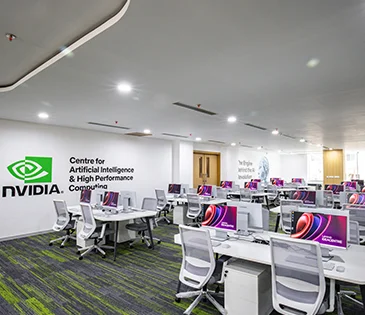
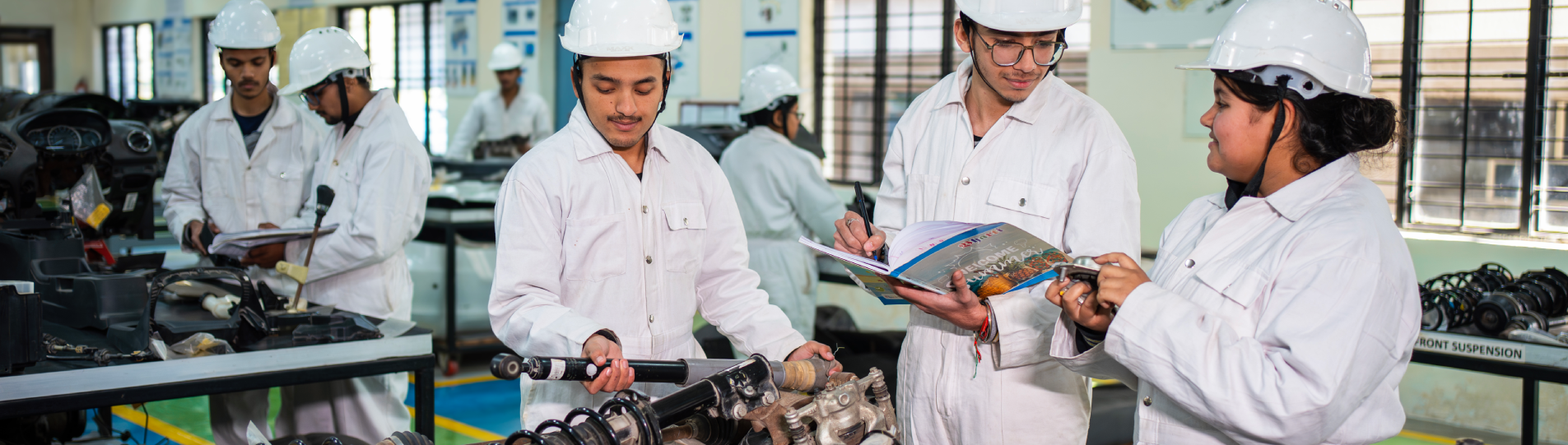
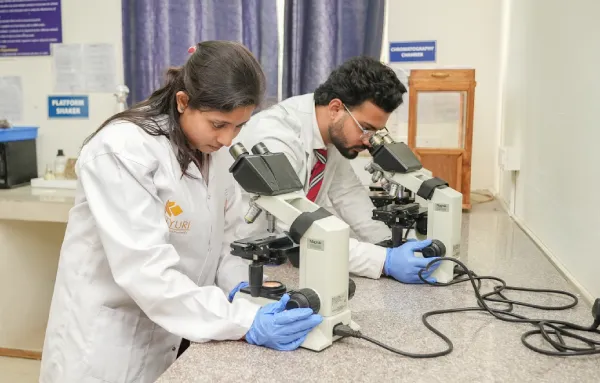
Graphic Era has well-equipped labs including:
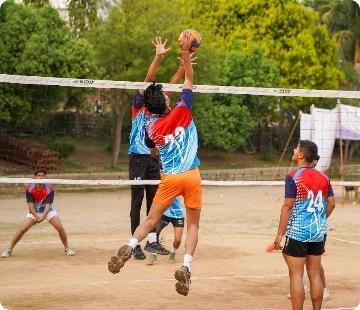
Yes, the university offers several active clubs:
These clubs organize competitions, workshops, hackathons, industrial projects, and hands-on sessions.
Graphic Era provides:
The total course fee is optimized for 4 years, excluding hostel charges. Fees may vary slightly depending on specialization or year of admission.
Yes. Graduates pursue M.Tech, MS, and research in areas like: