






GEU
facilities
Level
Ph.D.
facilities
Duration
As per UGC Guidelines
Ph.D. in Electrical Engineering

Admission Procedure

Merit prepared on basis of the qualifying exam

Provisional Admission

i. Master’s degree (M.Tech./M.E.) in Electrical Engineering or related fields with minimum 55% marks (5% relaxation for reserved categories as per UGC norms). 

About The Program

The PhD in Electrical Engineering program at Graphic Era (Deemed to be University) is a research-driven doctoral program designed to cultivate independent researchers, academicians, and industry innovators capable of addressing complex challenges in emerging areas of electrical engineering.

The program offers advanced research opportunities in both core and emerging domains of electrical engineering, including power systems, renewable energy, power quality, smart grids, electric vehicles, power electronics, control systems, and artificial intelligence–based applications. With a strong emphasis on interdisciplinary research, scholars are encouraged to integrate advanced computational techniques, data analytics, and intelligent control methodologies into electrical engineering solutions.

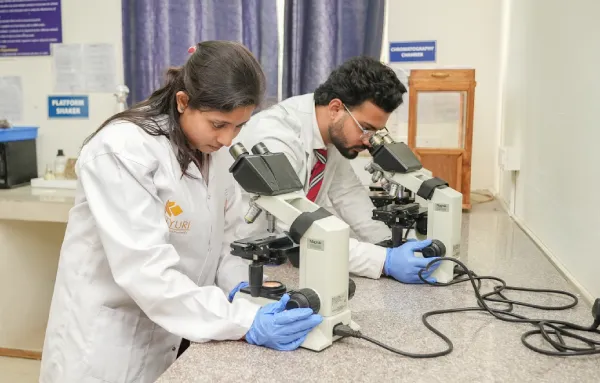
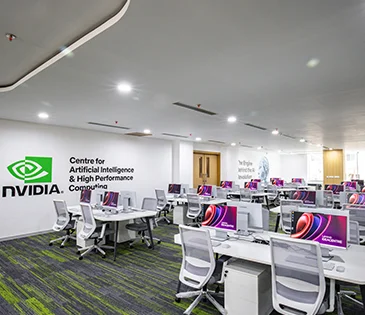
Doctoral candidates work closely with experienced faculty members and research mentors, benefiting from state-of-the-art laboratories, advanced simulation tools, and collaborative research environments. The program promotes innovation through funded research projects, industry collaborations, and opportunities for publication in reputed journals and conferences.

Designed in alignment with national and global research priorities, the PhD program empowers scholars to contribute original, high-impact research that supports sustainable energy development, smart infrastructure, and next-generation electrical technologies.


Eligibility Criteria for the admissions in the Program

  • Master’s degree (M.Tech./M.E.) in Electrical Engineering or related fields with a minimum of 55% marks (5% relaxation for reserved categories as per UGC norms).
  • Candidates with B.Tech. along with an exceptional academic record and valid research experience may be considered as per UGC guidelines.
  • Candidates must qualify the PhD Entrance Test conducted by the University or possess a valid GATE/NET score, as per university rules.
  • Shortlisted candidates must clear the interview/viva voce conducted by the Department Research Committee (DRC).

Teaching Pedagogies

The program adopts advanced and flexible pedagogical approaches suited for doctoral-level research:

  • Research-driven and supervisor-guided learning
  • Advanced seminar and colloquium-based learning
  • Problem-oriented and solution-focused research approach
  • Simulation and experimental-based research methodology
  • Interdisciplinary research with AI, ML, and data analytics integration
  • Industry-collaborative and application-oriented research
  • Publication and patent-oriented research training
  • Continuous research evaluation and progress monitoring
  • Emphasis on research ethics and professional practices

Specializations

Scholars may pursue research in (but not limited to) the following areas: 

  • Power Systems
  • Power Quality
  • Renewable Energy Systems
  • Solar Energy and Photovoltaic Technologies
  • Smart Grid and Clean Energy Systems
  • Distributed Generation
  • Hybrid Energy Systems
  • Electric Vehicles and Charging Technologies
  • Power Electronics and Electrical Drives
  • Battery Management Systems
  • Control Systems with AI and Machine Learning Techniques
  • FACTS Devices and Power System Optimization
  • Instrumentation and Signal Processing
  • Artificial Intelligence, Machine Learning, and Intelligent Data Analytics
  • High Voltage Engineering and Advanced Applications
  • Interdisciplinary Research in Material Science and Biomedical Engineering

Career Pathways

  • Academician / Professor / Research Scholar in Universities and Institutions
  • Research Scientist in National & International R&D Organizations
  • Power Systems and Renewable Energy Specialist
  • Smart Grid and Clean Energy Consultant
  • Electric Vehicle and Energy Storage Research Expert
  • Industry R&D Engineer / Technology Lead
  • Policy Advisor and Energy Consultant
  • Entrepreneur in Energy, EV, and Smart Grid Technologies
  • Postdoctoral Researcher in Advanced Electrical and Energy Systems

Course Curriculum

The minimum credit requirement for PhD coursework is as follows

  • Minimum 12 credits - This must include a "Research and Publication Ethics" course and a research methodology seminar.
  • Scholars admitted after completion of a 4-year/8-semester bachelor’s degree program require a minimum of 16 credits.
  • Scholars can take MOOCs (like SWAYAM, NPTEL) for course work credit. For this purpose, approval of SRC is required.
  • For registration of MOOCs, the scholar can consult/discuss with his/her supervisor.

List of Courses

  • Research and Publication Ethics
  • Research Methodology
  • Advanced Power Electronics
  • Electrical Machines and Drives
  • Electric Vehicle Technology
  • Energy Storage Systems and Management
  • EV Battery Charging System
  • Digital Signal and Image Processing
  • Advanced Microcontroller-Based Systems
  • Control of Special Electric Machines
  • Fuel Cell Technology
  • Robotics & Automation
  • Industrial Automation and Control
  • Renewable Energy Resources and Energy Management
  • Virtual Instrumentation
  • Smart Grid for EVs
  • Control Systems for Electric Vehicles
  • Industrial Internet of Things
  • Machine Learning
  • Microgrid Systems
  • Advanced Optimization Techniques

Frequently Asked Questions

The program offers research opportunities in power systems, power quality, renewable energy, smart grids, electric vehicles, power electronics and drives, hybrid energy systems, battery management systems, control systems with AI techniques, instrumentation, signal processing, and interdisciplinary domains such as machine learning and data analytics.

The program typically spans three to six years, depending on the scholar’s research progress, completion of coursework, and successful submission of the doctoral thesis.

Yes. The university provides strong support for publishing in reputed peer-reviewed journals, presenting work at national and international conferences, and filing patents for innovative and impactful research outcomes.

Yes. Doctoral scholars often collaborate with power utilities, renewable energy companies, EV industries, research laboratories, and government agencies through sponsored research projects and applied research initiatives.

Contact Us

GEU
GEU

566/6, Bell Road, Society Area,
Clement Town, Dehradun,
Uttarakhand