







GEU
facilities
Level
Undergraduate
facilities
Duration
4 Years
facilities
Fee Structure
Click Here
B.Sc. (Hons.) in Fashion Apparel and Accessory Design

Admission Procedure

Merit will be prepared on the basis of the qualifying exam.

Provisional Admission

Seats to be allocated based on projected scores (12th), calculated based on the candidate’s 10th percentage.

About The Program

The seamless integration of human and artificial cognition leveraged through Emerging Technologies is the core of our practice. This dynamic, transdisciplinary method builds a foundation for leading innovation in user-environment-centered problem-solving and creative product development.

The B.Sc. (Hons.) in Fashion Apparel and Accessory Design is a hands-on undergraduate design program that cultivates innovative, ethical, and industry-ready designers. Blending studio practice with creative problem-solving, the curriculum empowers students with enhanced Human Intelligence (HI) and an awareness of emerging technologies like AI to shape the future of fashion.

Students progress from foundational design principles, including visual communication, design thinking, textiles, and material processes, to specialized expertise in garment construction, pattern making, and accessory crafting. Grounded in a human-centered approach, the program balances practical design execution with market and user research to develop sustainable, functional, and culturally resonant collections.

Through studio projects, digital design tools, and industry exposure, students learn to translate concepts into tangible apparel and accessories that meet both consumer and business needs. Graduates emerge as versatile, socially responsible professionals equipped to lead innovation across global fashion, lifestyle, and retail industries.

Eligibility Criteria for Admission

  • Academic Qualification : To be eligible for the Bachelor of Design (B.Des.) program, a candidate must have passed 10+2 examination.
  • Entrance Exam : Candidate’s admission may be based on Graphic Era’s entrance test, or a personal interview, unless they have a valid score from a national-level entrance exams like UCEED / NID-DAT / NIFT Entrance Exam.

Teaching Pedagogies

The pedagogy for the B.Sc. (Hons.) in Fashion Apparel and Accessory Design blends tactile studio craftsmanship with digital fashion engineering and circular systems thinking. The curriculum guides students from foundational material exploration and pattern making to full-scale apparel and accessory prototyping.

Experiential & Studio-Based Learning

  • Atelier Culture & Jury Critiques: Learning is anchored in specialized studios for garment construction, leatherwork, metal/accessory fabrication, and 3D draping. Regular open-floor critiques mirror professional design houses, building visual articulation and iterative rigor.
  • Tactile Prototyping & Form Iteration: Emphasizes hands-on making using calico toiles, zero-waste pattern drafting, and physical mock-ups to test fit, ergonomics, and silhouette before committing to final materials.
  • End-to-End Design Pipeline: Mirrors real-world production—from material sourcing, surface development, and precision tailoring to accessory hardware prototyping, tech-pack documentation, and collection staging.

Future-Ready & Tech-Integrated Pedagogy

  • Virtual Prototyping & 3D Modeling: Students use 3D CAD and virtual draping tools (such as CLO 3D and Rhino/Matrix) to simulate garment drape and accessory ergonomics digitally, minimizing physical sampling waste.
  • AI-Augmented Design Exploration: Generative AI tools support rapid mood curation, print sequencing, and form variation, enabling students to focus on creative direction and craftsmanship.
  • Material Innovation & Smart Fabrication: Introduces biomaterials, vegan leather alternatives, low-impact finishes, and additive manufacturing (3D-printed hardware and trimmings) for next-generation fashion.

Cultural, Circular & Industry-Linked Systems

  • Circular Lifecycle Design: Integrates cradle-to-cradle principles, mono-material engineering, upcycling, and disassembly-friendly accessory construction to reduce environmental impact.
  • Craft Immersion & Cultural Context: Field engagements with local artisan clusters help students ethically translate indigenous handloom, embroidery, and metalwork traditions into contemporary global products.
  • Live Industry Briefs & Portfolio Showcasing: Collaborations with export houses, retail brands, and accessory manufacturers ground projects in commercial costing and production realities, culminating in physical lookbooks, digital showcases, and runway presentations.
Design education embraces the synergy of AI and HI, forging a 'hyper-transdisciplinary' approach. This empowers learners to tackle complex challenges through deep integration of knowledge, AI-augmented creativity, and ethically guided innovation. Cultivating both AI literacy and enhanced human intelligence will be central to shaping impactful design solutions for tomorrow's world.

Building-in Areas of Expertise in Innovation

Design Strategy

Defines the overarching vision and framework for design decisions to achieve specific goals.

  • User research
  • Design direction
  • Culture & context
  • Design impact
  • Socio-business design
  • Strategic design

Design Tools & Technologies

Equips students with the practical skills to translate concepts into tangible outputs using relevant software and methods.

  • Design thinking
  • CAD softwares
  • Human intelligence & Artificial intelligence
  • Ergonomics
  • Prog. languages
  • XR Lab (AR+VR+MR)
  • Emerging technologies

Design Innovation

Fosters creative problem-solving and the development of novel and impactful design solutions.

  • Design process
  • HCI - Human Factors
  • Inclusive Design
  • Systems thinking
  • Managing uncertainty
  • Value realization & creation

Experience Design

Focuses on understanding and shaping meaningful and user-centric interactions across touchpoints.

  • Multi-sensory design
  • Human interface
  • Nature & sustainability
  • Design futures
  • Product lifestyle
  • Holistic User Experience

Business Design Management

Integrates design thinking with business principles for strategic decision-making and value creation.

  • Business tools for Design
  • Leadership & change maker
  • Design management
  • Professional communication
  • Promotion & awareness
  • Business strategy
  • Project management

Infrastructure

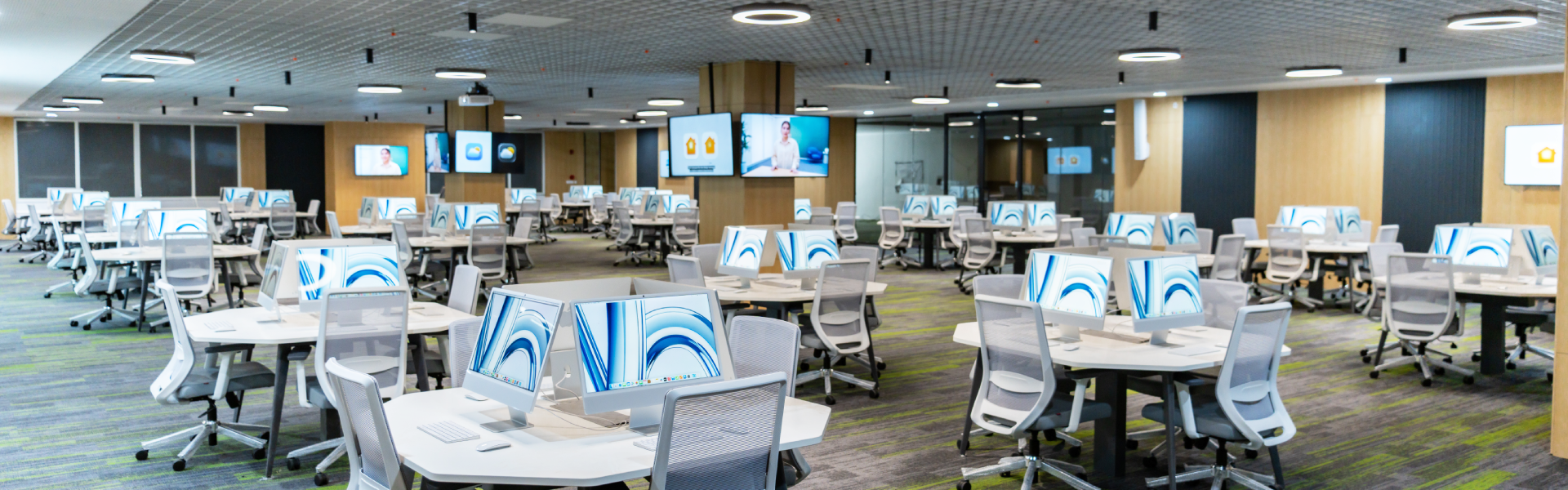
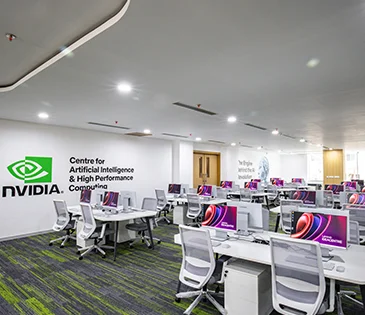
  • Garment Construction & Assembly Studios
  • Pattern Making & 3D Draping Studios
  • Accessory Prototyping & Craftsmanship Studio (Footwear, Fine & Contemporary Adornments, Bags & Lifestyle Objects)
  • Precision Metalwork, Casting & Surface Finishing Workshop
  • Leather, Non-Leather & Soft Goods Fabrication Lab
  • Lasting, Ergonomics & Structural Modeling Studio
  • Printmaking & Surface Ornamentation Studio (Screen, Block & Heat Transfer)
  • Digital Printing & Fashion CAD Studio
  • 3D Fashion Simulation & Virtual Prototyping Lab (CLO 3D, Browzwear & 3D CAD)
  • Rapid Prototyping & Digital Fabrication Lab (3D Printing, Laser Cutting & Engraving)
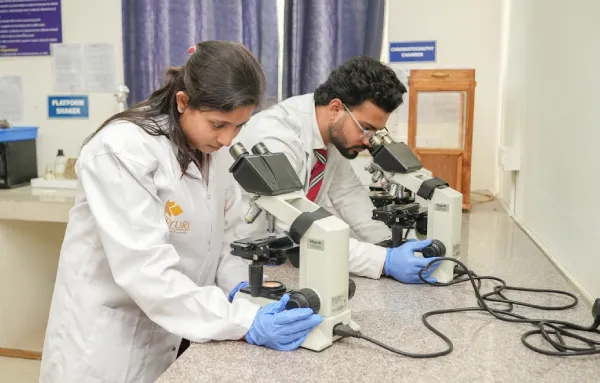
  • Material, Hardware & Quality Testing Laboratory
  • Textile, Material & Trim Resource Library
  • Circular Design, Upcycling & Zero-Waste Workshop
  • Fashion Styling, Editorial Photography & Visual Merchandising Studio

Key highlights

Fashion & Apparel Design, Footwear & Last Design Engineering, Contemporary Adornments & Fine Craft, Soft Goods & Carry-Solution Design, Lifestyle & Functional Accessories, Pattern Making & 3D Draping, 3D Digital Prototyping & Virtual Simulation, Surface Ornamentation & Print Development, Material Innovation & Bio-Fabrication, Fashion Styling & Visual Merchandising, Sustainable & Circular Design, Apparel & Accessory Production Management, and many more.

Specializations

Stream : B.Sc. (Hons.) in Fashion Apparel and Accessory Design

  • This specialization trains versatile designers to bridge garment construction, functional accessory engineering, and sustainable innovation, fusing Human Intelligence (HI) with advanced design methodologies to create cohesive, future-ready fashion and lifestyle collections. It balances aesthetic sensibility with ergonomic and technical rigor, exploring silhouette development, structural form-making, and surface storytelling.
  • The curriculum advances from foundational sketching, material exploration, and basic draping to advanced pattern engineering, footwear and soft-goods construction, contemporary adornment prototyping, 3D digital modeling, and circular design systems. Students navigate the complete product pipeline, from concept ideation and zero-waste pattern drafting to hardware prototyping, virtual fit simulation, and runway staging, leveraging generative AI tools alongside indigenous artisanal techniques.
  • Students learn to articulate distinct brand identities, design functional apparel and wearable accessories, engineer sustainable material alternatives, and navigate the commercial dynamics of global fashion, luxury, and retail markets.
  • This prepares graduates to lead across international fashion houses, footwear and lifestyle brands, luxury ateliers, and conscious design studios as apparel designers, accessory specialists, and creative directors.

Program Educational Objectives (PEOs)

PEO1

To prepare students for successful careers in diverse design domains by building a strong foundation in theoretical knowledge, practical skills, and problem-solving methodologies applicable to real-world, interdisciplinary challenges.

PEO2

To develop responsible and ethical design professionals capable of contributing effectively both as independent practitioners and as collaborative team members in dynamic work environments.

PEO3

To equip students with the academic and research aptitude necessary to pursue higher education and engage in scholarly or professional advancement within the field of design and allied disciplines.

PEO4

To instill in students the ability to embrace and adapt to evolving design practices, tools, and technologies through a mindset of lifelong learning and continuous improvement.

Program Outcomes (POs)

PO1

Analyzing

Identify and analyze complex design challenges by applying critical thinking and contextual awareness across cultural, societal, and technological domains.

PO2

Understanding

Understand user needs, behaviors, and values through empathy-driven approaches to create inclusive, human-centered design outcomes.

PO3

Applying

Apply design thinking methodologies and creative problem-solving processes to address real-world design problems effectively.

PO4

Evaluating

Conduct and evaluate design research using appropriate qualitative and quantitative methods to generate informed insights.

PO5

Synthesizing

Integrate diverse inputs technical, emotional, and aesthetic into cohesive and impactful design solutions.

PO6

Reflecting

Demonstrate professional ethics, self-awareness, and reflective practice in individual and collaborative design work.

PO7

Creating

Conceptualize and develop original, adaptive, and future-oriented design ideas using imagination, iteration, and prototyping.

PO8

Sustaining

Evaluate the social, environmental, and ethical implications of design choices, promoting sustainability and responsible innovation.

PO9

Collaborating

Function effectively in interdisciplinary teams, managing roles and responsibilities across the design and development process.

PO10

Communicating

Express design ideas, processes, and outcomes clearly through visual, verbal, and written communication tailored to varied audiences and contexts.

PO11

Evolving

Recognize the necessity for independent, life-long learning by maintaining the agility to adapt to emerging technologies and applying critical thinking to navigate continuous socio-technological change.

Program Specific Outcomes (PSOs)

PSO1

Apply principles of design theory, silhouette engineering, and visual storytelling to develop compelling fashion concepts and cohesive apparel and accessory collections.

PSO2

Design and prototype functional footwear, soft goods, contemporary adornments, and lifestyle accessories by integrating structural mechanics, ergonomics, and surface finishing techniques.

PSO3

Apply principles of flat pattern engineering, creative 3D draping, and precision assembly to translate two-dimensional concepts into well-fitted, three-dimensional physical and virtual forms.

PSO4

Develop apparel and accessory ranges rooted in consumer behavior, anthropometry, trend forecasting, and brand identity to address diverse global market segments.

PSO5

Use industry-standard CAD, 3D fashion simulation (such as CLO 3D), and 3D modeling tools to prototype, simulate material behavior, and streamline pre-production tech-pack workflows.

PSO6

Demonstrate understanding of ethical sourcing, circular lifecycle systems, and cultural preservation in material selection, craft cluster collaboration, and responsible manufacturing.

PSO7

Work effectively in collaborative production environments alongside pattern masters, craft artisans, hardware technicians, merchandisers, and creative directors from concept to final showcase.

PSO8

Reflect critically on fit analyses, wear testing, hardware durability, and market feedback to iterate and refine product ergonomics, structural performance, and commercial viability.

PSO9

Explore emerging paradigms such as next-generation biomaterials, additive manufacturing, AI-assisted design workflows, and virtual retail environments to advance sustainable fashion practices.

PSO10

Demonstrate professionalism, technical agility, and an entrepreneurial mindset to navigate and lead within the evolving global fashion, lifestyle, and luxury ecosystem.

Career Prospects

Fashion apparel and accessory design is a dynamic, multidisciplinary industry operating at the intersection of creative culture, ergonomic engineering, material innovation, and global retail. Graduates from this program find opportunities across established and emerging sectors where wearable design, aesthetic direction, functional craftsmanship, and sustainable systems are essential, including:

  • Luxury, Couture & Ready-to-Wear Fashion Houses
  • Footwear, Luggage & Lifestyle Goods Brands
  • Fine, Contemporary & Bridge Jewellery Houses
  • Apparel & Accessory Export Houses and Buying Agencies
  • E-Commerce, D2C & Omnichannel Fashion Retail
  • Sustainable Design & Circular Economy Enterprises
  • Wearable Technology & Smart Performance Gear
  • Sports, Athleisure & Active Lifestyle Brands
  • Entertainment, Film, OTT & Theatre (Costume & Prop Styling)
  • Gaming & Virtual Worlds (Digital Wearables & Avatar Assets)
  • Automotive & Aviation Interior Soft-Trim Studios
  • Handloom, Craft Clusters & Artisanal Cooperatives
  • Trend Forecasting & Consumer Insights Agencies
  • Creative Direction, Styling & Visual Branding Studios
  • Fashion Media, Publishing & Editorial Houses
  • Independent Design Labels / Fashion & Lifestyle Entrepreneurship

Graduates of the B.Sc. (Hons.) in Fashion Apparel and Accessory Design program are versatile practitioners equipped with both hands-on prototyping skills and digital agility. Potential career paths and roles include:

  • Fashion Designer (Apparel / Prêt / Couture)
  • Footwear & Last Designer
  • Jewellery & Contemporary Adornment Designer
  • Bag, Luggage & Soft-Goods Designer
  • Lifestyle & Functional Accessory Designer
  • 3D Digital Fashion & Virtual Prototyping Specialist
  • Creative Director / Art Director
  • Fashion Stylist & Editorial Image Director
  • Apparel & Accessory Technical Designer / Product Developer
  • Pattern Engineer & 3D Draping Specialist
  • Fashion Merchandiser, Buyer & Range Planner
  • Sustainable Fashion & Circular Lifecycle Strategist
  • Costume & Wardrobe Designer (Cinema, OTT & Stage)
  • Trend Forecaster & Material Strategist
  • Visual Merchandiser & Retail Experience Designer
  • Production & Quality Assurance Manager (Apparel & Accessories)
  • Craft Cluster & Artisanal Innovation Designer
  • Brand Strategist & Fashion Content Creator
  • Independent Label Founder / Design Studio Entrepreneur

Course Curriculum

Course Name

Semester 1

  • Visualisation and Representation
  • Elements and Principles of Design
  • Materials and Processes
  • Digital Interface and Visualisation
  • Creative Coding
  • Healthy Living and Fitness
  • Environmental Science

Semester 2

  • Scenario and Perception Sketching
  • Storytelling and Narrative Structures
  • Systems Thinking
  • Industry Visit
  • The Constitution of India
  • Nature Studies

Semester 3

  • Fiber Science and Yarn Exploration
  • Indian Knowledge System
  • Fashion Illustration and Figure Anatomy
  • Research Methodology
  • Summer Project
  • Universal Human Values and Professional Ethics
  • Surface Ornamentation and Dyeing Techniques

Semester 4

  • Weaving Structures and Loom Practices
  • Nature Studies
  • Digital Textile Design and Print Exploration
  • History of World Art, Costumes, and Textiles
  • Pattern Making and Garment Construction I
  • Indian Culture (Ethics and Values in Ancient Indian Traditions)

Semester 5

  • Creative Draping and Silhouette Development
  • 3D Digital Fashion Simulation and Virtual Prototyping
  • Pattern Making and Garment Construction II
  • Craft Cluster Research and Documentation
  • Industry Visit

Semester 6

  • Advanced Surface Design: Knits and Technical Textiles
  • Circular Fashion and Sustainable Material Systems
  • Apparel Range Development and Collection Planning
  • Fashion Merchandising and Sourcing

Semester 7

  • Business Integration
  • Graduation Project Case Study
  • Design Research Publication
  • Business Strategy
  • Industrial Internship
  • Entrepreneurship and Innovation in Design

Semester 8

  • Graduation Project
  • Design Colloquium

List of Electives - Course Names

Semester 1

  • Form and Function
  • Object Studies and Technical Drawing
  • Interaction Fundamentals
  • Design Thinking Methods
  • Visual Composition and Layout
  • Basics of Typography and Letterform
  • Animation Principles
  • Gesture and Anatomy Sketching

Semester 2

  • Form and Function Integration
  • Physical Computation
  • Biophilic Design
  • Typography Design
  • Composition in Context
  • Design for and with AI
  • Sensing Nature
  • Factory Visit
  • Responsive Interface and Interaction Design

Semester 3

  • Design Research for Product Design
  • Design Research Methods
  • Visual Research and Analysis
  • Language of Moving Images
  • Sustainable Materiality and Circularity

Semester 4

  • Manufacturing and Assembly Techniques
  • UX Content Strategy
  • Design for Publication
  • Animation Production Pipeline
  • More than Human Design
  • Spatial Media and Interactive Narratives

Semester 5

  • Product Packaging and Detailing
  • Data-Driven UX Design
  • Packaging Graphics
  • 2D and 3D Animation
  • Game Development
  • Studio Visit
  • Interior Immersive Technologies

Semester 6

  • Product Interface Design
  • Behavioral Design and Gamification
  • Design for Social Change
  • Craft of Direction
  • Design for Inclusive Spaces and Cities

Contact Us

GEU
GEU

566/6, Bell Road, Society Area,
Clement Town, Dehradun,
Uttarakhand