







GEU
facilities
Level
Postgraduate
facilities
Duration
4 Years
M.Des. (Fashion Apparel and Textile Design)

Admission Procedure

Merit will be prepared on the basis of the qualifying exam.

Provisional Admission

Seats to be allocated based on projected scores (12th), calculated based on the candidate’s 10th percentage.

About The Program

The seamless integration of human and artificial cognition leveraged through Emerging Technologies is the core of our practice. This dynamic, transdisciplinary method builds a foundation for leading innovation in user-environment-centered problem-solving and creative product development.

The Master of Design (M.Des.) in Fashion Apparel and Textile Design is a two-year postgraduate program that cultivates visionary, ethical, and research-driven designers, empowering them with enhanced Human Intelligence (HI) for strategic creative leadership. The curriculum integrates advanced design theory, craft heritage, and material innovation across physical and digital domains, while critically engaging with AI's transformative impact on apparel and textile ecosystems.

Students progress from advanced explorations in textile science and apparel construction to mastering sustainable fashion systems, smart textiles, and digital garment prototyping. Emphasizing a human-centered and culturally grounded approach, the program encourages students to conduct ethnographic research, address ecological challenges, and develop circular, inclusive solutions that balance wearer needs with commercial viability.

Whether innovating functional textiles, designing contemporary collections, or leading sustainable brand strategies, students apply rigorous research methodologies and emerging technologies, such as 3D virtual sampling and AI-driven design tools, to drive business goals. Graduates emerge as adaptable, ethically responsible innovators equipped to shape the future of fashion and textiles, contributing to both cultural sustainability and economic growth.

Eligibility Criteria for Admission

  • Academic Qualification : To be eligible for the Master of Design (M.Des.) program, a candidate must have a Bachelor's Degree of minimum 4 years duration in any specialization.
  • Entrance Exam : Candidate’s admission may be based on Graphic Era’s entrance test, or a personal interview, unless they have a valid score from a national-level entrance exams like GATE / CEED / NID-DAT / NIFT Entrance Exam.

Entrance Exam is exempted for GEU Alumni.

Teaching Pedagogies

The pedagogy for the two-year Master of Design (M.Des.) in Fashion Apparel and Textile Design shifts from foundational garment making toward advanced design research, material innovation, and strategic leadership. The curriculum bridges indigenous craft systems with virtual fashion engineering and circular value chains.

Research-Driven & Studio-Based Learning

  • Research Labs & Critical Colloquiums: Learning centers on specialized research studios for experimental textiles, digital fabrication, and 3D prototyping. Regular peer reviews and industry juries challenge students to defend conceptual rigor, refine design theses, and articulate strategic intent.
  • Material-First Experimentation: Prioritizes investigative prototyping. Students test structural manipulation, zero-waste engineering, and experimental draping directly on forms before scaling into final collections.
  • Systemic Value-Chain Integration: Mirrors high-level industry workflows, connecting fiber innovation and surface engineering with scalable production, supply-chain strategy, and brand positioning.

Future-Ready & Tech-Integrated Pedagogy

  • Advanced Virtual Prototyping: Students leverage 3D simulation tools (such as CLO 3D and Browzwear) to validate fabric physics, fit, and grading digitally, minimizing sampling waste and accelerating go-to-market timelines.
  • AI-Augmented Creative Direction: Generative AI is utilized for predictive trend synthesis, complex textile algorithmic patterning, and rapid visual ideation, elevating students from makers to strategic creative directors.
  • Next-Gen Textiles & Bio-Design: Investigates biomaterials, natural bio-dyes, e-textiles, and additive manufacturing to engineer responsive, performance-driven apparel systems.

Cultural, Circular & Industry Systems

  • Circular Systems & Lifecycle Engineering: Advances beyond sustainability basics into Lifecycle Analysis (LCA), cradle-to-cradle frameworks, mono-material engineering, and closed-loop supply models.
  • Ethnographic Craft Immersion: Through field research in artisanal clusters, students analyze traditional textile architectures and cultural semiotics to co-create ethical, globally relevant luxury and contemporary products.
  • Industry-Sponsored Briefs & Capstone Ventures: Live research projects with textile mills, fashion houses, and design-led startups ground student work in commercial viability, culminating in market-ready collections, brand blueprints, or design patents.

Design education embraces the synergy of AI and HI, forging a 'hyper-transdisciplinary' approach. This empowers learners to tackle complex challenges through deep integration of knowledge, AI-augmented creativity, and ethically guided innovation. Cultivating both AI literacy and enhanced human intelligence will be central to shaping impactful design solutions for tomorrow's world.

Building-in Areas of Expertise in Innovation

Design Strategy: Defines the overarching vision and framework for design decisions to achieve specific goals.

  • User research
  • Design direction
  • Culture & context
  • Design impact
  • Socio-business design
  • Strategic design

Design Tools & Technologies: Equips students with the practical skills to translate concepts into tangible outputs using relevant software and methods.

  • Design thinking
  • CAD softwares
  • Human intelligence & Artificial intelligence
  • Ergonomics
  • Prog. languages
  • XR Lab (AR+VR+MR)
  • Emerging technologies

Design Innovation: Fosters creative problem-solving and the development of novel and impactful design solutions.

  • Design process
  • HCI - Human Factors
  • Inclusive Design
  • Systems thinking
  • Managing uncertainty
  • Value realization & creation

Experience Design: Focuses on understanding and shaping meaningful and user-centric interactions across touchpoints.

  • Multi-sensory design
  • Human interface
  • Nature & sustainability
  • Design futures
  • Product lifestyle
  • Holistic User Experience

Business Design Management: Integrates design thinking with business principles for strategic decision-making and value creation.

  • Business tools for Design
  • Leadership & change maker
  • Design management
  • Professional communication
  • Promotion & awareness
  • Business strategy
  • Project management

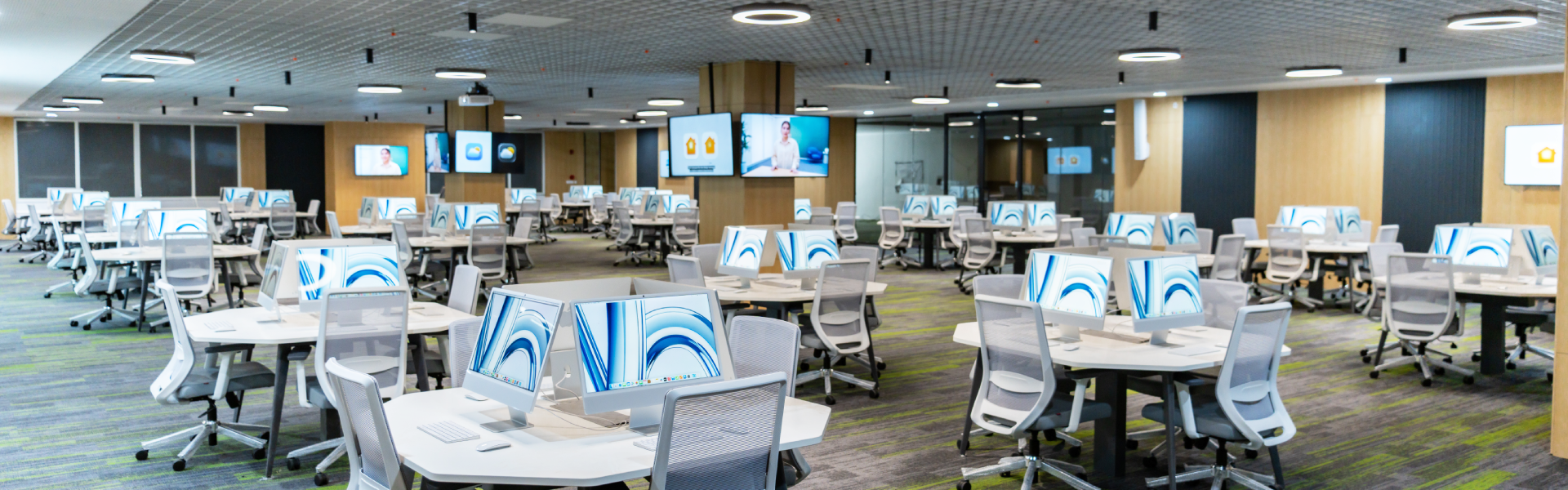
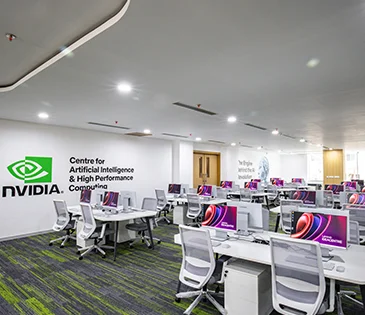
Infrastructure

  • Garment Construction & Assembly Studios
  • Pattern Making & Draping Studios
  • Weaving & Loom Shed (Handlooms, Table Looms & Dobby Systems)
  • Textile Dyeing & Wet Processing Laboratory
  • Printmaking & Surface Ornamentation Studio (Screen, Block & Heat Transfer)
  • Digital Textile Printing & CAD Studio
  • 3D Fashion Simulation & Virtual Prototyping Lab (CLO 3D / Browzwear)
  • Knitting & Fiber Exploration Lab
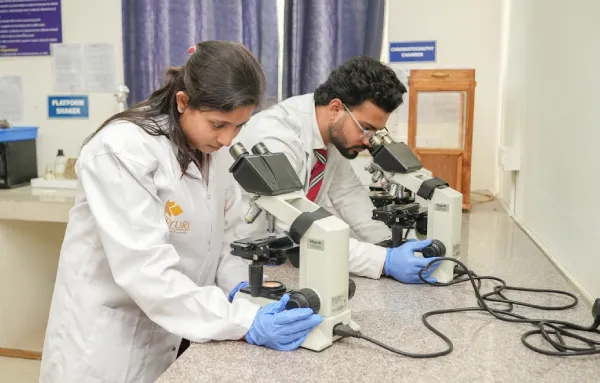
  • Material & Fabric Testing Laboratory
  • Textile & Trim Resource Library
  • Fashion Styling, Editorial & Photography Studio
  • Laser Cutting & Ultrasonic Fabric Bonding Facility
  • Circular Fashion, Upcycling & Zero-Waste Workshop
  • Fitting & Visual Merchandising Display Studio

Key Highlights

Fashion Design, Textile & Surface Design, Apparel Production & Technical Design, 3D Digital Fashion / Virtual Prototyping, Print & Pattern Development, Fashion Styling & Direction, Sustainable & Circular Fashion, Costume Design, and many more.

Specializations

M.Des. (Fashion Apparel and Textile Design)

  • This two-year postgraduate specialization cultivates research-driven design leaders who bridge heritage craft, material innovation, and circular fashion systems. Fusing Human Intelligence (HI) with strategic methodologies, the stream balances aesthetic vision with technical and commercial rigor to shape future-ready apparel and textile ecosystems.
  • Moving beyond foundational techniques, the curriculum focuses on advanced material science, smart textiles, 3D virtual garment prototyping, and lifecycle engineering. Students navigate the strategic value chain, from ethnographic craft research and zero-waste engineering to digital fit simulation and sustainable brand strategy, integrating AI-driven ideation with artisanal excellence.
  • Students master the ability to pioneer functional textiles, direct cohesive fashion narratives, implement closed-loop production models, and solve complex supply-chain challenges across luxury, functional wear, and digital fashion markets.
  • Graduates emerge equipped to lead global fashion houses, textile innovation labs, and conscious design ventures as creative directors, material researchers, and design strategists.

Program Educational Objectives (PEOs)

PEO1

To prepare students for successful careers in diverse design domains by building a strong foundation in theoretical knowledge, practical skills, and problem-solving methodologies applicable to real-world, interdisciplinary challenges.

PEO2

To develop responsible and ethical design professionals capable of contributing effectively both as independent practitioners and as collaborative team members in dynamic work environments.

PEO3

To equip students with the academic and research aptitude necessary to pursue higher education and engage in scholarly or professional advancement within the field of design and allied disciplines.

PEO4

To instill in students the ability to embrace and adapt to evolving design practices, tools, and technologies through a mindset of lifelong learning and continuous improvement.

Program Outcomes (POs)

PO1

Analyzing

Identify and analyze complex design challenges by applying critical thinking and contextual awareness across cultural, societal, and technological domains.

PO2

Understanding

Understand user needs, behaviors, and values through empathy-driven approaches to create inclusive, human-centered design outcomes.

PO3

Applying

Apply design thinking methodologies and creative problem-solving processes to address real-world design problems effectively.

PO4

Evaluating

Conduct and evaluate design research using appropriate qualitative and quantitative methods to generate informed insights.

PO5

Synthesizing

Integrate diverse inputs technical, emotional, and aesthetic into cohesive and impactful design solutions.

PO6

Reflecting

Demonstrate professional ethics, self-awareness, and reflective practice in individual and collaborative design work.

PO7

Creating

Conceptualize and develop original, adaptive, and future-oriented design ideas using imagination, iteration, and prototyping.

PO8

Sustaining

Evaluate the social, environmental, and ethical implications of design choices, promoting sustainability and responsible innovation.

PO9

Collaborating

Function effectively in interdisciplinary teams, managing roles and responsibilities across the design and development process.

PO10

Communicating

Express design ideas, processes, and outcomes clearly through visual, verbal, and written communication tailored to varied audiences and contexts.

PO11

Evolving

Recognize the necessity for independent, life-long learning by maintaining the agility to adapt to emerging technologies and applying critical thinking to navigate continuous socio-technological change.

Program Specific Outcomes (PSOs)

PSO1

Synthesize advanced design research, cultural semiotics, and strategic storytelling to direct innovative fashion concepts and market-ready apparel collections.

PSO2

Design engineer original textile structures and smart surfaces, integrating advanced weave, knit, bio-dyeing, and surface technologies, for high-performance and luxury applications.

PSO3

Execute complex zero-waste pattern engineering, experimental draping, and precision prototyping to translate conceptual textiles into ergonomic physical and virtual silhouettes.

PSO4

Formulate data-driven brand strategies and collections grounded in ethnographic consumer research, anthropometry, and predictive market forecasting.

PSO5

Leverage advanced 3D simulation software (such as CLO 3D and Browzwear) and AI-augmented design workflows to validate fabric physics, minimize sampling waste, and optimize pre-production pipelines.

PSO6

Implement circular lifecycle frameworks, ethical sourcing, and equitable craft-cluster collaborations to drive sustainable and culturally restorative production models.

PSO7

Lead multidisciplinary teams, bridging artisanal makers, textile technologists, supply-chain managers, and executives, from research thesis to commercial launch.

PSO8

Critically evaluate material performance, Lifecycle Analysis (LCA) metrics, and empirical user feedback to refine product durability, fit, and commercial scalability.

PSO9

Pioneer emerging frontiers in bio-fabricated materials, e-textiles, and digital fashion ecosystems to solve systemic industry challenges.

PSO10

Demonstrate executive leadership, intellectual property integrity, and an entrepreneurial mindset to spearhead innovation across global fashion houses, research labs, and independent ventures.

Career Prospects

Fashion, apparel, and textile design operates at the convergence of cultural heritage, material science, and strategic commerce. Graduates of this two-year postgraduate program are positioned for leadership roles across established global industries and emerging innovation hubs, including:

  • Luxury, Couture & Contemporary Fashion Houses
  • Textile Mills, Material Innovation Labs & R&D Centers
  • Sustainable Systems & Circular Economy Consultancies
  • Smart Textiles, Technical Fibers & Wearable Tech
  • Apparel Export Houses, Global Retail & E-Commerce
  • Handloom, Craft Clusters & Heritage Conservation Foundations
  • Performance Wear, Athleisure & Technical Gear
  • Automotive & Aerospace Interior Textiles
  • Film, OTT, Theatre & Virtual Meta-Fashion Studios
  • Trend Forecasting, Consumer Analytics & Brand Agencies

Equipped with advanced design research methodologies, material agility, and executive strategy, graduates pursue high-impact leadership roles such as:

  • Creative Director / Design Lead
  • Senior Apparel Designer (Prêt, Couture & Functional Wear)
  • Textile & Material Innovation Researcher
  • Circular Economy & Sustainability Strategist
  • 3D Virtual Fashion & Digital Prototyping Lead
  • Smart Textiles & Wearables Specialist
  • Trend Forecaster & Cultural Semiotician
  • Craft Cluster & Supply-Chain Strategist
  • Head of Merchandising, Sourcing & Range Architecture
  • Costume & Visual Narrative Director (Cinema & OTT)
  • Academic Researcher & Design Educator
  • Independent Label Founder / Design Entrepreneur

Course Curriculum

Course Name

Semester 1

  • Cultural Context & Design Practices
  • Research Methodology
  • AI-Augmented Creativity & Surface Generation
  • Silhouette, Draping & Technical Detailing
  • Advanced Fashion & Textile Visualization
  • Textile Science, Processes & Surface Innovation
  • Healthy Living and Fitness
  • Environmental Science

Semester 2

  • Circular Fashion Systems & Lifecycle Engineering
  • Adaptive, Inclusive & Ergonomic Apparel Design
  • 3D Virtual Garment Prototyping & Simulation
  • Smart Textiles & Functional Apparel Systems
  • Industry / Craft Cluster Visit
  • The Constitution of India
  • Nature Studies

Semester 3

  • Fashion Entrepreneurship & Brand Strategy
  • Design Innovation Strategy & Supply-Chain Impact
  • Design Industry Internship
  • Inclusive Fashion & Universal Wearability
  • Emerging Materials & Bio-Fabrication Technologies
  • Universal Human Values and Professional Ethics
  • Indian Knowledge System & Heritage Textiles

Semester 4

  • Graduation Capstone Project
  • Design Colloquium
  • Professional Portfolio

List of Electives - Course Names

Semester 1

  • Form and Function
  • Object Studies and Technical Drawing
  • Interaction Fundamentals
  • Design Thinking Methods
  • Visual Composition and Layout
  • Basics of Typography and Letterform
  • Animation Principles
  • Gesture and Anatomy Sketching

Semester 2

  • Responsive Interface and Interaction Design
  • Form and Function Integration
  • Physical Computation
  • Biophilic Design
  • Typography Design
  • Composition in Context
  • Design for and with AI
  • Sensing Nature
  • Factory Visit

Semester 3

  • Design Research for Product Design
  • Design Research Methods
  • Visual Research and Analysis
  • Language of Moving Images
  • Sustainable Materiality and Circularity

Semester 4

  • Manufacturing and Assembly Techniques
  • UX Content Strategy
  • Design for Publication
  • Animation Production Pipeline
  • More than Human Design
  • Spatial Media and Interactive Narratives

Semester 5

  • Product Packaging and Detailing
  • Data-Driven UX Design
  • Packaging Graphics
  • 2D and 3D Animation
  • Game Development
  • Studio Visit
  • Interior Immersive Technologies

Semester 6

  • Product Interface Design
  • Behavioral Design and Gamification
  • Design for Social Change
  • Craft of Direction
  • Design for Inclusive Spaces and Cities

Contact Us

GEU
GEU

566/6, Bell Road, Society Area,
Clement Town, Dehradun,
Uttarakhand