









GEU
facilities
Level
Undergraduate
facilities
Duration
4 Years
facilities
Fee Structure
Click Here
B.Sc. (Hons.) in Game Design

Admission Procedure

Merit will be prepared on the basis of the qualifying exam.

Provisional Admission

Seats to be allocated based on projected scores (12th), calculated based on the candidate’s 10th percentage.

About The Program

The seamless integration of human and artificial cognition leveraged through Emerging Technologies is the core of our practice. This dynamic, transdisciplinary method builds a foundation for leading innovation in user-environment-centered problem-solving and creative product development.

The B.Sc. (Hons.) in Game Design is a hands-on undergraduate design program that cultivates innovative, ethical, and industry-ready game designers. Blending studio practice with creative problem-solving, the curriculum empowers students with enhanced Human Intelligence (HI) and a strategic fluency in emerging technologies like AI and real-time engines to shape the future of interactive media.

Students progress from foundational design principles, including visual communication, design thinking, storytelling, and interactive mechanics, to specialized expertise in level design, character and environment creation, game systems, and UI/UX for games. Grounded in a human-centered approach, the program balances practical design execution with player psychology and user testing to develop engaging, inclusive, and culturally resonant gaming experiences.

Through intensive studio projects, industry-standard game engines, and iterative prototyping, students learn to translate concepts into playable digital and tabletop games that meet both player expectations and market realities. Graduates emerge as versatile, socially responsible professionals equipped to lead innovation across global gaming, interactive entertainment, XR, and gamified learning industries.

Eligibility Criteria for Admission

  • Academic Qualification : To be eligible for the B.Sc. (Hons.) Graphic and Interaction Design program, a candidate must have passed the 10+2 examination.
  • Entrance Exam : Candidate admission may be based on Graphic Era's entrance test or a personal interview, unless the candidate has a valid score from a national-level entrance examination such as UCEED / NID-DAT / NIFT Entrance Exam.

Teaching Pedagogies

The pedagogy for the B.Sc. (Hons.) in Game Design blends hands-on studio making with digital game development, behavioral research, and interactive systems thinking. The curriculum guides students from foundational play mechanics and analog prototyping to full-scale digital, physical, and hybrid game production.

Experiential & Studio-Based Learning

  • Game Lab Culture & Playtest Critiques: Learning is anchored in dedicated game design studios, tabletop fabrication workshops, and XR/playtesting labs. Regular open-floor playtest sessions and jury critiques mirror professional game studios, building mechanical clarity, player empathy, and iterative rigor.
  • Tactile & Rapid Paper Prototyping: Emphasizes hands-on making using paper prototypes, card decks, board mock-ups, and physical rule-sets to test core game loops, balance, and player ergonomics before committing to digital code or final production materials.
  • End-to-End Game Production Pipeline: Mirrors real-world development workflows, from initial game design documentation (GDD), world-building, and level greyboxing to 2D/3D asset creation, engine programming, sound design, and final build deployment.

Future-Ready & Tech-Integrated Pedagogy

  • Real-Time Engines & Interactive Simulation: Students work hands-on with industry-standard game engines (such as Unity and Unreal Engine) alongside 3D modeling and animation suites to build responsive, real-time interactive worlds across PC, console, mobile, and XR platforms.
  • AI-Augmented World-Building & Game Systems: Generative AI and procedural tools support rapid concept visualization, asset variation, narrative branching, and adaptive NPC behavior, empowering students to focus on creative direction and core gameplay experience.
  • Phygital & Hybrid Fabrication: Introduces physical computing, sensors, custom controllers, and rapid fabrication (3D printing and laser cutting) to bridge tactile board/toy design with digital interactivity for next-generation play experiences.

Cultural, Circular & Industry-Linked Systems

  • Player Research & Behavioral Analytics: Integrates qualitative user observation, usability testing, cognitive psychology, and quantitative playtest telemetry to refine difficulty curves, accessibility, and inclusive player engagement.
  • Cultural Storytelling & Traditional Play Systems: Field studies and ethnographic exploration of indigenous Indian games, folklore, and craft traditions enable students to ethically translate rich cultural narratives and traditional mechanics into contemporary global games.
  • Live Industry Briefs & Playable Showcases: Collaborations with game studios, toy manufacturers, and serious-game organizations ground projects in commercial production realities, culminating in playable vertical slices, physical prototypes, and public game jams/demo days.

Design education embraces the synergy of AI and HI, forging a 'hyper-transdisciplinary' approach. This empowers learners to tackle complex challenges through deep integration of knowledge, AI-augmented creativity, and ethically guided innovation. Cultivating both AI literacy and enhanced human intelligence will be central to shaping impactful design solutions for tomorrow's world.

Building-in Areas of Expertise in Innovation

Design Strategy

Defines the overarching vision and framework for design decisions to achieve specific goals.

  • User research
  • Design direction
  • Culture & context
  • Design impact
  • Socio-business design
  • Strategic design

Design Tools & Technologies

Equips students with the practical skills to translate concepts into tangible outputs using relevant software and methods.

  • Design thinking
  • CAD softwares
  • Human intelligence & Artificial intelligence
  • Ergonomics
  • Prog. languages
  • XR Lab (AR+VR+MR)
  • Emerging technologies

Design Innovation

Fosters creative problem-solving and the development of novel and impactful design solutions.

  • Design process
  • HCI - Human Factors
  • Inclusive Design
  • Systems thinking
  • Managing uncertainty
  • Value realization & creation

Experience Design

Focuses on understanding and shaping meaningful and user-centric interactions across touchpoints.

  • Multi-sensory design
  • Human interface
  • Nature & sustainability
  • Design futures
  • Product lifestyle
  • Holistic User Experience

Business Design Management

Integrates design thinking with business principles for strategic decision-making and value creation.

  • Business tools for Design
  • Leadership & change maker
  • Design management
  • Professional communication
  • Promotion & awareness
  • Business strategy
  • Project management

Infrastructure

  • Game Design, Ideation & Analog Prototyping Studio (Dedicated spaces for paper prototyping, board games, card decks, tabletop mechanics, and collaborative level mapping)
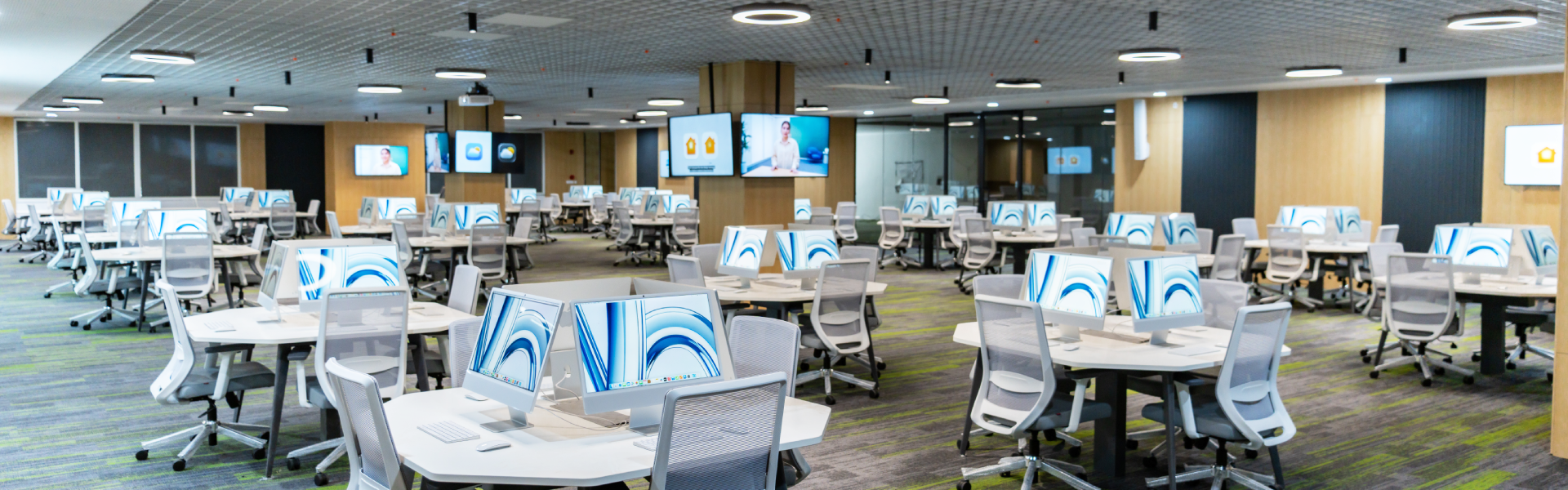
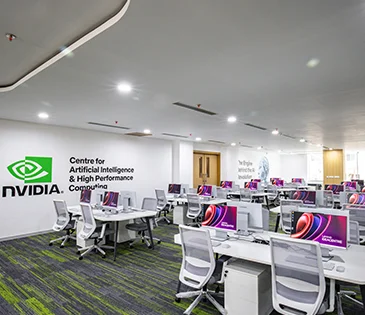
  • Digital Game Development, 3D Art & Engine Lab (High-performance workstations equipped with Unity, Unreal Engine, digital sculpting tablets, and 3D modeling/animation suites)
  • Extended Reality (XR) & Motion Capture Studio (VR/AR development kits, spatial computing setups, and optical/inertial mocap systems for character performance)
  • Phygital, Tangible Interaction & Rapid Fabrication Lab (Physical computing, sensors, custom controllers, 3D printing, laser cutting, CNC, and precision print for physical game components)
  • Game Audio, Foley & Sound Design Studio (Acoustically treated recording booths, foley pits, and interactive audio middleware setups)
  • Playtesting, UX & Player Analytics Lab (Controlled observation suites, usability testing, and behavioral/player research tools)
  • Game Archive, Console Library & Live Showcase Arena (Curated collection of historical tabletop and digital games paired with multi-screen testing bays for game jams and demo days)

Specializations

Stream: B.Sc. (Hons.) in Game Design

  • This specialization trains versatile game designers to bridge interactive mechanics, immersive world-building, and cross-platform game production, fusing Human Intelligence (HI) with emerging real-time and AI technologies to create engaging, future-ready play experiences. It balances creative storytelling with systemic and technical rigor, exploring gameplay loops, player psychology, and tactile-to-digital interaction design.
  • The curriculum advances from foundational visual communication, narrative structuring, and analog paper prototyping to advanced level design, 3D character and environment modeling, real-time engine development (Unity and Unreal), UI/UX for games, and XR/phygital play systems. Students navigate the complete production pipeline, from game design documentation (GDD) and greyboxing to asset integration, playtest telemetry, and playable vertical-slice builds, leveraging generative AI workflows alongside traditional Indian play systems and cultural narratives.
  • Students learn to craft distinct game aesthetics, balance complex rule sets and game economies, design inclusive user interfaces, and navigate the commercial dynamics of global gaming, serious games, and interactive entertainment markets.
  • This prepares graduates to lead across AAA and indie game studios, XR/metaverse companies, tabletop and toy design firms, and gamified learning organizations as game designers, level designers, narrative architects, game UI/UX specialists, and creative producers.

Program Educational Objectives (PEOs)

PEO1

To prepare students for successful careers in diverse design domains by building a strong foundation in theoretical knowledge, practical skills, and problem-solving methodologies applicable to real-world, interdisciplinary challenges.

PEO2

To develop responsible and ethical design professionals capable of contributing effectively both as independent practitioners and as collaborative team members in dynamic work environments.

PEO3

To equip students with the academic and research aptitude necessary to pursue higher education and engage in scholarly or professional advancement within the field of design and allied disciplines.

PEO4

To instill in students the ability to embrace and adapt to evolving design practices, tools, and technologies through a mindset of lifelong learning and continuous improvement.

Program Outcomes (POs)

PO1

Analyzing

Identify and analyze complex design challenges by applying critical thinking and contextual awareness across cultural, societal, and technological domains.

PO2

Understanding

Understand user needs, behaviors, and values through empathy-driven approaches to create inclusive, human-centered design outcomes.

PO3

Applying

Apply design thinking methodologies and creative problem-solving processes to address real-world design problems effectively.

PO4

Evaluating

Conduct and evaluate design research using appropriate qualitative and quantitative methods to generate informed insights.

PO5

Synthesizing

Integrate diverse inputs - technical, emotional, and aesthetic into cohesive and impactful design solutions.

PO6

Reflecting

Demonstrate professional ethics, self-awareness, and reflective practice in individual and collaborative design work.

PO7

Creating

Conceptualize and develop original, adaptive, and future-oriented design ideas using imagination, iteration, and prototyping.

PO8

Sustaining

Evaluate the social, environmental, and ethical implications of design choices, promoting sustainability and responsible innovation.

PO9

Collaborating

Function effectively in interdisciplinary teams, managing roles and responsibilities across the design and development process.

PO10

Communicating

Express design ideas, processes, and outcomes clearly through visual, verbal, and written communication tailored to varied audiences and contexts.

PO11

Evolving

Recognize the necessity for independent, life-long learning by maintaining the agility to adapt to emerging technologies and applying critical thinking to navigate continuous socio-technological change.

Program Specific Outcomes (PSOs)

In addition to the eleven POs, ten custom Program Specific Outcomes (PSOs) are formulated for the B.Sc. (Hons.) in Game Design program.

PSO1

Apply principles of game theory, interactive mechanics, and visual storytelling to conceptualize compelling game worlds, rule systems, and cohesive player experiences.

PSO2

Design and prototype analog, tabletop, and physical-digital (phygital) games by integrating tactile ergonomics, balanced rule sets, and rapid fabrication techniques.

PSO3

Apply principles of level architecture, spatial greyboxing, and environmental narrative to translate two-dimensional design documents into engaging three-dimensional playable spaces.

PSO4

Develop digital and physical game experiences rooted in player psychology, cognitive accessibility, cultural context, and market dynamics to address diverse global player demographics.

PSO5

Use industry-standard game engines (such as Unity and Unreal Engine), 3D modeling suites, and interactive audio tools to prototype, simulate gameplay systems, and streamline production pipelines.

PSO6

Demonstrate understanding of ethical design, inclusive representation, healthy player engagement, and cultural preservation in narrative world-building and responsible game monetization.

PSO7

Work effectively in multidisciplinary studio environments alongside programmers, 3D artists, sound designers, narrative writers, and producers from initial concept to playable vertical slice.

PSO8

Reflect critically on playtest observations, usability heuristics, telemetry data, and player feedback to iterate and refine core gameplay loops, difficulty curves, and commercial viability.

PSO9

Explore emerging paradigms such as Extended Reality (XR), AI-augmented content generation, adaptive Non-Player Character (NPC) systems, and gamified learning environments to advance next-generation interactive media.

PSO10

Demonstrate professionalism, technical agility, and an entrepreneurial mindset to navigate and lead within the evolving global gaming, interactive entertainment, and serious-games ecosystem.

Career Prospects

Game design is a dynamic, multidisciplinary industry operating at the intersection of interactive storytelling, behavioral psychology, real-time technology, and global digital entertainment. Graduates from this program find opportunities across established and emerging sectors where play mechanics, world-building, player-centric UX, and interactive systems are essential, including:

  • AAA & Independent (Indie) Digital Game Studios
  • Mobile, Casual & Hyper-Casual Gaming Companies
  • Tabletop, Board Game & Toy Design Publishers
  • Extended Reality (XR), Spatial Computing & Metaverse Studios
  • Serious Games, EdTech & Gamified Learning Platforms
  • Healthcare, Therapeutic & Cognitive Rehabilitation Simulation Studios
  • Defense, Aviation & Industrial Virtual Simulation Developers
  • Entertainment, Film, Animation & Virtual Production Houses
  • Esports Organizations & Live-Service Gaming Platforms
  • Interactive Advertising, Experiential Marketing & Branded Play Agencies
  • Consumer Tech, Smart Toys & Phygital Hardware Companies
  • Cultural Heritage, Museum & Interactive Exhibition Studios
  • Game Publishing, Quality Assurance & Player Analytics Firms
  • Independent Game Studios / Tabletop & Digital Entrepreneurship

Graduates of the B.Sc. (Hons.) in Game Design program are versatile practitioners equipped with both analog prototyping intuition and real-time technical agility. Potential career paths and roles include:

  • Game Designer (Systems, Mechanics & Economy)
  • Level Designer & World-Builder
  • Narrative Designer & Interactive Scriptwriter
  • Tabletop, Board Game & Toy Designer
  • Game UI/UX Designer & Player Researcher
  • 3D Character, Environment & Prop Artist
  • Technical Designer & Gameplay Prototyper (Unity / Unreal)
  • XR / VR / AR Experience Designer
  • Phygital & Tangible Interaction Designer
  • Game Sound Designer & Interactive Audio Specialist
  • Serious Games & Gamification Strategist
  • Creative Director / Art Director
  • Game Producer & LiveOps Manager
  • Playtest Coordinator & Quality Assurance (QA) Lead
  • Indie Game Studio Founder / Creative Entrepreneur

Course Curriculum

Course Name

Semester 1

  • Form and Function
  • Object Studies and Technical Drawing
  • Interaction Fundamentals
  • Design Thinking Methods
  • Visual Composition and Layout
  • Basics of Typography and Letterform
  • Animation Principles
  • Gesture and Anatomy Sketching

Semester 2

  • Form and Function Integration
  • Physical Computation
  • Biophilic Design
  • Typography Design
  • Composition in Context
  • Design for and with AI
  • Sensing Nature
  • Factory Visit
  • Responsive Interface and Interaction Design

Semester 3

  • Design Research for Product Design
  • Design Research Methods
  • Visual Research and Analysis
  • Language of Moving Images
  • Sustainable Materiality and Circularity

Semester 4

  • Manufacturing and Assembly Techniques
  • UX Content Strategy
  • Design for Publication
  • Animation Production Pipeline
  • More than Human Design
  • Spatial Media and Interactive Narratives

Semester 5

  • Product Packaging and Detailing
  • Data-Driven UX Design
  • Packaging Graphics
  • 2D and 3D Animation
  • Game Development
  • Studio Visit
  • Interior Immersive Technologies

Semester 6

  • Product Interface Design
  • Behavioral Design and Gamification
  • Design for Social Change
  • Craft of Direction
  • Design for Inclusive Spaces and Cities

List of Electives - Course Names

Semester 1

  • Form and Function
  • Object Studies and Technical Drawing
  • Interaction Fundamentals
  • Design Thinking Methods
  • Visual Composition and Layout
  • Basics of Typography and Letterform
  • Animation Principles
  • Gesture and Anatomy Sketching

Semester 2

  • Responsive Interface and Interaction Design
  • Form and Function Integration
  • Physical Computation
  • Biophilic Design
  • Typography Design
  • Composition in Context
  • Design for and with AI
  • Sensing Nature
  • Factory Visit

Semester 3

  • Design Research for Product Design
  • Design Research Methods
  • Visual Research and Analysis
  • Language of Moving Images
  • Sustainable Materiality and Circularity

Semester 4

  • Manufacturing and Assembly Techniques
  • UX Content Strategy
  • Design for Publication
  • Animation Production Pipeline
  • More than Human Design
  • Spatial Media and Interactive Narratives

Semester 5

  • Product Packaging and Detailing
  • Data-Driven UX Design
  • Packaging Graphics
  • 2D and 3D Animation
  • Game Development
  • Studio Visit
  • Interior Immersive Technologies

Semester 6

  • Product Interface Design
  • Behavioral Design and Gamification
  • Design for Social Change
  • Craft of Direction
  • Design for Inclusive Spaces and Cities

Contact Us

GEU
GEU

566/6, Bell Road, Society Area,
Clement Town, Dehradun,
Uttarakhand