







GEU
facilities
Level
Postgraduate
facilities
Duration
4 Years
facilities
Fee Structure
Click Here
M.Sc. (Hons.) in Fashion Apparel and Accessory Design

Admission Procedure

Merit will be prepared on the basis of the qualifying exam.

Provisional Admission

Seats to be allocated based on projected scores (12th), calculated based on the candidate’s 10th percentage.

About The Program

The seamless integration of human and artificial cognition leveraged through Emerging Technologies is the core of our practice. This dynamic, transdisciplinary method builds a foundation for leading innovation in user-environment-centered problem-solving and creative product development.

The Master of Science (M.Sc.) in Fashion Apparel and Accessory Design is a two-year postgraduate program that cultivates analytical, ethical, and research-driven designers equipped for strategic leadership in the global fashion industry. The curriculum blends technical apparel engineering, accessory craftsmanship, and material science across physical and digital domains, while critically engaging with emerging technologies and AI-driven ecosystems.

Students progress from advanced garment construction, pattern engineering, and leather/non-leather accessory prototyping to mastering sustainable supply chains, wearable technology, and 3D virtual sampling. Grounded in a human-centred approach, the program emphasises ergonomic research, circular production, and commercial viability to solve contemporary ecological and market challenges.

Graduates emerge as adaptable innovators prepared to lead contemporary fashion labels, develop functional lifestyle accessories, and drive brand growth through technical precision and cultural responsibility.
Eligibility Criteria for Admission

  • Academic Qualification : To be eligible for the Master of Design (M.Des.) program, a candidate must have a Bachelor's Degree of minimum 4 years duration in any specialization.
  • Entrance Exam : Candidate’s admission may be based on Graphic Era’s entrance test, or a personal interview, unless they have a valid score from a national-level entrance exams like GATE / CEED / NID-DAT / NIFT Entrance Exam.

Entrance Exam is exempted for GEU Alumni.

Teaching Pedagogies

The pedagogy for the two-year Master of Science (M.Sc.) in Fashion Apparel and Accessory Design transitions from foundational making to technical engineering, material science, and strategic product leadership. The curriculum bridges traditional craftsmanship with digital prototyping and circular industry ecosystems.

Research-Driven & Studio-Based Learning

  • Specialized Labs & Industry Juries: Learning centers on apparel engineering and accessory fabrication studios. Regular peer critiques and industry juries challenge students to defend technical precision, ergonomic fit, and commercial viability.
  • Material & Form Prototyping: Emphasizes hands-on experimentation with structural pattern engineering, leather/non-leather hardware construction, and zero-waste draping before scaling into full collections.
  • End-to-End Value Chain Mapping: Mirrors real-world workflows, connecting raw material sourcing and component engineering with scalable manufacturing and brand positioning.

Tech-Integrated & Future-Ready Pedagogy

  • 3D Virtual Sampling: Students utilize digital simulation tools (such as CLO 3D and Browzwear) alongside CAD modeling for accessories to validate fit, drape, and hardware mechanics, reducing physical sampling waste.
  • AI-Augmented Design & Forecasting: Generative AI supports predictive trend analysis, rapid visual ideation, and automated pattern grading, shifting students from makers to strategic product innovators.
  • Smart Materials & Additive Manufacturing: Explores bio-based alternatives, functional finishes, wearable tech integration, and 3D-printed accessory components.

Circular, Cultural & Industry Systems

  • Lifecycle & Circular Engineering: Focuses on Lifecycle Analysis (LCA), modular disassembly, and closed-loop production models across apparel and lifestyle accessories.
  • Artisanal Cluster Immersion: Field engagements with regional craft clusters train students to analyze indigenous techniques and co-create ethical, globally competitive products.
  • Live Industry Briefs & Capstone Projects: Sponsored briefs with export houses, accessory brands, and startups ground student work in market realities, culminating in commercial-ready collections or design patents.
Design education embraces the synergy of AI and HI, forging a 'hyper-transdisciplinary' approach. This empowers learners to tackle complex challenges through deep integration of knowledge, AI-augmented creativity, and ethically guided innovation. Cultivating both AI literacy and enhanced human intelligence will be central to shaping impactful design solutions for tomorrow's world.

Building-in Areas of Expertise in Innovation

Design Strategy

Defines the overarching vision and framework for design decisions to achieve specific goals.

  • User research
  • Design direction
  • Culture & context
  • Design impact
  • Socio-business design
  • Strategic design

Design Tools & Technologies

Equips students with the practical skills to translate concepts into tangible outputs using relevant software and methods.

  • Design thinking
  • CAD softwares
  • Human intelligence & Artificial intelligence
  • Ergonomics
  • Prog. languages
  • XR Lab (AR+VR+MR)
  • Emerging technologies

Design Innovation

Fosters creative problem-solving and the development of novel and impactful design solutions.

  • Design process
  • HCI - Human Factors
  • Inclusive Design
  • Systems thinking
  • Managing uncertainty
  • Value realization & creation

Experience Design

Focuses on understanding and shaping meaningful and user-centric interactions across touchpoints.

  • Multi-sensory design
  • Human interface
  • Nature & sustainability
  • Design futures
  • Product lifestyle
  • Holistic User Experience

Business Design Management

Integrates design thinking with business principles for strategic decision-making and value creation.

  • Business tools for Design
  • Leadership & change maker
  • Design management
  • Professional communication
  • Promotion & awareness
  • Business strategy
  • Project management

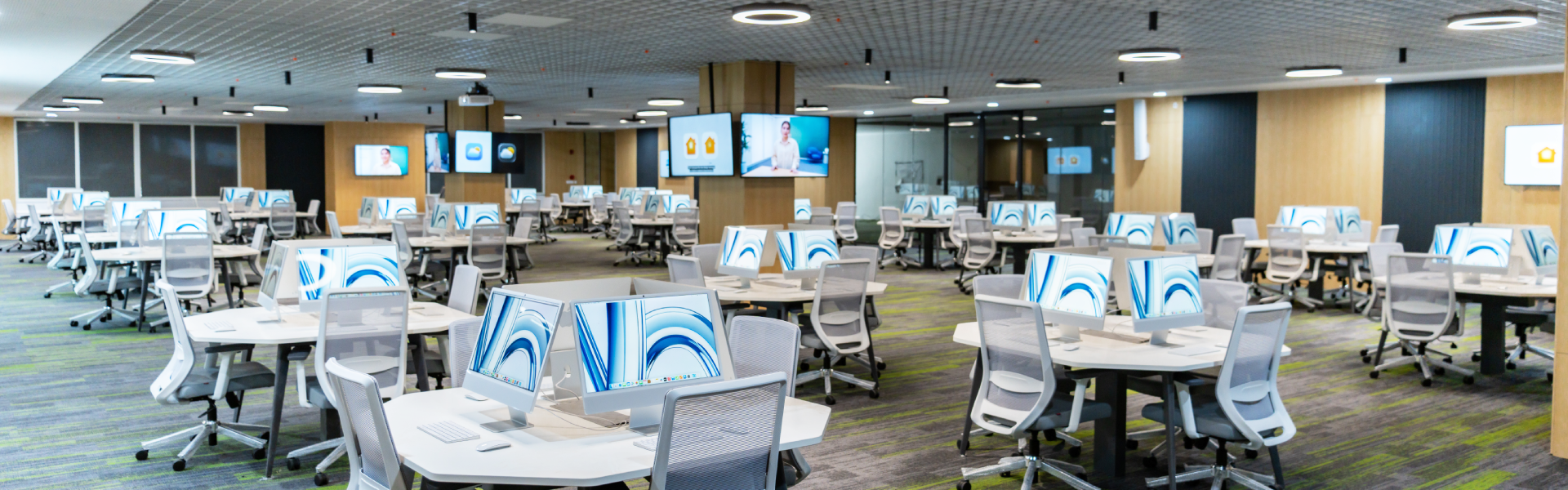
Infrastructure

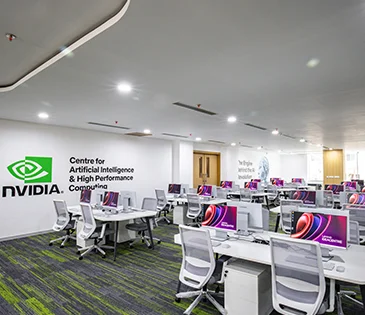
  • Garment Construction & Apparel Design Engineering Studios
  • Pattern Making, Grading & Draping Studios
  • Leather & Non-Leather Accessory Fabrication Workshop
  • Footwear & Bag Prototyping Lab
  • 3D CAD, Accessory Modeling & Additive Manufacturing (3D Printing) Lab
  • 3D Fashion Simulation & Virtual Prototyping Lab (CLO 3D / Browzwear)
  • Surface Ornamentation, Embroidery & Laser Cutting Facility
  • Ultrasonic Fabric Bonding & Seamless Construction Lab
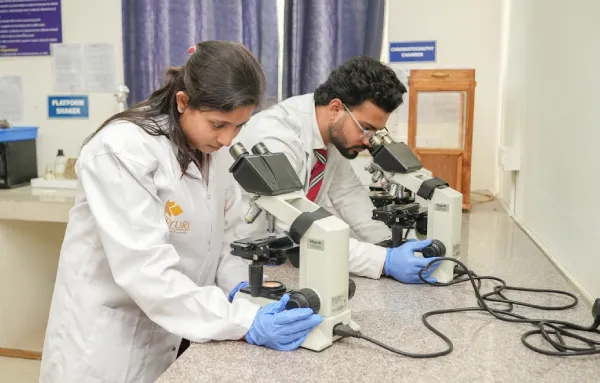
  • Textile, Leather & Hardware Testing Laboratory
  • Material, Trim & Hardware Resource Library
  • Circular Design, Upcycling & Zero-Waste Workshop
  • Fashion Styling, Editorial & Product Photography Studio
  • Fitting & Visual Merchandising Display Studio

Key highlights

Fashion Design, Textile & Surface Design, Apparel & Pattern Design Engineering, Fashion Accessory & Footwear Design, Leather & Non-Leather Goods Prototyping, 3D Digital Fashion & Virtual Prototyping, Technical Design & Apparel Production, Surface Ornamentation & Hardware Development, Sustainable & Circular Fashion Systems, Fashion Styling & Brand Direction, and many more.

Specializations

Stream : M.Sc. in Fashion Apparel and Accessory Design

  • This two-year postgraduate specialization develops technically proficient, research-driven design leaders who bridge apparel engineering, accessory craftsmanship, and circular product systems. Combining scientific inquiry with strategic design methodologies, the stream balances creative vision with ergonomic, technical, and commercial rigor.
  • Moving beyond foundational construction, the curriculum emphasizes advanced pattern engineering, leather and non-leather accessory prototyping, hardware development, and 3D virtual sampling. Students navigate the end-to-end value chain, from material and trim sourcing and zero-waste cutting to digital fit simulation, additive manufacturing, and AI-augmented trend forecasting.
  • Students master the ability to engineer functional garments and lifestyle accessories, direct cohesive brand collections, implement closed-loop lifecycle models, and solve complex manufacturing and supply-chain challenges across luxury, activewear, and contemporary retail markets.
  • Graduates emerge equipped to lead fashion labels, accessory brands, and R&D studios as creative directors, technical designers, product developers, and design strategists.

Program Educational Objectives (PEOs)

PEO1

To prepare students for successful careers in diverse design domains by building a strong foundation in theoretical knowledge, practical skills, and problem-solving methodologies applicable to real-world, interdisciplinary challenges.

PEO2

To develop responsible and ethical design professionals capable of contributing effectively both as independent practitioners and as collaborative team members in dynamic work environments.

PEO3

To equip students with the academic and research aptitude necessary to pursue higher education and engage in scholarly or professional advancement within the field of design and allied disciplines.

PEO4

To instill in students the ability to embrace and adapt to evolving design practices, tools, and technologies through a mindset of lifelong learning and continuous improvement.

Program Outcomes (POs)

PO1

Analyzing

Identify and analyze complex design challenges by applying critical thinking and contextual awareness across cultural, societal, and technological domains.

PO2

Understanding

Understand user needs, behaviors, and values through empathy-driven approaches to create inclusive, human-centered design outcomes.

PO3

Applying

Apply design thinking methodologies and creative problem-solving processes to address real-world design problems effectively.

PO4

Evaluating

Conduct and evaluate design research using appropriate qualitative and quantitative methods to generate informed insights.

PO5

Synthesizing

Integrate diverse inputs—technical, emotional, and aesthetic—into cohesive and impactful design solutions.

PO6

Reflecting

Demonstrate professional ethics, self-awareness, and reflective practice in individual and collaborative design work.

PO7

Creating

Conceptualize and develop original, adaptive, and future-oriented design ideas using imagination, iteration, and prototyping.

PO8

Sustaining

Evaluate the social, environmental, and ethical implications of design choices, promoting sustainability and responsible innovation.

PO9

Collaborating

Function effectively in interdisciplinary teams, managing roles and responsibilities across the design and development process.

PO10

Communicating

Express design ideas, processes, and outcomes clearly through visual, verbal, and written communication tailored to varied audiences and contexts.

PO11

Evolving

Recognize the necessity for independent, life-long learning by maintaining the agility to adapt to emerging technologies and applying critical thinking to navigate continuous socio-technological change.

Program Specific Outcomes (PSOs)

PSO1

Synthesize advanced design research, cultural semiotics, and strategic brand storytelling to direct cohesive apparel and lifestyle accessory collections.

PSO2

Engineer functional fashion apparel and structural accessories, including bags, footwear, and small leather/non-leather goods, by integrating material science, hardware mechanics, and ergonomic principles.

PSO3

Execute complex pattern engineering, zero-waste cutting, experimental draping, and precision prototyping to translate design concepts into high-fit physical and virtual products.

PSO4

Formulate data-driven product strategies and seasonal ranges grounded in consumer ethnography, anthropometry, and predictive trend forecasting.

PSO5

Leverage 3D apparel simulation tools, 3D CAD accessory modeling, and AI-augmented workflows to validate fit, reduce sampling waste, and accelerate pre-production timelines.

PSO6

Implement circular design frameworks, ethical material sourcing, and equitable craft-cluster collaborations to drive sustainable and culturally grounded manufacturing models.

PSO7

Lead cross-functional teams, bridging master artisans, technical patternmakers, material technologists, and merchandisers, from design research to commercial production.

PSO8

Critically evaluate material durability, hardware performance, Lifecycle Analysis (LCA) metrics, and user testing feedback to optimize product quality and market scalability.

PSO9

Pioneer emerging applications in bio-based leather alternatives, wearable technology, smart textiles, and additive manufacturing (3D printing) to address evolving industry needs.

PSO10

Demonstrate strategic leadership, intellectual property integrity, and entrepreneurial acumen to spearhead innovation across fashion labels, accessory brands, R&D studios, and independent ventures.

Career Prospects

Fashion apparel and accessory design operates at the intersection of ergonomic engineering, material innovation, and strategic commerce. Graduates of this two-year postgraduate program are positioned for leadership roles across global fashion enterprises, lifestyle brands, and emerging product innovation hubs, including:

  • Luxury, Couture & Contemporary Fashion Houses
  • Leather, Footwear & Lifestyle Accessory Brands
  • Apparel & Accessory Export Houses, Global Retail & E-Commerce
  • Wearable Tech, Smart Gear & Bio-Material R&D Centers
  • Performance Wear, Athleisure & Technical Outerwear Brands
  • Sustainable Fashion & Circular Economy Consultancies
  • Artisanal Craft Clusters & Heritage Product Enterprises
  • Film, OTT, Theatre & Digital Fashion Studios
  • Trend Forecasting, Consumer Analytics & Brand Agencies

Equipped with advanced technical proficiency, material agility, and strategic management skills, graduates of the M.Sc. in Fashion Apparel and Accessory Design program pursue high-impact leadership roles such as:

  • Creative Director / Design Lead
  • Senior Apparel Designer (Prêt, Couture & Functional Wear)
  • Senior Fashion Accessory & Footwear Designer
  • Technical Designer & Pattern Engineering Specialist
  • 3D Virtual Fashion & CAD Prototyping Lead
  • Material Innovation & Bio-Leather Researcher
  • Circular Economy & Sustainability Strategist
  • Wearable Tech & Smart Product Developer
  • Head of Merchandising, Sourcing & Range Architecture
  • Trend Forecaster & Brand Strategist
  • Costume & Styling Director (Cinema, OTT & Editorial)
  • Academic Researcher & Design Educator
  • Independent Label Founder / Design Entrepreneur

Course Curriculum

Course Name

Semester 1

  • Cultural Context & Design Practices
  • Research Methodology
  • AI-Augmented Creativity & Trend Forecasting
  • Advanced Pattern Engineering, Draping & Garment Construction
  • Fashion Apparel & Accessory Visualization
  • Leather, Non-Leather & Material Science
  • Healthy Living and Fitness
  • Environmental Science

Semester 2

  • Circular Fashion Systems & Lifecycle Engineering
  • Accessory Design: Bags, Footwear & Lifestyle Goods
  • 3D Virtual Prototyping & CAD Modeling (Apparel & Accessories)
  • Ergonomic, Adaptive & Functional Product Systems
  • Industry / Craft Cluster Visit
  • The Constitution of India
  • Nature Studies

Semester 3

  • Fashion Entrepreneurship & Brand Strategy
  • Design Innovation Strategy & Supply-Chain Management
  • Design Industry Internship
  • Wearable Technology & Smart Product Integration
  • Bio-Materials, Hardware Engineering & Additive Manufacturing
  • Universal Human Values and Professional Ethics
  • Indian Knowledge System & Heritage Craftsmanship

Semester 4

  • Graduation Capstone Project
  • Design Colloquium
  • Professional Portfolio

List of Electives - Course Names

Semester 1

  • Form and Function
  • Object Studies and Technical Drawing
  • Interaction Fundamentals
  • Design Thinking Methods
  • Visual Composition and Layout
  • Basics of Typography and Letterform
  • Animation Principles
  • Gesture and Anatomy Sketching

Semester 2

  • Responsive Interface and Interaction Design
  • Form and Function Integration
  • Physical Computation
  • Biophilic Design
  • Typography Design
  • Composition in Context
  • Design for and with AI
  • Sensing Nature
  • Factory Visit

Semester 3

  • Design Research for Product Design
  • Design Research Methods
  • Visual Research and Analysis
  • Language of Moving Images
  • Sustainable Materiality and Circularity

Semester 4

  • Manufacturing and Assembly Techniques
  • UX Content Strategy
  • Design for Publication
  • Animation Production Pipeline
  • More than Human Design
  • Spatial Media and Interactive Narratives

Semester 5

  • Product Packaging and Detailing
  • Data-Driven UX Design
  • Packaging Graphics
  • 2D and 3D Animation
  • Game Development
  • Studio Visit
  • Interior Immersive Technologies

Semester 6

  • Product Interface Design
  • Behavioral Design and Gamification
  • Design for Social Change
  • Craft of Direction
  • Design for Inclusive Spaces and Cities

Contact Us

GEU
GEU

566/6, Bell Road, Society Area,
Clement Town, Dehradun,
Uttarakhand