Merit prepared on basis of the qualifying exam
Seats to be allocated based on projected scores(12th), calculated basis the candidate’s 10th percentage – only meritorious students
The Bachelor of Science in Emergency & Trauma Care Technology (B.Sc. ETCT) is a four-year undergraduate allied healthcare programme designed to develop skilled, competent, and ethically responsible emergency healthcare professionals capable of providing immediate life-saving care during medical emergencies, trauma, disasters, and other critical situations.
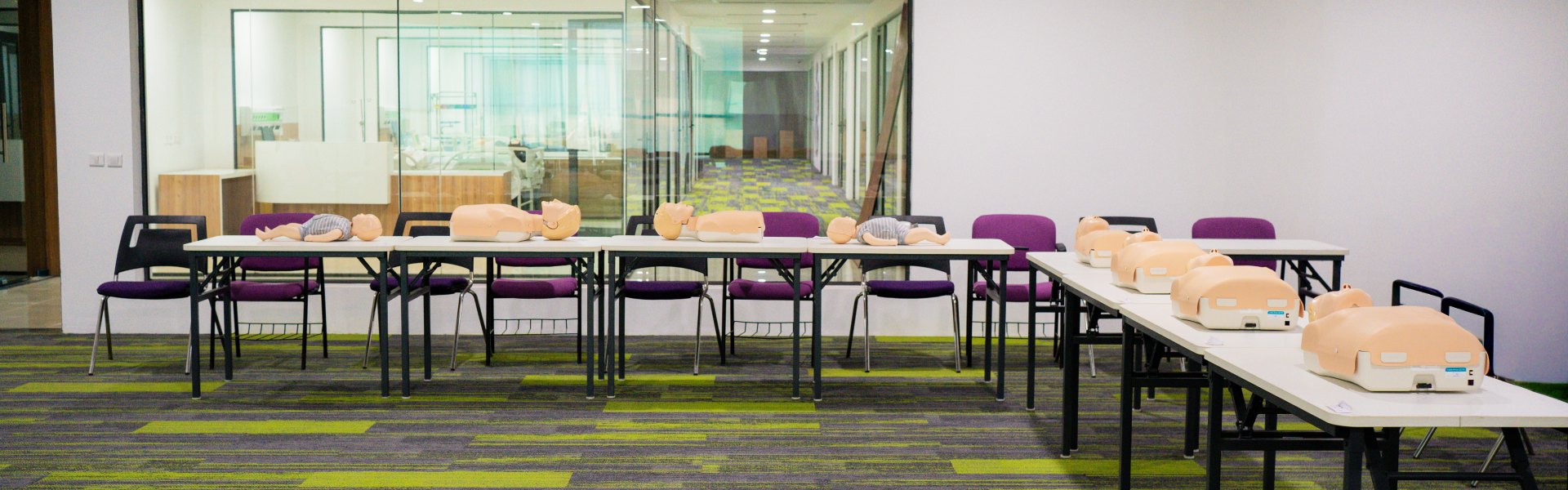
The curriculum integrates theoretical knowledge with extensive hands-on clinical training in emergency medicine, trauma care, critical care, pre-hospital emergency services, disaster management, emergency medical services (EMS), ambulance care, patient stabilization, airway management, and advanced life support. Students develop competencies in rapid patient assessment, emergency interventions, clinical decision-making, and multidisciplinary teamwork through simulation-based learning and hospital-based clinical training.
Successful completion of 10+2 with Physics, Chemistry, Biology (PCB) and English or an equivalent qualification.
Minimum aggregate marks as prescribed by the University and regulatory authorities.
Admission through the University admission process.
Medical fitness as per institutional norms.
Teaching pedagogies include:
The programme provides exposure and competency development in:
Graduates of the programme will:
Function as competent Emergency & Trauma Care Technologists capable of delivering safe, effective, and evidence-based emergency healthcare services.
Apply professional ethics, patient safety principles, quality assurance, and legal responsibilities while providing emergency and trauma care.
Demonstrate leadership, teamwork, communication skills, and adaptability to emerging technologies in emergency medicine and critical care.
Engage in lifelong learning, research, innovation, and continuous professional development to improve patient outcomes and healthcare delivery.
On successful completion of the programme, graduates will be able to:
Apply biomedical science and emergency medicine principles in emergency patient care.
Assess, triage, stabilize, transport, and assist in the management of emergency and trauma patients.
Perform Basic Life Support (BLS), Advanced Cardiac Life Support (ACLS), CPR, airway management, hemorrhage control, and emergency resuscitation procedures.
Operate, maintain, and troubleshoot emergency medical equipment, ventilators, defibrillators, infusion pumps, and patient monitoring systems.
Implement infection prevention, patient safety, quality assurance, and biomedical waste management protocols.
Communicate effectively with patients, caregivers, physicians, emergency response teams, and multidisciplinary healthcare professionals.
Demonstrate professionalism, ethical practice, legal awareness, empathy, and social responsibility.
Apply critical thinking, clinical reasoning, and evidence-based decision-making during emergency situations.
Utilize healthcare information technology, electronic medical records, and emergency documentation effectively.
Engage in lifelong learning, research, innovation, and continuous professional development.

Program Specific Outcomes (PSOs)
Perform emergency patient assessment, stabilization, transportation, and pre-hospital trauma care using established emergency care protocols.
Assist physicians and multidisciplinary healthcare teams in emergency medicine, trauma care, critical care, and disaster management.
Operate emergency medical equipment including ventilators, defibrillators, infusion pumps, suction devices, patient monitors, and airway management equipment.
Apply emergency response protocols, infection prevention measures, biomedical waste management, quality improvement practices, and patient safety standards.
(M.Sc. Emergency & Trauma Care Technology, Critical Care Technology, Hospital Administration, Public Health, Healthcare Management, and Research Programmes)