











 Download Brochure


Electronics shapes almost every modern experience today. Smartphones, satellites, and smart cars prove that every day. Medical devices also depend on precise electronic systems. AI hardware keeps transforming ordinary machines into helpers. Consequently, India now expands electronics manufacturing at a remarkable speed.
Moreover, semiconductor innovation creates exciting engineering possibilities nationwide. Communication technologies continue to change how people connect everywhere. Therefore, skilled professionals remain highly valuable across industries. B.Tech electronics and communication engineering prepares students for this exciting future.
This is why many students compare every electronics and communication engineering course carefully. They often seek clear answers before making a wise choice. Eligibility, curriculum, fees, and careers deserve careful attention. Graphic Era (Deemed to be University) offers practical learning throughout this journey. In addition, industry-focused training keeps students confidently prepared for tomorrow.
What is B.Tech Electronics and Communication Engineering?
B. Tech ECE is a four-year undergraduate program. It builds strong technical foundations through practical learning experiences. Students explore electronics, communication, embedded systems, and semiconductor technologies together. Moreover, they learn to design intelligent devices solving everyday challenges. Tiny circuits herein power countless modern innovations around us.
Therefore, engineers shape smarter products with confident precision. The curriculum supports the ambitious India Semiconductor Mission goals. In addition, industries actively seek professionals mastering chip design. Communication expertise also drives innovation across diverse technology sectors.
Also Read: Best Strategy for NEET Preparation: How to Crack NEET on First Attempt
| Program Snapshot | What the Program Focuses On |
|---|---|
|
|
A Curriculum Designed for Industry Readiness
A strong curriculum keeps future engineers genuinely industry-ready. Graphic Era carefully aligns learning with evolving national priorities. Moreover, the program supports the ambitious India Semiconductor Mission. Students also benefit from industry-focused academic planning throughout.
Outcome-Based Education encourages measurable skills beyond classroom knowledge. In addition, the curriculum reflects the progressive NEP framework. AICTE and UGC standards further strengthen academic quality. Therefore, graduates develop the required confidence before entering competitive workplaces.
Every subject builds practical understanding through meaningful learning experiences. Ultimately, this balanced approach prepares students for changing technologies. It not only strengthens technical expertise but also nurtures professional readiness with lasting confidence.
Also Read: Top 12 B.Sc Courses to Pursue After 12th for a Bright Career
Subjects You Will Study during the Program
Electronics Foundation
- Electronic Devices
- Electronic Circuits
- Analog Electronics
- Digital Electronics.
Communication Technologies
- Signals and Systems
- Analog Communication
- Digital Communication
- RF Engineering
- Microwave Engineering
- Optical Communication.
Computing & Intelligent Systems
- Embedded Systems
- Microprocessors
- Microcontrollers
- Internet of Things (IoT).
Semiconductor & Chip Design
- VLSI Design
- Semiconductor Fundamentals
- Hardware-Software Co-design.
Emerging Technologies
- AI-assisted Electronics
- Robotics
- Biomedical Electronics
- Cyber-Physical Systems.
How the above Subjects Create Industry-ready Engineers
The curriculum builds knowledge through carefully connected technical subjects. Students first understand electronic devices, circuits, and digital concepts. Moreover, communication technologies strengthen analytical and system design abilities. Signals, optical communication, and RF engineering expand practical understanding.
Embedded systems introduce intelligent hardware through hands-on learning. In addition, microprocessors and IoT connect software with electronics. Therefore, every subject develops practical engineering confidence step by step. Ultimately, students graduate with adaptable technical skills for modern industries. They not only understand technology but also solve real engineering challenges.
Practical Learning That Goes Beyond Classrooms
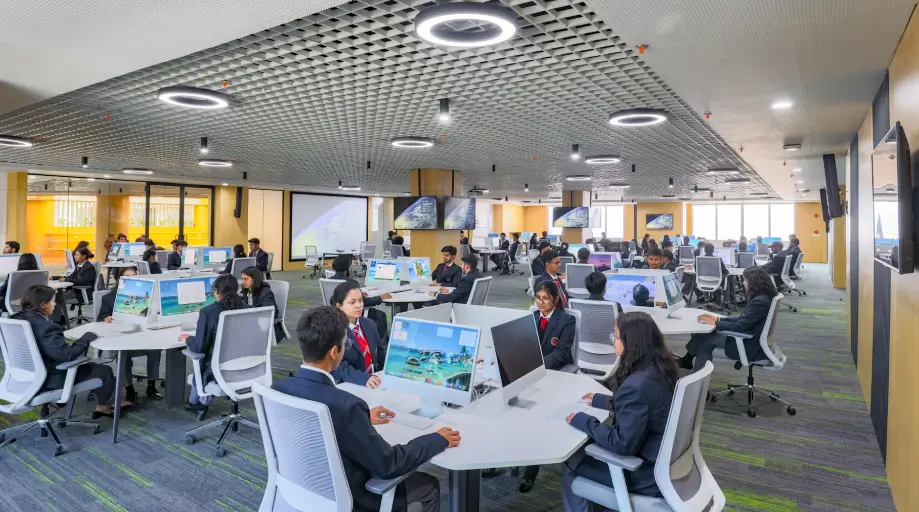
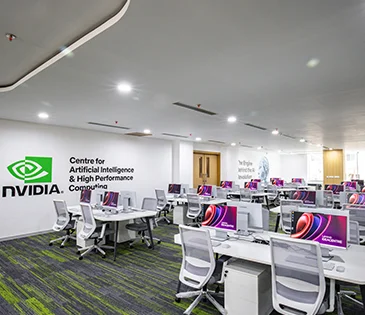
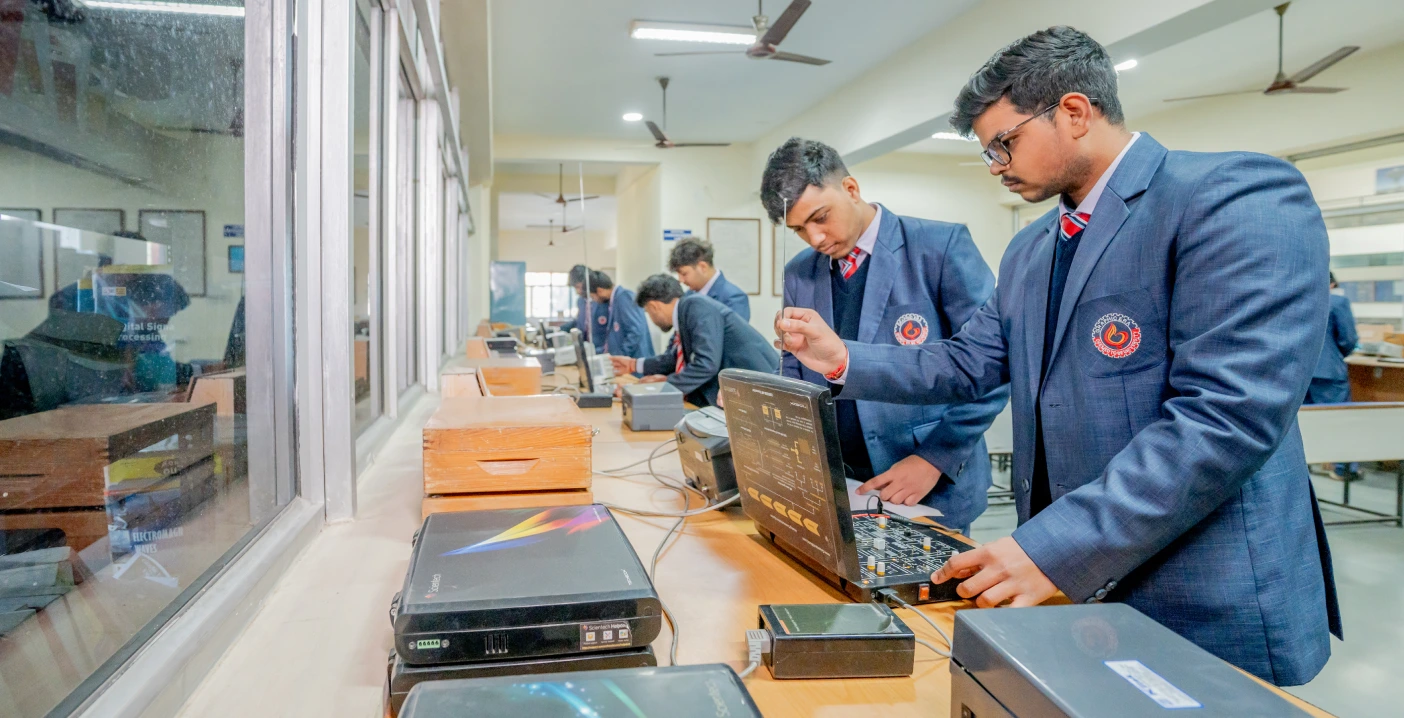
Real engineering begins where classroom discussions silently end. Inside advanced laboratories, ideas gradually find solid ground. Students sketch circuits before breathing life into hardware systems. Moreover, embedded programming transforms curiosity into working innovations. Communication experiments sharpen instincts through constant trial and refinement.
Electronic design projects encourage bold thinking beyond familiar paths. In addition, students master Cadence, MATLAB, and Xilinx confidently. They also explore ADS, CST Studio, and OrCAD. Every prototype teaches lessons earned through steady perseverance. Therefore, practical challenges separate wheat from chaff naturally.
B.Tech ECE Eligibility and Fee Structure
Passed 10+2 examination with Physics/Mathematics/Chemistry/Computer Science/ Electronics/Information Technology/Biology/Informatics Practices/Biotechnology/ Technical Vocational subject/Agriculture/Engineering Graphics/Business Studies/ Entrepreneurship.
| Minimum Marks | |
|---|---|
| General | 45% |
| Reserved Categories | 40% |
B. Tech ECE Course Fees
Click the link: https://geu.ac.in/fee/btech-ece
Skills Students Develop During the B. Tech Electronics and Communication Engineering Program:
Every challenge quietly sharpens valuable engineering abilities over time. Students strengthen analytical thinking through practical technical situations. Moreover, problem-solving becomes second nature with consistent practice. They design electronic systems and reliable hardware confidently.
Embedded programming builds precision alongside creative technical thinking. In addition, semiconductor concepts deepen engineering understanding through applied learning. Communication system development encourages accuracy under changing conditions. Research activities spark curiosity beyond familiar academic boundaries.
Career Avenues at a Glance
Technology continues to open remarkable doors across countless industries today. Electronics quietly fuel progress behind every modern convenience. Moreover, innovation creates fresh possibilities with impressive consistency.
Skilled graduates find opportunities across expanding technology-driven sectors. In addition, research, manufacturing, automation, and communication continue growing steadily. Semiconductor advancements further strengthen long-term professional prospects nationwide.
Therefore, adaptable technical knowledge remains worth its weight in gold. Curious minds often flourish within fast-changing engineering environments.
Major Job Titles at a Glance
Electronics Industry
- Electronics Design Engineer
- Hardware Engineer
- Product Development Engineer
- Testing Engineer.
Communication Industry
- Telecom Engineer
- RF Engineer
- Optical Communication Engineer
Semiconductor Industry
- VLSI Engineer
- Chip Design Engineer
- Semiconductor Engineer
- IC Design Engineer.
Embedded Systems
- Firmware Engineer
- Embedded Systems Engineer.
Emerging Technology Roles
- IoT Engineer
- Robotics Engineer
- AI Hardware Engineer
- Cyber-Physical Systems Engineer.
Government & Research
- PSUs
- Defence
- Research Labs
- Academia
- Startups.
Is This the Right Engineering Course for You?
Do electronic gadgets naturally spark your endless curiosity? Perhaps circuit design feels surprisingly satisfying every single time. Moreover, communication technologies constantly reshape today's connected world. Robotics and embedded programming reward curious, patient minds. Semiconductor innovations also invite creative thinkers chasing fresh ideas.
Therefore, strong problem-solving abilities become your greatest companion. Emerging technologies rarely stand still for anyone. Ultimately, this path suits those who embrace challenges wholeheartedly. It not only rewards persistence but also celebrates inventive thinking every day.
Why Graphic Era (Deemed to be a University) Stands Out
- Industry-focused curriculum
- Experienced faculty
- Practical learning
- Modern laboratories
- Research culture
- Innovation ecosystem
- Patent-oriented environment
- Industry collaborations
- Placement assistance
- Internship opportunities
- Outcome-Based Education
- Faculty mentorship
- Student testimonials
- Undergraduate, postgraduate, and doctoral programs in ECE.
Also Read: Why B.Tech CSE at Graphic Era Deemed University Is Worth It
The Closing Note
Tomorrow belongs to engineers who stay ahead of the curve. Electronics and communication continue to rewrite technological possibilities every day. Therefore, choose a university that leaves no stone unturned. Examine practical training, research culture, laboratories, and industry exposure carefully. B.Tech electronics and communication engineering rewards aspirants with lasting determination and success.