









 Download Brochure


Healthcare in India is usually pictured through doctors and nurses. Yet a large workforce of technologists and therapists stands behind every successful treatment. Scans are captured by trained radiology technicians. Blood samples are examined by laboratory experts. Operation theatres are managed by skilled assistants. For many decades this workforce was overlooked. Training was scattered across small centres. Recognition was rarely offered. The picture has changed considerably in recent years. Paramedical colleges in India are now regarded as serious centres of professional learning rather than backup choices. Several forces are credited with this shift.
A National Law Gave the Sector Its Shape
A national law for allied and healthcare professions was enacted in March 2021. Earlier attempts in 2007 and 2018 had never materialised. Under the new law a single framework was created for regulating education as well as services. Standards for courses were laid down. Professional registers were planned. A statutory commission was established to supervise the entire process. Because of this structure qualifications can now be compared across states. Confidence among employers has also been strengthened.
A Workforce Gap Too Big to Ignore
The need for trained people has been highlighted by several studies. A national occupational mapping exercise revealed that more than 64 lakh allied health professionals are required across the country. Only around two lakh are formally recognised at present. The biggest shortage was recorded in Uttar Pradesh where over ten lakh paramedics are missing. Such numbers could not be dismissed. Hospitals were forced to depend on informal training. Policymakers were convinced that quality teaching had to be expanded quickly. Many universities were encouraged to launch new programmes. Private institutions were also drawn into the effort.
Funding That Signals Intent
Financial backing has been another turning point. A dedicated scheme was announced with an allocation of Rs 1000 crore. Training of one lakh professionals over five years was planned under it. Ten disciplines were named for skilling in the Union Budget for 2026 and 2027. Optometry was included. Radiology was another. Anaesthesia technology along with applied psychology was also covered. Larger spending on health itself is expected. The government is researching on all the advanced healthcare technologies and fixing the budgets for investment accordingly.
Curricula Rewritten Around Skills
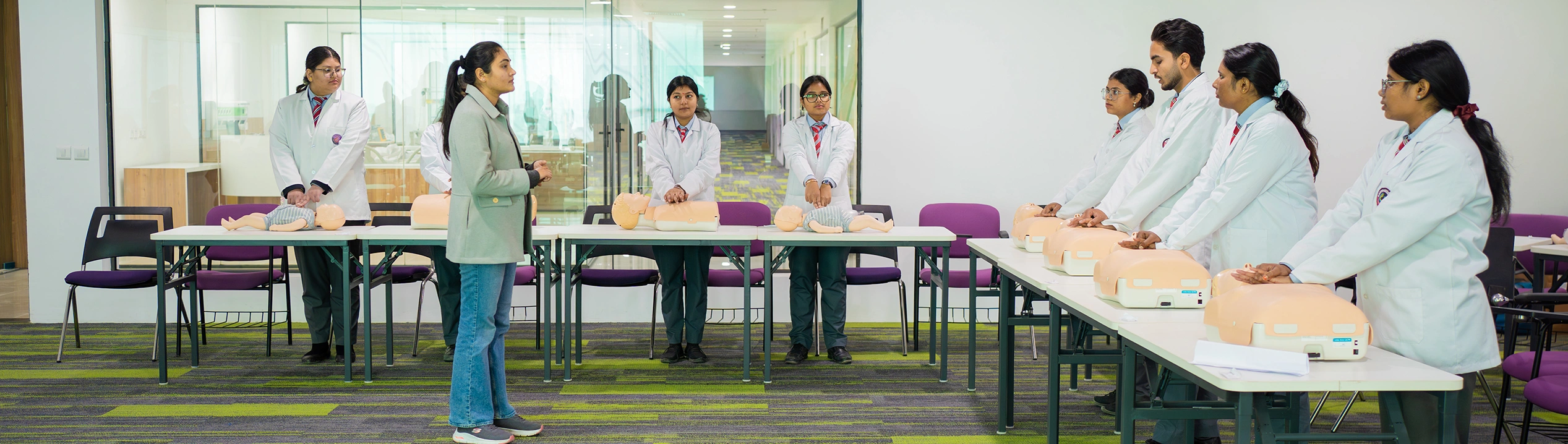
Syllabi have been redesigned in a major way. Curricula built around competencies were released for many professions. There has been the emergence of various kinds of paramedical courses of increasing importance over the past few years. Clinical postings are now treated as compulsory. Simulation labs are being installed in many campuses. Digital tools are used for tracking learning outcomes. A national entrance test for diploma and degree admissions was introduced as well. Selection has become more transparent as a result.
Partnerships with Hospitals
Collaboration between teaching institutions and hospitals has grown steadily. Joint postgraduate programmes have been launched in metropolitan cities. Students are posted in live clinical settings. Visiting faculty are invited from hospitals. The primary idea here is to provide experiential education to candidates that significantly increase their employability. Graduates are therefore found to be ready for work sooner.
Quality Education beyond Big Cities
Learning opportunities are no longer confined to large metros. Paramedical colleges in Uttarakhand offer a useful example. The state is widely regarded as an education hub with Dehradun at its centre. Mountain terrain and pilgrimage routes create a constant need for emergency care and trauma response. Skilled technicians are therefore required at district hospitals as well as remote health centres. Paramedical colleges in Uttarakhand are increasingly supported by local hospitals for clinical training. Students from neighbouring states are also attracted by the calm environment and the expanding infrastructure. Such growth shows that healthcare education is being spread to smaller regions.
Affordability and Access
Cost remains a major concern for families. Paramedical courses fees differ widely depending on the discipline and the type of institution. Diploma programmes are generally priced lower than degree programmes. Seats supported by governments are made available at modest rates. Scholarships and education loans are offered by many colleges. Fee structures are now being published openly on institutional websites. Before admission is taken paramedical courses fees should be compared with facilities as well as clinical exposure.
Transforming Career Scope
Awareness has increased steadily. Earlier most school students knew only MBBS or BDS or nursing. Now physiotherapy is being discussed openly. Medical laboratory science draws growing interest. So does optometry. New roles have emerged as technology advanced. Imaging specialists are needed for advanced scanners. Dialysis technicians are required in rising numbers. Rehabilitation experts are demanded for ageing populations. Skilled graduates are also sought by hospitals overseas. At the same time low pay and limited growth have been cited as reasons for attrition. Better regulation is expected to improve these conditions.
Technology Entering the Classroom
Teaching methods have been modernised. Virtual dissections are used for anatomy practice. Online lectures are recorded for revision. The use of AI technologies is constantly increasing. Mobile applications help students rehearse procedures. Access has been widened for learners who live far from campuses.
Looking Ahead
Legislation has provided structure. Funding has provided momentum. Revised curricula have raised quality. Hospital partnerships have added practical depth. Because of these changes paramedical colleges in India are now being trusted by students as well as parents. A shortage of more than 64 lakh professionals shows that the journey is far from complete. Faculty shortages remain a challenge. Uniform quality across all states is yet to be achieved. Still the direction is clearly positive.